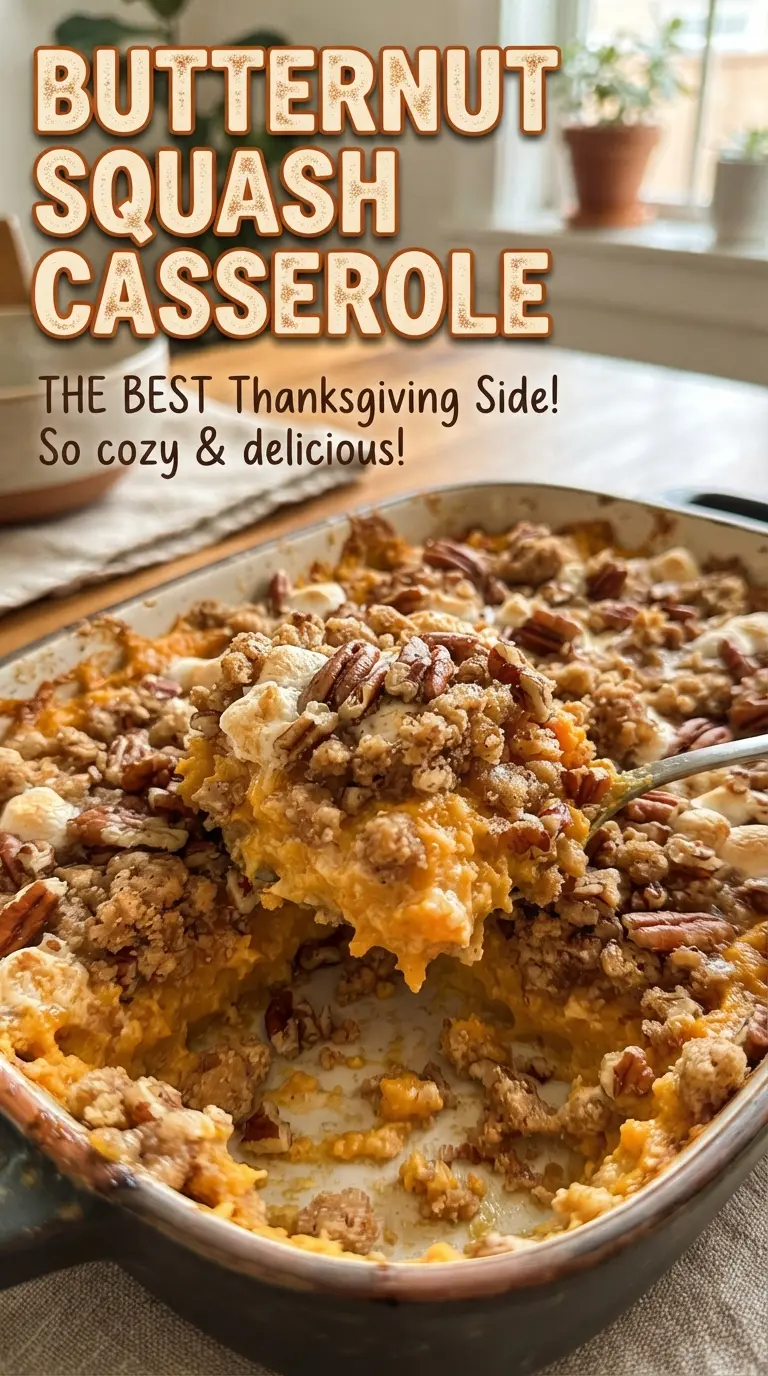
Butternut squash casserole lands on the table with a silky, spoonable center and a buttery pecan topping that turns crisp in the oven. The sweetness stays in check, the squash tastes rich instead of watery, and every bite has that soft-meets-crunchy contrast that keeps people going back for a second scoop.
The difference here is in the texture of the squash and the way the topping is built. Boiling the squash until it’s fully tender gives you a mash that blends smoothly with the eggs and milk, while draining it well keeps the casserole from turning loose or grainy. The streusel uses butter, brown sugar, flour, and pecans in just enough amount to bake into a golden shell without burying the squash underneath.
Below, I’ve included the small details that matter most: how to keep the filling from getting watery, why the topping should look crumbly before it goes in the oven, and a few smart swaps if you need to adapt it for your table.
The squash baked up creamy instead of watery, and that pecan topping stayed crunchy even after sitting on the table for a bit. I used it for Sunday dinner and everybody kept asking what was in it.
Save this butternut squash casserole for the kind of side dish that bakes into a creamy center with a crunchy pecan streusel.
The Part That Keeps This Casserole Creamy Instead of Watery
The biggest failure in butternut squash casserole is excess moisture. Squash holds a lot of water, and if it goes into the dish too loose, the eggs and topping can’t save it. Boiling the cubes until they’re fully tender is only half the job; draining them well is what keeps the casserole thick enough to slice or scoop cleanly.
The other piece is the mash itself. You want it smooth, but not whipped into a gluey puree. Mash until the butter, sugar, milk, and eggs are evenly mixed and the squash still has a little body. That gives you a custardy base that bakes up set at the edges and soft in the center.
- Drain the squash well — after boiling, let it sit in the colander for a minute or two so steam escapes. If you rush this part, the casserole can puddle in the pan.
- Use eggs for structure — they help the casserole set instead of collapsing into a mash. Skip them and the texture turns looser and less cohesive.
- Keep the topping crumbly — the streusel should look sandy with pea-size pieces of butter throughout. If it turns paste-like, it won’t bake into a crisp layer.
What Each Ingredient Is Actually Doing in the Dish
- Butternut squash — this is the base and the star. Fresh squash gives the best texture because you control how tender it gets, and you avoid the extra moisture that canned versions can bring.
- Butter — it carries the brown sugar and cinnamon through the casserole and helps the topping brown. Use real butter here; this is where the flavor comes from.
- Brown sugar — it adds a deeper sweetness than white sugar and helps the filling taste rich instead of flat. It also gives the streusel that caramel-like finish.
- Eggs and milk — together they create the soft, custardy body of the casserole. Whole milk gives the best result, but 2% works if that’s what you’ve got.
- Pecans — they bring the crunch that makes this casserole memorable. If you chop them too finely, they disappear into the topping; leave some pieces a little larger for texture.
- Flour — this binds the streusel so it bakes into a crumb instead of melting into the filling. All-purpose flour is the right choice here because it gives structure without heaviness.
Building the Base and Baking the Streusel at the Right Moment
Boiling Until the Squash Gives Easily
Boil the squash until a fork slides in with no resistance and the cubes start to break at the edges. If they’re even a little firm, the mash stays lumpy and the finished casserole can bake unevenly. Drain the squash thoroughly before mashing, because any water left in the pot ends up in the casserole.
Mashing Into a Smooth, Loose Filling
Mash the squash with the butter, brown sugar, eggs, milk, vanilla, cinnamon, and salt until the mixture looks smooth and glossy. Stop once the ingredients are combined; overmixing can make the texture heavy. Spread it into the dish in an even layer so the topping bakes at the same rate across the whole pan.
Making a Crumbly Pecan Topping
Mix the flour, pecans, melted butter, and remaining brown sugar until you get a loose crumble with visible nut pieces. If the butter is too hot, the mixture can turn greasy instead of crumbly, so stir just until everything is moistened. Sprinkle it evenly over the squash without pressing it down; a light hand keeps the topping crisp.
Baking Until the Edges Bubble
Bake until the top is deep golden and the filling bubbles around the edges, which tells you the center has heated through. If the topping is browning too quickly before the casserole is set, tent it loosely with foil for the last part of the bake. Let it rest for a few minutes before serving so the base settles and scoops cleanly.
How to Adapt This Butternut Squash Casserole for Different Tables
Dairy-Free Version
Use plant-based butter and an unsweetened non-dairy milk with some body, like oat milk. The casserole will still bake into a soft, sweet base, but the flavor will be a little less rich and the topping may brown a touch faster, so watch it near the end of baking.
Gluten-Free Topping
Swap the all-purpose flour for a cup-for-cup gluten-free blend. The streusel still works, but some blends brown more quickly than wheat flour, so start checking a few minutes early for that nutty golden color.
Less-Sweet Side Dish
Cut the brown sugar in the filling back by a couple of tablespoons and keep the topping as written. The casserole will taste more squash-forward and less dessert-like, which works well next to ham, roast chicken, or turkey.
Storage and Reheating
- Refrigerator: Store covered for up to 4 days. The topping softens a bit, but the flavor stays good.
- Freezer: It freezes reasonably well after baking. Cool completely, wrap tightly, and freeze for up to 2 months; the streusel won’t stay as crisp after thawing.
- Reheating: Reheat covered at 325F until warmed through, then uncover for the last few minutes to bring back some texture on top. Don’t microwave it if you want the topping to stay even remotely crisp.
Answers to the Questions Worth Asking

Butternut Squash Casserole
Ingredients
Equipment
Method
- Boil cubed butternut squash for 15 minutes until very tender. Drain well so the casserole bakes with a creamy, not watery, texture.
- Preheat the oven to 350F and grease a 9x13-inch baking dish. Brush or coat the dish so the squash releases cleanly after baking.
- Mash the squash with 1/4 cup melted butter, 1/4 cup brown sugar, eggs, milk, vanilla, cinnamon, and salt until smooth. Mix thoroughly until no lumps remain for a silky center.
- Spread the smooth squash mixture into the greased baking dish. Level the surface so it bakes evenly.
- Mix all-purpose flour, chopped pecans, remaining butter, and remaining brown sugar into a crumbly topping. Rub and stir until it forms clumps you can sprinkle over the squash.
- Sprinkle the pecan streusel evenly over the squash in an even layer. Make sure the crumbs reach the edges for browning and bubbling.
- Bake for 35-40 minutes at 350F until the topping is golden and the edges bubble. Let it rest briefly so the topping sets and the center holds together when scooped.