Butter pecan ice cream earns its place by balancing two things that can go wrong fast: a custardy base that stays smooth and pecans that taste toasted, not burnt. When it’s done right, the first spoonful is creamy and rich, then the buttered nuts come through with a salty crunch and a deep caramel note that lingers. It’s the kind of homemade ice cream that feels classic without tasting flat.
The trick is giving the pecans enough time in the butter to pick up color and flavor before they ever touch the churn. That browned, nutty butter carries straight into the ice cream base and makes the whole batch taste fuller. The custard also matters here. Egg yolks give this flavor its body, and cooking the base to the right temperature keeps it thick enough to freeze into a scoopable texture instead of turning icy.
Below, I’m walking through the small choices that make this recipe work: when to stop cooking the custard, how to cool it without watering it down, and how to keep the pecans crisp enough to stand out in every bite.
The custard came out silky and the pecans stayed crunchy even after freezing overnight. I loved that the butter flavor came through without making the ice cream taste heavy.
Butter pecan ice cream with buttery toasted pecans and a silky custard base is one to keep handy for dessert nights.
The Fastest Way to Ruin Butter Pecan Ice Cream Is Rushing the Pecans
The pecans need real attention here. If you stop too soon, they taste flat and disappear into the custard. If you push them too far, they turn bitter and take over the whole batch. Butter pecan ice cream depends on that narrow middle ground where the nuts are deeply toasted, the butter smells nutty, and the salt wakes up the sweetness instead of fighting it.
The second place people miss is the custard. Egg yolks need gentle heat and constant stirring, not a hard boil. Once the base reaches 175°F and coats the back of a spoon, it’s done. Anything hotter and you risk scrambled bits or a grainy texture that never churns smooth again.
- Watch the pecans, not the clock. Four to five minutes is usually enough, but the right cue is color and aroma.
- Cook the custard low and steady. A simmering edge is fine; bubbling is not.
- Strain the base even if it looks smooth. That catches any tiny cooked egg particles before they freeze.
- Chill it completely before churning. Warm base makes softer ice cream and longer churn times.
What the Brown Sugar, Yolks, and Buttered Pecans Are Doing Here
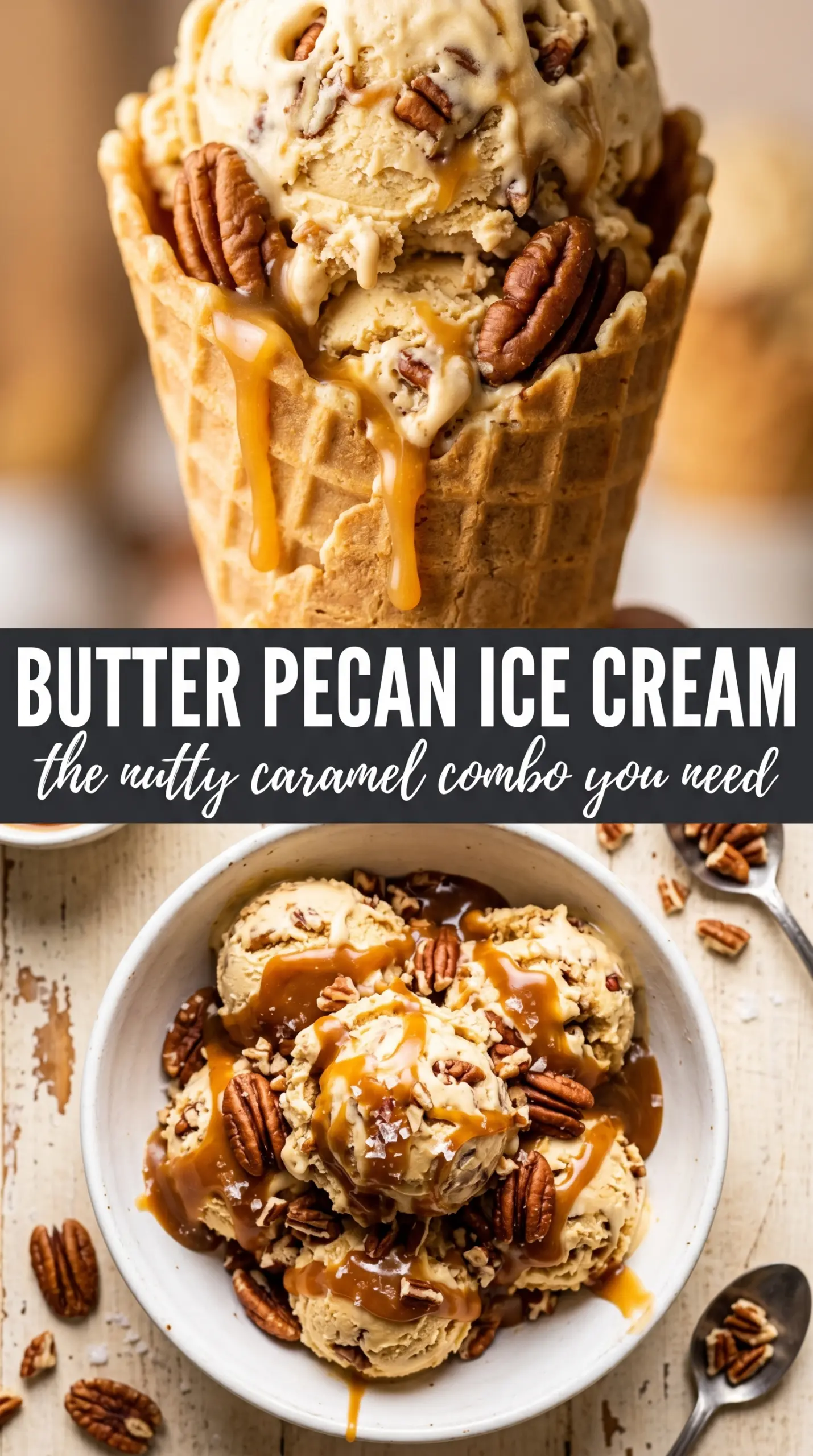
- Pecans — Fresh pecan halves matter because stale nuts taste dusty after freezing. Halves also hold their texture better than pieces. If you only have chopped pecans, use them, but expect more small bits scattered through the ice cream instead of distinct crunch.
- Unsalted butter — This is what turns the nuts from plain toasted to butter-glazed. Salted butter works in a pinch, but the flavor is harder to control, so reduce the added salt a little if you use it.
- Brown sugar — White sugar makes a cleaner sweet base, but brown sugar gives this flavor its caramel depth. Pack it firmly when measuring so the custard has enough sweetness to balance the dairy and yolks.
- Egg yolks — They’re what make this an actual custard ice cream instead of a shortcut base. There isn’t a substitute that gives the same body, but if you need to avoid eggs, you’ll need a different formula entirely rather than a simple swap.
- Heavy cream and whole milk — Cream gives the richness; whole milk keeps the texture from becoming greasy or too dense. Lower-fat milk will freeze harder and taste thinner.
- Vanilla — It rounds out the brown sugar and butter without making the ice cream taste like vanilla ice cream with nuts in it. Add it after straining so the aroma stays bright.
Getting the Custard Smooth, Churned, and Filled with Pecans
Toasting the Pecans in Butter
Melt the butter in a skillet over medium heat, then add the pecans and salt. Stir often and watch for the nuts to darken a shade or two and smell like warm pastry. Pull them off the heat as soon as that happens, because the carryover heat keeps cooking them after the pan is removed. Spread them out on parchment so they cool fast and stay crisp.
Building the Custard Base
Warm the cream, milk, and brown sugar until the sugar disappears and the mixture starts to steam. In a separate bowl, whisk the yolks until smooth, then add the hot dairy slowly while whisking constantly so the eggs temper instead of curdling. Put it all back in the saucepan and stir over low heat until it thickens enough to coat a spoon and reaches 175°F. If you see little egg flecks, the heat was too high; strain immediately and keep going with the smooth portion.
Cooling Before Churning
Stir in the vanilla, then strain the custard into a clean container. Press plastic wrap directly on the surface if you want to prevent a skin from forming. Chill it until it’s cold all the way through, then refrigerate at least four hours. A cold base churns faster and freezes with a finer texture, while a lukewarm one tends to make icy, soft ice cream.
Adding the Pecans at the End
Churn the custard according to your machine’s directions until it looks like soft serve. Add the cooled pecans in the last five minutes so they’re evenly distributed but not broken down by the paddle. Transfer the ice cream to a freezer container and freeze until firm. If it feels too hard after freezing, let it sit on the counter for a few minutes before scooping instead of microwaving the whole batch.
How to Adapt Butter Pecan Ice Cream Without Losing the Character of It
Dairy-Free Version
Use full-fat canned coconut milk in place of the cream and milk, but expect a faint coconut note and a softer set. The custard will still work with yolks, though the flavor shifts away from classic dairy-rich butter pecan. Keep the pecans extra well toasted to help the nutty flavor stand up to the coconut.
No-Churn Approach
Whip sweetened condensed milk with whipped cream, then fold in the cooled buttered pecans. You’ll lose the custard depth and some of the old-fashioned richness, but the texture is faster and still creamy. Don’t skip cooling the pecans fully, or they’ll melt the whipped base.
Extra-Salty Southern Style
Increase the salt slightly in the pecan pan and finish the churned ice cream with a tiny pinch on top. That sharper edge makes the caramel notes pop and gives the dessert more contrast. It works best if your brown sugar is firmly packed and the custard tastes just sweet enough before churning.
Storage and Reheating
- Refrigerator: Not applicable once churned; the base can be refrigerated up to 2 days before churning.
- Freezer: Store in an airtight container for up to 2 weeks. After that, the texture starts to pick up ice crystals and the pecans lose some snap.
- Reheating: Reheating doesn’t apply here. For the best scoop, let the container sit at room temperature for 5 to 10 minutes so the custard softens evenly instead of forcing a spoon through a frozen block.
Questions I Get Asked About This Recipe
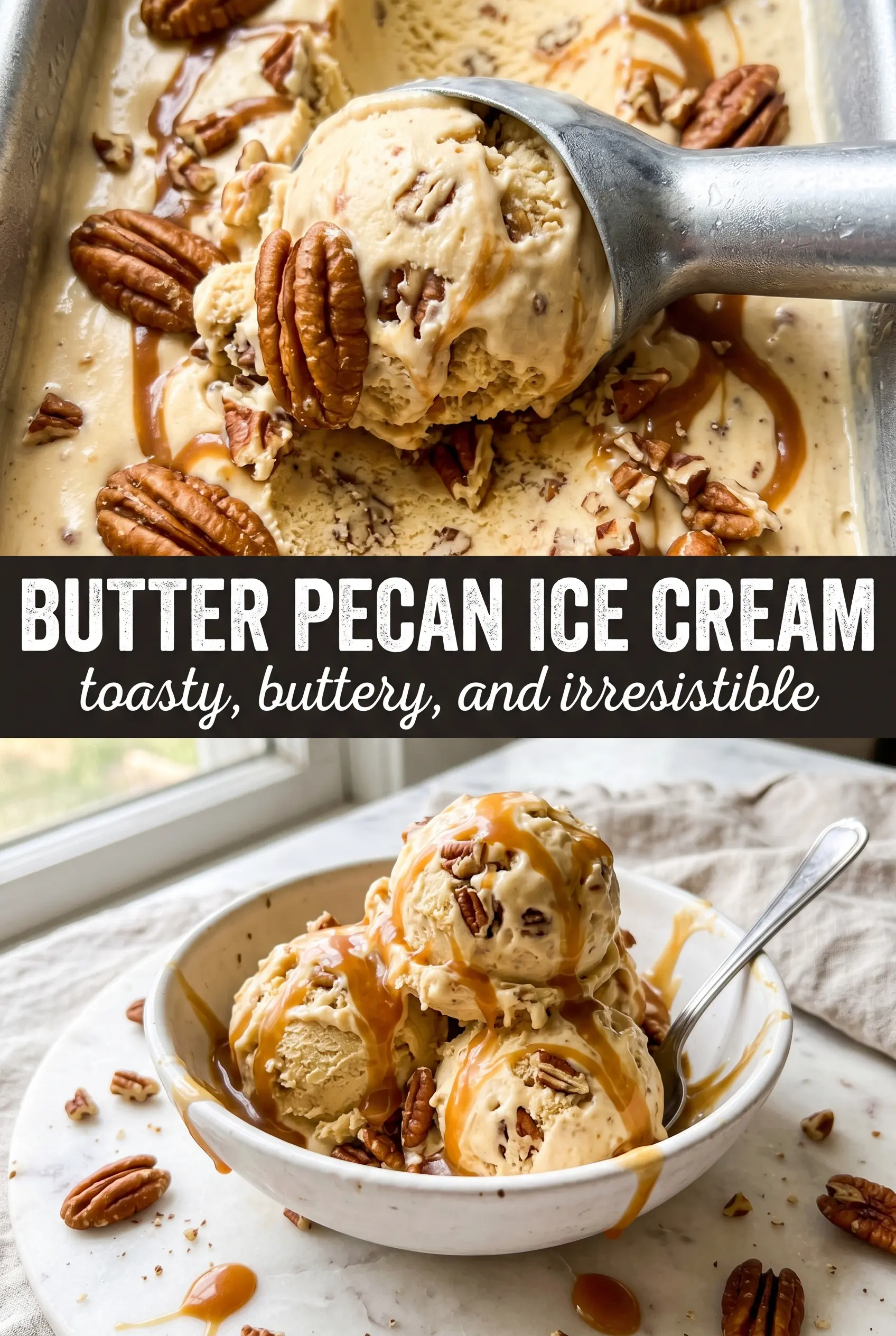
Butter Pecan Ice Cream
Ingredients
Equipment
Method
- Melt the unsalted butter in a skillet over medium heat, then stir in pecan halves and 1/2 teaspoon salt. Toast for 4-5 minutes until deeply golden and fragrant, then cool completely on a parchment-lined sheet.
- Combine heavy cream, whole milk, and packed brown sugar in a saucepan and heat until the mixture steams and the sugar dissolves. Keep it hot but not boiling while you prepare the yolks.
- Whisk egg yolks until smooth in a bowl. Slowly whisk the hot cream mixture into the yolks to temper.
- Return the custard to the saucepan and cook to 175F, stirring constantly. The mixture should thicken enough to lightly coat a spoon.
- Strain the custard into a container, then stir in vanilla extract and 1/4 teaspoon salt. Cool completely, then refrigerate at least 4 hours.
- Churn the chilled custard in an ice cream maker. In the last 5 minutes, add the cooled butter-toasted pecans.
- Transfer to a container and freeze until firm. Serve after hardening for at least a few hours for scoopable texture.