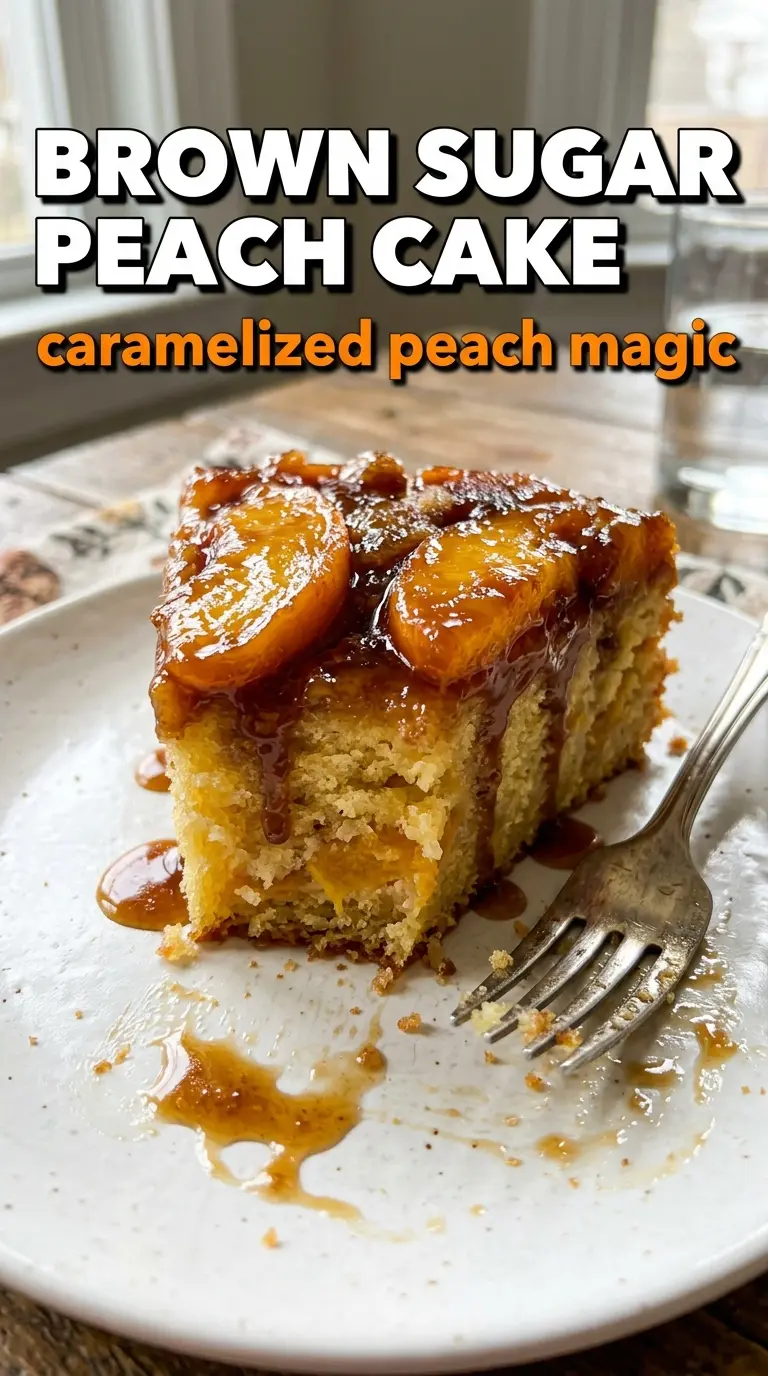
Brown sugar peach cake bakes up plush and tender, with a caramel-kissed crumb that stays moist long after the layers cool. The peaches soften just enough in the oven to turn jammy at the edges without disappearing into the batter, and the caramel cream cheese frosting brings the whole cake into balance with a tangy, buttery finish.
What makes this version work is the combination of brown sugar and sour cream. Brown sugar deepens the flavor and nudges the crumb toward a soft, almost toffee-like richness, while sour cream keeps the cake from drying out under all that fruit. The peaches need to be ripe, but not mushy; too much juice and the batter turns heavy. A gentle fold at the end keeps the fruit intact and the layers light.
Below, I’ve added the details that matter most: how to keep the cake from sinking in the middle, which peach swaps hold up, and how to make the frosting smooth instead of loose. If you’ve had peach cakes turn soggy before, the process section will save you from that again.
The cake stayed incredibly moist for two days, and the peach pieces baked in without making the layers dense. That caramel cream cheese frosting was the part everyone kept scraping off the plate.
Brown sugar peach cake with caramel cream cheese frosting is the kind of layer cake worth keeping on hand for peach season.
The Reason Peach Cakes Turn Heavy, and How This One Stays Light
Fruit cakes fail when the batter gets overworked or the fruit brings in too much extra moisture. Here, the batter starts with butter and both sugars beaten until pale and fluffy, which gives the cake a little lift before the flour even goes in. That step matters because the peaches are dense enough on their own; you want the crumb supported before they’re folded through.
The other trick is the sour cream. It adds fat and acidity, which keeps the cake soft and helps the baking soda do its job. If you swap in plain yogurt, use full-fat and keep the texture thick. Thin yogurt or overripe peaches with a lot of juice can push the batter toward gummy.
- Brown sugar — This is what gives the cake that deeper, almost caramel note. Light or dark brown sugar both work, but dark brown sugar will make the flavor richer and the color a little darker.
- Sour cream — Don’t replace this with milk. Sour cream brings both moisture and structure, and that’s what keeps the crumb tender without collapsing under the peaches.
- Ripe peaches — They should smell fragrant and give slightly when pressed. If yours are very juicy, dice them, then pat them dry with paper towels before folding them in.
- Cream cheese frosting — It needs to be fully softened before beating, or you’ll get tiny lumps that never smooth out. Cold cream cheese is the fastest way to a grainy frosting.
What Each Ingredient Is Actually Doing in This Recipe
- Primary ingredient (the star) — Quality matters most. Choose the best you can find.
- Cooking medium (oil, butter, or broth) — This carries flavors and prevents dryness.
- Seasonings (salt, pepper, spices, herbs) — Layer flavors so nothing overpowers. Build depth gradually.
- Aromatics (garlic, onion, herbs) — Cook with fat to bloom flavors. Become the foundation.
- Supporting ingredients — Complement the main ingredient without overpowering it.
- Sauce or liquid (if applicable) — Brings flavors together. Balance richness with acid.
- Acid (lemon, vinegar, wine, or other) — Brightens and prevents flat-tasting results.
- Final finish (garnish, glaze, or sauce) — Prevents one-dimensional taste and adds visual appeal.
Building the Batter Without Crushing the Fruit
Whipping the Butter and Sugars
Beat the butter with the brown sugar and granulated sugar until the mixture looks fluffy and a little paler in color. That takes a few minutes, not a quick stir, and it’s where the cake gets its first bit of air. If you stop too soon, the crumb will bake up tighter and the finished layers won’t have that soft lift you want.
Adding the Eggs and Dairy
Add the eggs one at a time so the batter stays smooth and emulsified. If the mixture looks a little curdled after the second egg, keep going; it usually comes back together once the flour and sour cream are added. The sour cream should be cool room temperature, not icy cold, so it blends in without forcing you to overmix.
Folding in the Peaches
Mix the diced peaches in by hand at the end, just until they disappear through the batter. A heavy hand here breaks the fruit and streaks the batter with juice, which can create wet pockets in the finished cake. Divide the batter evenly between the pans and smooth the tops gently so the layers bake level.
Baking Until the Center Springs Back
Bake until the tops are golden, the edges pull away slightly from the pans, and a toothpick inserted in the center comes out clean or with a few moist crumbs. If the middle still wobbles, give it a few more minutes and check again. Pulling the cake too early is what leads to a sunken center once it cools.
Making the Frosting Thick Enough to Spread
Beat the cream cheese and butter until completely smooth before adding the powdered sugar. Then add the caramel sauce and vanilla, and beat just until the frosting turns fluffy. If it gets too loose, chill it for 10 to 15 minutes before assembling; that’s usually enough to bring it back to a spreadable texture.
How to Adjust This Cake for Different Kitchens and Different Peach Situations
Use frozen peaches when fresh ones aren’t at their best
Frozen peaches work well if you thaw them first and drain off the excess liquid. Pat them dry before folding them in, or the batter can turn too wet around the fruit. The cake will still taste peachy, but the texture will be a little softer than with fresh peaches.
Make it gluten-free with a 1:1 baking blend
A good cup-for-cup gluten-free flour blend can stand in for the all-purpose flour here. The cake may bake a touch more tender, so let it cool completely before slicing. That rest helps the crumb set cleanly instead of crumbling apart under the frosting.
Skip the caramel drizzle and keep the frosting tangier
If you want a less sweet finish, leave the caramel sauce out of the frosting and use an extra splash of vanilla instead. You’ll get a cleaner cream cheese flavor that still pairs beautifully with the peaches. The cake reads less dessert-shop rich and more fresh, especially with just the sliced peaches on top.
Storage and Reheating
- Refrigerator: Store the frosted cake covered for up to 4 days. The crumb stays moist, and the flavor deepens by day two.
- Freezer: Freeze unfrosted layers tightly wrapped for up to 2 months. Thaw them in the refrigerator before frosting so the cake doesn’t sweat under the icing.
- Reheating: This cake is best served at room temperature, not warmed. If it’s been chilled, let slices sit out for 30 to 45 minutes so the frosting softens and the peach flavor comes through.
Questions I Get Asked About This Recipe

Brown Sugar Peach Cake
Ingredients
Equipment
Method
- Preheat the oven to 350°F and grease two 9-inch round cake pans, then line each with parchment for easy release.
- In a bowl, beat the butter and both sugars until light and fluffy to incorporate air for a tender crumb.
- Beat in the eggs one at a time, then mix in the vanilla extract until smooth.
- Alternately mix in the dry flour mixture (all-purpose flour, baking powder, baking soda, salt, cinnamon) and the sour cream until just combined.
- Fold in the diced ripe peaches gently so the batter stays thick and the fruit stays suspended.
- Divide the batter evenly between the two pans, then bake for 35-40 minutes until a toothpick comes out clean.
- Cool the cakes completely before frosting, about 30 minutes.
- Beat the cream cheese and butter until smooth, ensuring no lumps remain.
- Add powdered sugar, caramel sauce, and vanilla, then beat until fluffy and thick.
- Fill and frost the cooled cake with the caramel cream cheese frosting so the frosting layers are generous between the cakes.
- Arrange fresh peach slices on top and drizzle with extra caramel before serving for a caramel-studded finish.