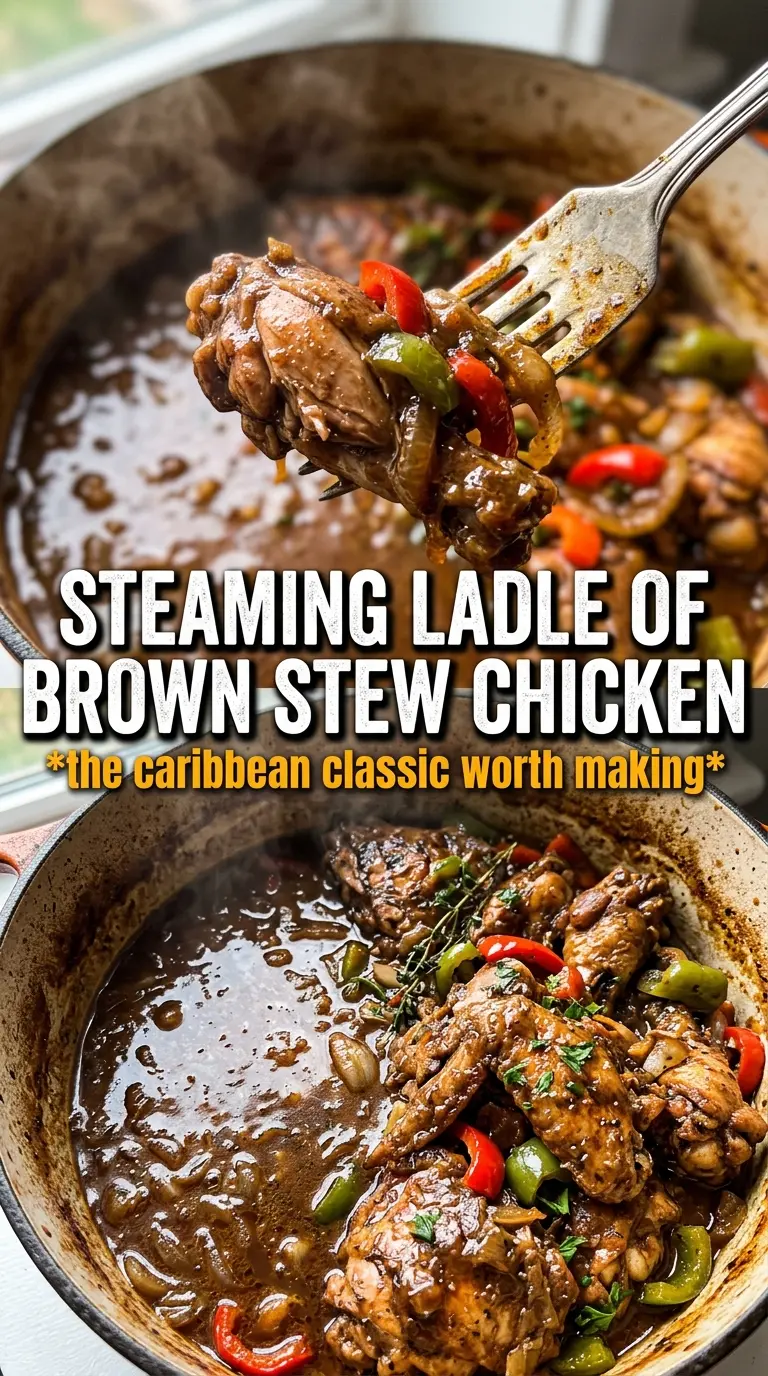
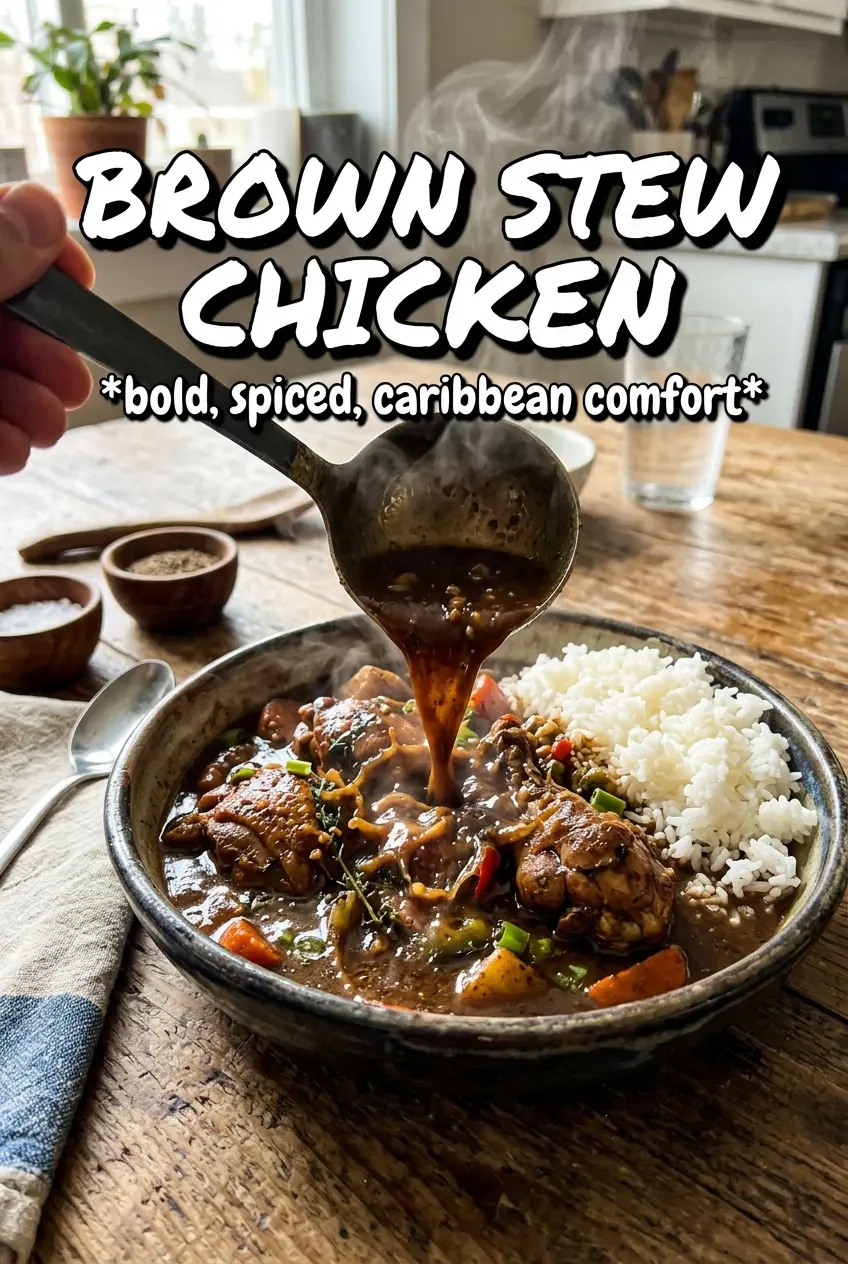
Brown stew chicken lands on the table with deep mahogany gravy clinging to the chicken, sweet bell peppers softening into the sauce, and thyme and scallion giving every bite that unmistakable Jamaican backbone. The chicken stays tender enough to pull apart with a spoon, but the real payoff is the sauce: glossy, lightly sweet, and layered with browned bits from the pan that make the whole dish taste cooked with care.
What makes this version work is the combination of a long enough marinade and a proper brown-on-brown simmer. The seasoning goes right into the chicken before it ever hits the pan, which means the meat is flavored all the way through instead of just sitting under sauce at the end. Then the sugar is caramelized separately and used to deepen color and give the stew that signature rich edge without needing a long reduction.
Below, I’ve included the part that matters most if you want the gravy to come out thick and the chicken to stay juicy instead of stringy. I’ve also added a few practical swaps for the heat level and the cut of chicken, because once you understand the structure of the dish, it’s easy to make it work in your own kitchen.
The gravy turned a deep, rich brown and coated the chicken beautifully. I simmered it the full 40 minutes and the thighs were fall-apart tender without drying out.
Save this brown stew chicken for the nights when you want deep Jamaican flavor, tender chicken, and that mahogany gravy over hot rice.
The Caramel Stage Is What Gives This Stew Its Depth
The biggest mistake with brown stew chicken is rushing the color. If the sugar never reaches that deep amber stage, the finished gravy tastes flat and the chicken looks pale even after a long simmer. You want the sugar to melt, foam, and turn golden-brown before the chicken goes in, because that caramel gives the stew its signature color and a little rounded sweetness that balances the peppers and Scotch bonnet.
Once the chicken hits the pot, give it time to take on color on the outside. That browning step is not decorative. It adds the roasted, almost smoky edge that makes the sauce taste like it simmered much longer than it did. If the pan looks dry before the chicken browns, the heat is too high and the sugar is moving toward burnt instead of caramelized.
What Each Ingredient Is Doing in the Pot
- Bone-in chicken thighs and drumsticks — These stay juicier through the simmer than boneless pieces and give the gravy more body. Thighs and drumsticks also forgive a little extra cook time, which matters when the sauce needs to thicken around them.
- Browning sauce — This deepens the color fast and adds a dark, slightly bitter-sweet edge that plain soy sauce or extra spice won’t copy. A little goes a long way; too much makes the stew taste heavy instead of rich.
- All-purpose seasoning, garlic powder, onion powder, and thyme — This blend seasons the meat from the inside out and gives the stew its layered savory base. Dried thyme works fine in the marinade, but fresh thyme on top at the end keeps the aroma bright.
- Scotch bonnet or habanero — This is there for heat and that fruity pepper note. If you want flavor without a burn, leave it whole or use just a little minced pepper, because chopping it fine spreads the heat through the whole pot.
- Chicken broth — Use a broth you’d drink on its own, because it becomes the sauce. Water will work in a pinch, but it leaves the stew thinner and less rounded.
- Bell peppers, onion, garlic, and green onions — These soften into the gravy and add sweetness, perfume, and body. Slice them thick enough that they hold some shape after simmering instead of disappearing completely.
Building the Sauce Without Losing the Chicken
Marinate for Flavor That Sticks
Coat the chicken well and let it sit for at least 2 hours, or overnight if you can. The marinade doesn’t just season the outside; it settles into the meat and gives you better flavor after the simmer. If you’re short on time, an hour is better than nothing, but the dish tastes deeper with a longer rest. Keep the chicken covered in the fridge and bring it out while the oil heats so the surface isn’t icy when it goes into the pan.
Caramelize the Sugar, Then Move Fast
Heat the oil first, then add the sugar and watch it closely. It should melt, bubble, and turn a golden brown that smells nutty, not burnt. The second it gets dark enough, add the chicken, because caramel goes from perfect to bitter in a hurry. If the sugar smokes heavily before the chicken goes in, the heat was too high and the base of the stew will taste harsh.
Brown the Chicken Before the Simmer
Let the chicken sear on all sides until deeply golden. You’re not cooking it through here; you’re building flavor and keeping the skin from going flabby in the sauce. If the pieces stick at first, leave them alone for a minute longer and they’ll release when a crust forms. Pull them out once they’ve picked up real color, even if they aren’t cooked through yet.
Cook the Vegetables Until They Smell Sweet
When the chicken comes out, sauté the onion, peppers, garlic, green onions, and Scotch bonnet in the same pot. This softens their edges and pulls up the browned bits stuck to the bottom. You want the onions translucent and the peppers just starting to slump, not mushy. That keeps the finished stew from tasting boiled.
Simmer Until the Gravy Clings
Return the chicken, add the broth, and bring it just to a boil before lowering the heat. Cover and simmer until the meat is tender and the gravy has turned glossy and thick enough to coat a spoon, usually 35 to 40 minutes. If the sauce is too thin at the end, simmer uncovered for a few extra minutes. If it looks greasy, skim a little fat from the surface before serving.
How to Adjust This Stew Without Losing Its Character
Make It Milder Without Flattening the Flavor
Leave the Scotch bonnet out completely or add it whole and remove it before serving. You still get the sweet peppers, thyme, and browned sauce, but without the heat spreading through the pot. If you want just a whisper of spice, use half the pepper and keep the seeds out.
Use Boneless Chicken Thighs When That’s What You Have
Boneless thighs work, but they cook faster and won’t make the gravy as rich as bone-in pieces. Start checking them about 10 minutes early so they stay tender. You’ll lose a little of the old-school depth, but the sauce still carries the dish.
Make It Gluten-Free Without Changing the Method
This recipe is naturally close to gluten-free as written, but check the browning sauce and all-purpose seasoning labels. Some brands sneak in wheat-based ingredients or additives, and that’s the only place you really need to watch. The stew itself doesn’t rely on flour to thicken, so the texture stays the same.
Storage and Reheating
- Refrigerator: Keeps for 3 to 4 days. The gravy actually tastes deeper on day two, and the chicken stays tender.
- Freezer: Freezes well for up to 2 months. Cool it completely, then store it with plenty of sauce so the chicken doesn’t dry out on thawing.
- Reheating: Warm it gently on the stovetop over low heat with a splash of broth if needed. A hard boil can toughen the chicken and make the sauce split, so go slow and stir often.
Questions I Get Asked About This Recipe
Brown Stew Chicken
Ingredients
Equipment
Method
- Combine browning sauce, all-purpose seasoning, garlic powder, onion powder, dried thyme, and salt and pepper, then rub all over the chicken and let it marinate for at least 2 hours or overnight in the refrigerator until seasoned through.
- Heat vegetable oil in a large skillet or Dutch oven over medium-high heat, then add sugar and stir until caramelized to golden brown, about 2 to 4 minutes.
- Add the marinated chicken pieces and brown in the caramel oil until deeply golden on all sides, about 6 to 8 minutes total, then remove to a plate.
- Sauté onion, bell peppers, garlic, green onions, and scotch bonnet for 4 minutes, stirring just until fragrant and slightly softened.
- Return chicken to the pot, add chicken broth, and bring everything to a boil.
- Reduce heat, cover, and simmer for 35 to 40 minutes until the chicken is fall-apart tender and the gravy is thick and glossy.
- Serve hot with rice and garnish with fresh thyme for a fragrant finish.