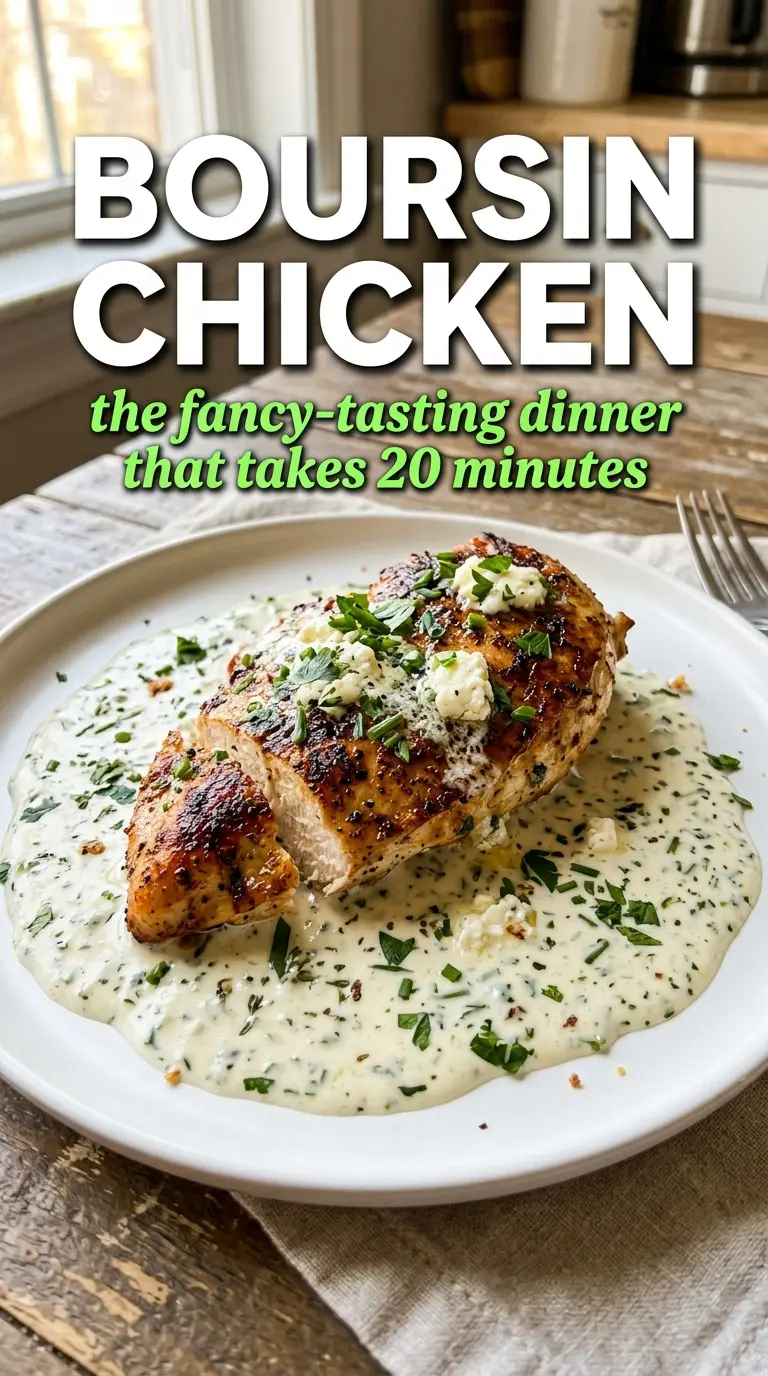
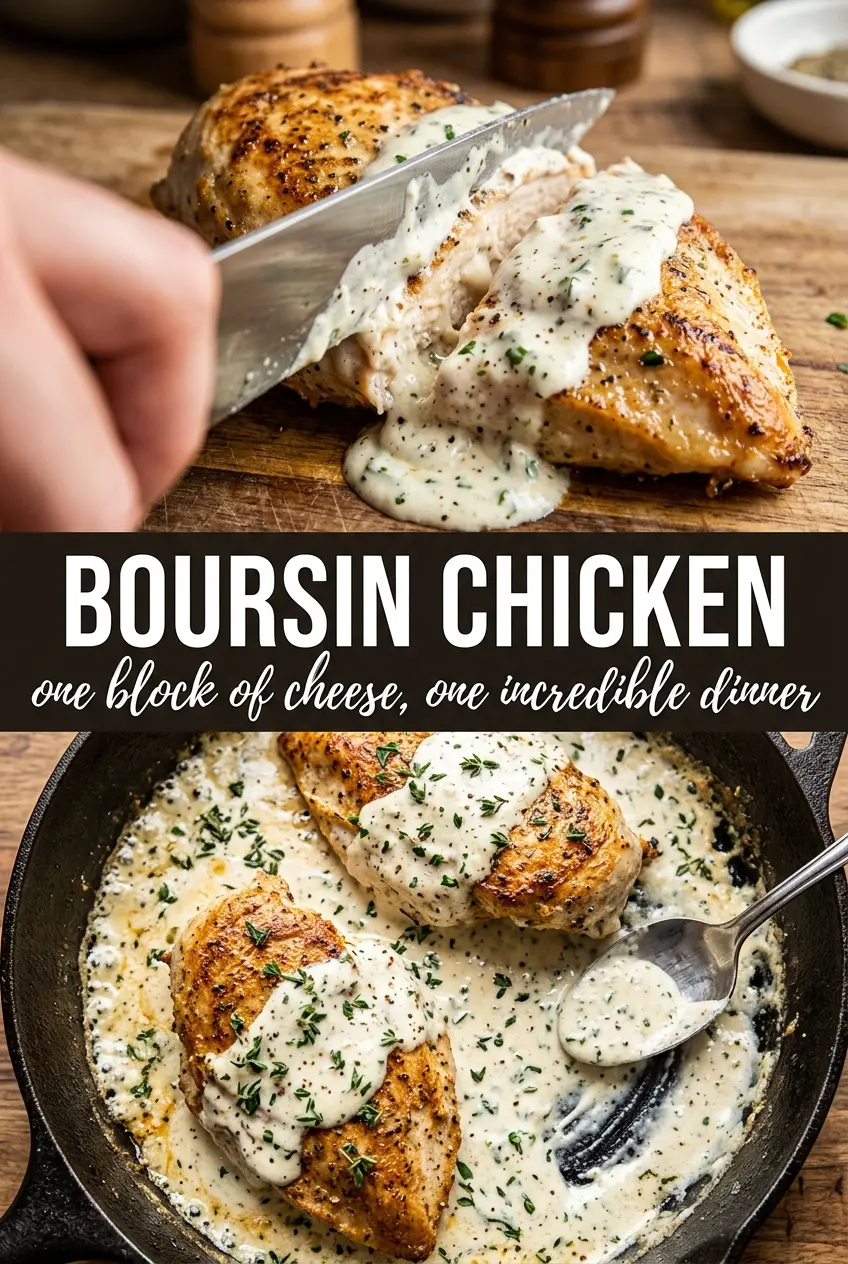
Golden-seared chicken breasts under a glossy Boursin cream sauce are the kind of dinner that looks like you paid attention, even when it came together on a weeknight. The sauce clings to the chicken instead of sliding off, with garlic, herbs, and black pepper showing up in every bite. It’s rich without feeling heavy, and the pan sauce has enough character to carry simple mashed potatoes, rice, or a pile of pasta.
What makes this version work is the order. The chicken gets a real sear first, which gives the sauce a deeper savory base from the browned bits left in the skillet. Then the garlic and wine or broth lift everything off the pan before the Boursin goes in. That cheese melts into a smooth foundation, and the cream finishes it with a silkier texture instead of turning it into a thick, gluey sauce.
Below, I’m walking through the small decisions that keep the sauce from breaking and the chicken from drying out. If you’ve ever had a cream sauce turn grainy or flat, the details here will help.
The sauce turned out silky and coated the chicken instead of pooling watery in the pan. I used broth instead of wine and it still had that garlicky herb flavor my husband kept spooning over his potatoes.
Save this Boursin chicken for the nights when you want a glossy, herb-packed skillet sauce without a long ingredient list.
The Pan Sauce Won’t Save a Weak Sear
The biggest mistake with Boursin chicken is treating the sauce like it can carry bland chicken. It can’t. You need deep golden color on the chicken first, because that browning gives the sauce its backbone. If the pan looks pale when the wine or broth goes in, the finished dish will taste creamy but flat.
Keep the chicken in a single layer and leave it alone long enough to brown. If you keep nudging it, the surface steams and sticks instead of releasing cleanly. The other key point is heat control once the cheese goes in. Boursin melts fast, and if the pan is raging hot when you stir in the cream, the sauce can turn grainy around the edges before it has a chance to smooth out.
- Chicken breasts — Pounding them to an even thickness helps them cook at the same pace, which keeps the thinner ends from drying out before the thicker center is done.
- Boursin garlic and herb cheese — This is the flavor engine. A plain cream cheese swap won’t give you the same garlic-herb lift or that soft, spreadable melt.
- Dry white wine or chicken broth — Wine gives the sauce a sharper, more restaurant-style finish, while broth keeps it mellow. If you use broth only, add a small squeeze of lemon at the end to wake the sauce up.
- Heavy cream — This smooths the sauce and gives it that glossy finish. Half-and-half can work in a pinch, but it won’t thicken as confidently and is more likely to look thin after the chicken goes back in.
What Each Ingredient Is Actually Doing in This Recipe
- Primary ingredient (the star) — Quality matters most. Choose the best you can find.
- Cooking medium (oil, butter, or broth) — This carries flavors and prevents dryness.
- Seasonings (salt, pepper, spices, herbs) — Layer flavors so nothing overpowers. Build depth gradually.
- Aromatics (garlic, onion, herbs) — Cook with fat to bloom flavors. Become the foundation.
- Supporting ingredients — Complement the main ingredient without overpowering it.
- Sauce or liquid (if applicable) — Brings flavors together. Balance richness with acid.
- Acid (lemon, vinegar, wine, or other) — Brightens and prevents flat-tasting results.
- Final finish (garnish, glaze, or sauce) — Prevents one-dimensional taste and adds visual appeal.
Build the Sauce in the Same Skillet
Season and Sear the Chicken
Pat the chicken dry, then season it well with salt, pepper, and garlic powder before it hits the oil. You want the skillet hot enough that the chicken sizzles right away. Cook until the first side is a deep golden brown and it releases without fighting the pan, then turn it and cook the second side until the thickest part reaches 165°F. If the chicken is browning too fast before the center cooks, lower the heat slightly and give it a minute more instead of forcing a hard sear on a scorching pan.
Wake Up the Brown Bits
After the chicken comes out, add the garlic and stir it for about 30 seconds, just until fragrant. If it starts turning tan, the heat is too high and it will taste bitter. Pour in the wine or broth and scrape the bottom of the pan with a wooden spoon so all those browned bits dissolve into the liquid. That’s where the savory depth comes from, and skipping this step leaves you with a sauce that tastes separate from the chicken.
Let the Cheese Melt Slowly
Add the broth and bring it to a gentle simmer before the Boursin goes in. Stir until the cheese disappears completely and the sauce looks smooth, not speckled or curdled. Then add the cream and thyme and let the sauce bubble softly for a few minutes until it thickens enough to coat a spoon. If it seems thin at first, keep simmering; cream sauces usually tighten as they lose a little water, and rushing that process on high heat is how they break.
Finish the Chicken in the Sauce
Return the chicken to the pan and spoon the sauce over the top so every piece gets coated. Let it simmer just long enough to warm the chicken through and settle the flavors, then take it off the heat. Overcooking at this stage is what turns juicy chicken into something stringy, and the sauce only needs a minute or two with the meat back in the pan. Fresh thyme on top is worth it here because it gives the finished dish a clean herbal note right before serving.
How to Adapt Boursin Chicken Without Losing the Good Part
Use chicken thighs for a richer, juicier version
Boneless skinless thighs stay more forgiving if you cook them a minute too long, and they add a deeper savory flavor to the sauce. They need a little longer in the skillet, but the method stays the same. The only tradeoff is that you lose the neat, lean look of chicken breasts.
Make it gluten-free without changing the texture
This recipe is naturally gluten-free as written if your broth and Boursin are certified gluten-free. That matters more than people think, because some boxed broths sneak in thickeners or additives. Serve it over mashed potatoes, rice, or gluten-free pasta and nothing about the sauce needs to change.
Skip the wine and keep the sauce mellow
Chicken broth works well in place of white wine if you want a softer, family-friendly flavor. Add an extra splash of broth when deglazing, then finish with a little black pepper or a few drops of lemon juice so the sauce doesn’t taste too round or muted.
Storage and Reheating
- Refrigerator: Store leftovers in an airtight container for up to 3 days. The sauce will thicken as it chills.
- Freezer: I don’t recommend freezing this one. Cream sauces made with soft cheese can turn grainy after thawing.
- Reheating: Warm it gently on the stovetop over low heat with a splash of broth or cream, stirring often. High heat is the fastest way to split the sauce.
Answers to the Questions Worth Asking
Boursin Chicken
Ingredients
Equipment
Method
- Season the boneless skinless chicken breasts with salt, pepper, and garlic powder, then heat the olive oil in a large skillet over medium-high heat until shimmering. Sear for 5-6 minutes per side until golden and the internal temperature reaches 165°F, then remove the chicken to a plate.
- In the same pan, cook the minced garlic for 30 seconds until fragrant. Deglaze with the dry white wine or chicken broth and cook for 2 minutes, scraping up the browned bits.
- Pour in the chicken broth, bring it to a simmer, and add the Boursin garlic and herb cheese. Stir until completely melted and smooth.
- Stir in the heavy cream and fresh thyme leaves, then simmer for 3-4 minutes until the sauce thickens slightly and looks glossy.
- Return the chicken breasts to the pan and spoon the Boursin sauce over each breast so they’re coated. Garnish with fresh thyme and serve over mashed potatoes or pasta.