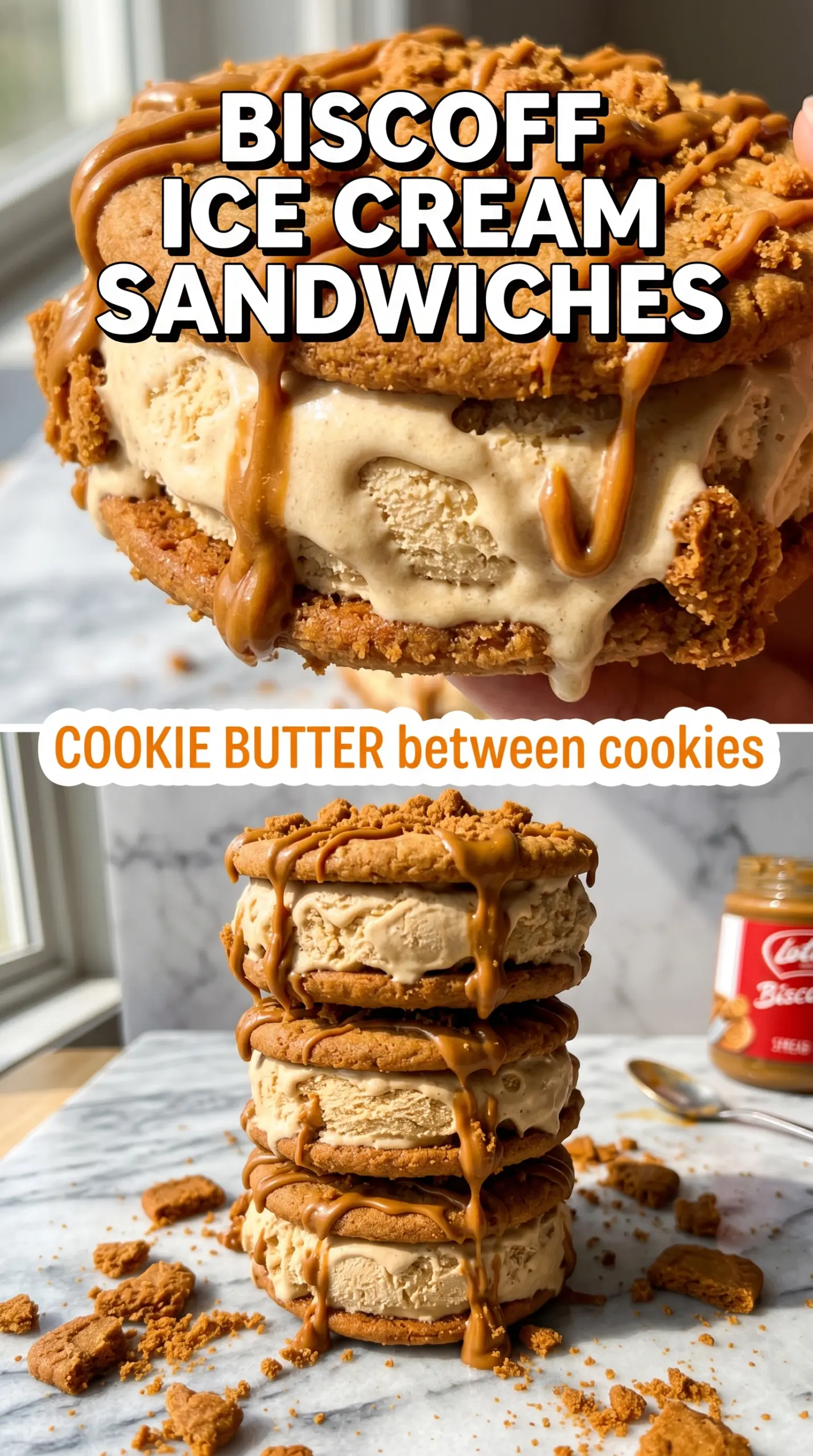
Caramelized speculoos cookies and Biscoff ice cream hit that sweet spot where the cookie stays chewy at the edges, the center turns cold and creamy, and every bite tastes like warm brown sugar and spice. These are the kind of frozen sandwiches that disappear fast because they eat like a bakery treat, not a novelty dessert.
What makes this version work is that the cookies bake a little thicker than standard sandwich cookies, so they hold their shape after freezing without turning hard. The spice blend matters, too: cinnamon leads, but ginger, cloves, and nutmeg give the cookies that deep, cookie-butter warmth you expect from Biscoff. A quick drizzle of warmed spread on top ties the whole thing together and keeps the flavor from feeling one-note.
Below, I’ve included the small timing details that keep the cookies from cracking when you fill them, plus a couple of smart swaps if you want to use vanilla ice cream instead of cookie butter ice cream.
The cookies stayed soft enough to bite after freezing, and the warmed Biscoff drizzle made them taste like a bakery ice cream sandwich instead of something I assembled in my kitchen.
Like these Biscoff ice cream sandwiches? Save them to Pinterest for the nights when you want a spiced cookie dessert with a cold, creamy center.
The Cookie Thickness That Keeps These from Turning Rock-Hard
Ice cream sandwiches fail when the cookies bake too thin or too crisp. Thin cookies freeze into hard little slabs, and overbaked cookies lose the soft chew that makes the first bite satisfying. Here, the dough is scooped into large rounds and pressed flat just enough to spread into a sturdy sandwich cookie with a caramelized edge and a tender middle.
The other thing that matters is cooling. If the cookies are even a little warm, the ice cream starts to melt before you get the second half on top, and the whole sandwich slides around. Let them cool all the way to room temperature, then assemble quickly and freeze long enough for the filling to set again.
- Brown sugar — This is what gives the cookies their deep caramel note and keeps them soft enough after freezing. White sugar won’t give you the same chew or color.
- The spice blend — Cinnamon brings the front-of-flavor warmth, but ginger, cloves, and nutmeg are what make these taste like speculoos instead of plain spice cookies.
- Biscoff spread — Warming it for the drizzle matters. Cold spread clumps; gently warmed spread flows in thin ribbons and sets with a glossy finish.
- Cookie butter ice cream — This is the most direct way to double down on the Biscoff flavor. Vanilla ice cream works too, but the result is milder and a little less dramatic.
What Each Ingredient Is Actually Doing in This Ice Cream
- Base ingredient (cream, milk, or custard) — This provides the foundation and richness. Quality matters.
- Sweetener (sugar, honey, or condensed milk) — This sweetens and prevents ice crystals. The ratio is critical.
- Flavor element (vanilla, fruit, chocolate, or other) — This defines the ice cream personality. Use quality ingredients.
- Egg yolks (if making custard base) — These create richness and silky texture. Optional but elevates ice cream.
- Churning (if using ice cream maker) — This incorporates air and prevents ice crystals. Critical for smooth texture.
- Freezing temperature and time — Proper freezing prevents rock-hard texture. Store at 0°F or below.
- Mix-ins (chocolate, cookies, fruit, or swirls) — These add texture and prevent one-dimensional flavor. Add near end of churning.
- Serving temperature (slightly soft, not rock hard) — This provides creamy mouthfeel. Remove from freezer 5 minutes before serving.
How to Build the Sandwiches So the Filling Stays Put
Mixing the Spiced Dough
Whisk the flour, spices, baking soda, and salt first so the spice blend is even all the way through the dough. Then beat the butter and brown sugar until it looks fluffy and a little paler; that step gives the cookies enough lift to stay tender. Once the egg and vanilla go in, stir only until the flour disappears. If you work the dough too much, the cookies bake up tougher and spread less evenly.
Baking for Chewy Edges
Scoop large rounds and press them flat before baking so they cool into matching halves. Pull them when the edges are golden and the centers still look just a touch soft; they’ll finish setting on the tray. If you wait until they look fully done in the oven, they’ll overbake by the time they’re cool enough to sandwich.
Filling and Freezing
Let the cookies cool completely, then work with softened ice cream that is scoopable but not soupy. Press the second cookie on top gently so the filling reaches the edges without squishing out the sides. If the ice cream is too soft, the sandwiches slump; if it’s too firm, the cookies crack as you press them together. Freeze them at least an hour so the center firms back up before serving.
Vanilla Ice Cream for a Softer Biscoff Finish
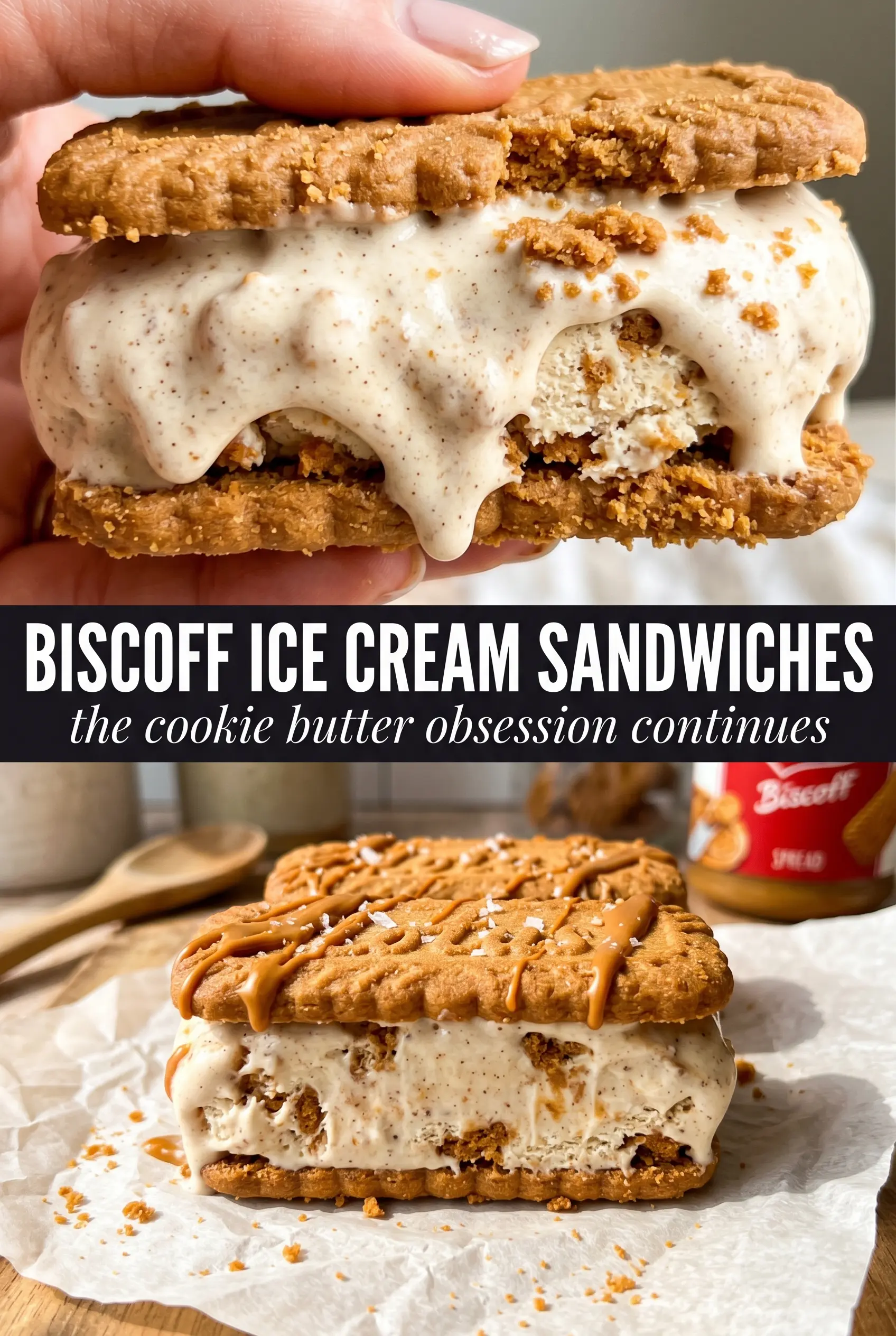
Use vanilla ice cream if you want the spiced cookies to lead and the filling to stay lighter. The sandwich will taste more like a cookie-and-cream dessert with a Biscoff finish on top instead of a full cookie butter bomb, which is great when you want the spice to stay balanced.
Dairy-Free Version
Swap in a plant-based butter and a dairy-free vanilla or cookie butter ice cream. The cookies will still bake up with the same chewy texture, but the ice cream layer can soften faster, so freeze the assembled sandwiches a little longer before serving.
Gluten-Free Adaptation
Use a good 1:1 gluten-free baking blend in place of the flour. The cookies may spread a little less and bake a touch more fragile, so let them cool completely before moving them off the tray or filling them.
Make-Ahead Assembly
Bake the cookies a day ahead and store them airtight at room temperature. Assemble the sandwiches the day you plan to serve them, then freeze until firm. That keeps the cookies from drying out and gives you the cleanest sandwich shape.
Storage and Reheating
- Refrigerator: Not the best place for these; the cookies lose their chewy texture and the ice cream softens unevenly. Keep them in the freezer instead.
- Freezer: Store wrapped individually or in a single layer in an airtight container for up to 2 weeks. After that, the cookies start to dry out and the ice cream picks up freezer flavor.
- Reheating: No reheating needed. Let them sit at room temperature for 3 to 5 minutes before serving so the cookies soften just enough to bite cleanly. Waiting too long is the mistake here; they go from perfect to messy fast.
The Things That Trip People Up With These Sandwiches
Biscoff Ice Cream Sandwiches
Ingredients
Equipment
Method
- Preheat oven to 350F and whisk all-purpose flour, cinnamon, ginger, cloves, nutmeg, baking soda, and salt until evenly combined.
- Beat unsalted butter, softened and brown sugar, packed until fluffy, then add the egg and vanilla extract and beat until smooth.
- Stir in the flour spice mixture just until no dry streaks remain.
- Scoop the dough into large rounds, press flat, and bake 10-12 minutes at 350F until caramelized and golden at the edges.
- Cool the cookies completely before assembling.
- Place cookie butter ice cream or vanilla ice cream between two cookies to form sandwiches.
- Drizzle warm Biscoff spread over the tops of the sandwiches.
- Freeze for at least 1 hour before serving until firm.