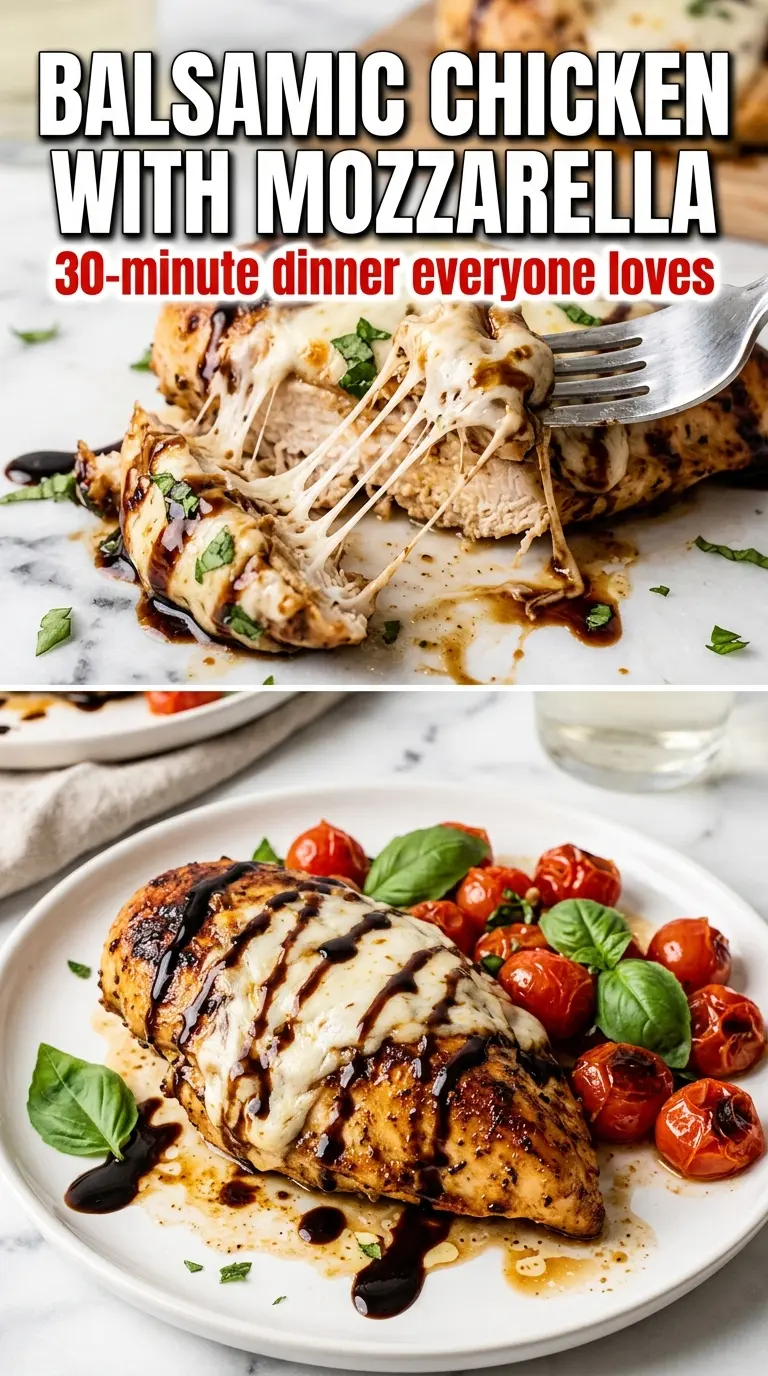
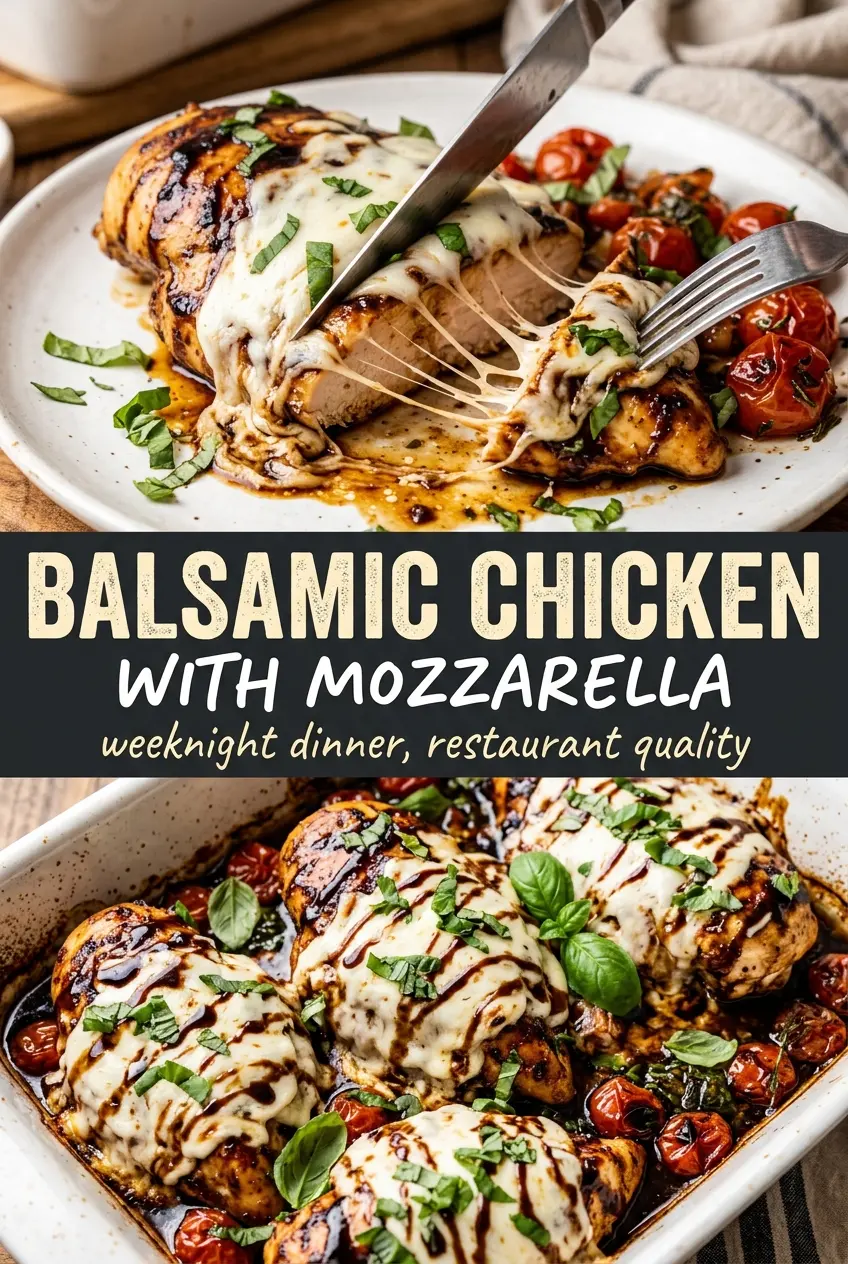
Balsamic baked chicken breast with mozzarella gives you juicy chicken, a glossy pan sauce, and that caprese-style finish that makes a simple dinner feel like it took more effort than it did. The balsamic reduces into something tangy and a little sticky, the mozzarella turns soft and milky on top, and the cherry tomatoes bring just enough brightness to keep the whole dish from feeling heavy.
What makes this version work is the quick marinade and the short sear before the oven. The balsamic, honey, garlic, and Dijon do more than season the chicken; they help build a sauce that clings instead of puddling at the bottom of the pan. Searing first gives the breasts color and flavor, while the oven finishes the center gently so the meat stays tender.
Below, I’ve included the small details that matter most, like when to add the cheese so it melts without overcooking the chicken, plus a few easy swaps if you need to work with what’s in your kitchen.
The balsamic glaze thickened up beautifully in the oven, and the mozzarella melted over the chicken without turning rubbery. My husband went back for seconds and asked if I could make it again next week.
Save this balsamic baked chicken breast with mozzarella for a juicy, cheesy dinner with a caramelized glaze and fresh basil finish.
The Trick to Keeping Balsamic Chicken Juicy Instead of Dry
Chicken breasts go from tender to chalky fast if they spend too long in a hot oven, and that’s the main failure point in a dish like this. The fix is a fast sear first, then a short bake at a fairly hot temperature so the outside gets flavor without dragging the center past 165°F. The balsamic marinade adds moisture and seasoning, but it won’t save overcooked chicken.
Another place people run into trouble is with the sauce. If you pour in all the marinade and walk away, it can stay thin and flat. Here, the honey and balsamic reduce around the chicken as it bakes, and the final drizzle of balsamic glaze adds the glossy finish you want without turning the pan sauce too sweet.
What the Balsamic, Dijon, and Fresh Mozzarella Are Doing Here
- Balsamic vinegar — This is the backbone of the dish. It brings sharpness and depth, and when it hits the heat with honey, it turns into that sticky, dark glaze that makes the chicken taste finished. Cheap balsamic works fine here because it’s being cooked down; save the fancy bottle for drizzling at the end if you want a cleaner, sweeter finish.
- Honey — A small amount softens the vinegar’s bite and helps the surface caramelize in the oven. Maple syrup will work in a pinch, but it reads a little different and can taste heavier. Keep the amount modest or the glaze turns candy-sweet instead of balanced.
- Dijon mustard — Dijon helps emulsify the marinade so the oil and vinegar cling together instead of separating immediately. It also adds a quiet savory note that keeps the sauce from tasting one-dimensional. Plain yellow mustard won’t give the same depth.
- Fresh mozzarella — Use fresh mozzarella, not low-moisture shredded cheese. Fresh mozzarella melts into soft, creamy pools and gives you that caprese look and texture. Slice it thick enough to soften without disappearing completely.
- Cherry tomatoes and basil — These are not garnish in the decorative sense; they keep the chicken tasting bright and fresh. Halved tomatoes burst a little in the oven, and basil should go on at the end so it stays fragrant instead of blackening.
Building the Glaze, Melting the Cheese, and Finishing at the Right Moment
Whisk the Marinade First
Start by whisking the balsamic vinegar, olive oil, honey, garlic, and Dijon until the mixture looks slightly thick and glossy. Season the chicken well before it goes in, because the marinade seasons the surface but doesn’t penetrate deeply in just 20 minutes. If the garlic sits in the marinade too long before cooking, it can scorch in the pan, so keep the timing tight.
Sear for Color Before the Oven Takes Over
Heat the skillet until it’s hot enough that the chicken sizzles the second it touches the pan. Three minutes per side is usually enough to build a golden crust without cooking the breasts through. If the pan is crowded or the heat is too low, the chicken steams and the glaze never gets a chance to develop.
Bake Until the Center Reaches 165°F
Transfer the skillet to the oven with the reserved marinade and let the chicken finish baking for 18 to 20 minutes. Pull it as soon as the thickest part reaches 165°F, because carryover heat will finish the job after it comes out. If your breasts are very large, flattening them slightly before marinating helps them cook evenly instead of drying out at the edges.
Add the Mozzarella and Tomatoes at the End
Lay the mozzarella slices over the chicken and scatter the halved tomatoes on top, then return the pan to the oven just long enough for the cheese to soften and melt, about 4 to 5 minutes. This short finish keeps the cheese creamy instead of oily and keeps the tomatoes from collapsing completely. Once it comes out, drizzle with balsamic glaze and add the basil right away so the herbs stay bright.
How to Adapt This Chicken Without Losing the Point
Dairy-Free Version
Skip the mozzarella and finish with extra tomatoes and basil, or add a little dairy-free melting cheese if you have one you trust. You’ll lose the creamy caprese contrast, but the balsamic glaze and fresh herbs still carry the dish well.
Gluten-Free and Naturally Low-Carb
This recipe is already gluten-free as written, and it’s a solid low-carb dinner when you keep the honey modest and serve it with vegetables or salad. If you want it even leaner, use a slightly smaller drizzle of balsamic glaze at the end.
Using Chicken Thighs Instead
Boneless skinless thighs work well and stay juicy, but they need a longer bake time than breasts. Expect a darker, richer result and check for doneness in the thickest part before adding the mozzarella so the meat doesn’t overcook under the cheese.
Storage and Reheating
- Refrigerator: Store leftovers for up to 3 days. The mozzarella will firm up, but the flavor holds well.
- Freezer: You can freeze the cooked chicken without the basil, though the tomatoes and cheese texture won’t be as good after thawing. Wrap tightly and freeze for up to 2 months for best results.
- Reheating: Reheat covered in a 325°F oven until warmed through, or use short bursts in the microwave at medium power. High heat dries out chicken breasts fast, so go gently if you want the meat to stay tender.
Answers to the Questions Worth Asking
Balsamic Baked Chicken Breast with Mozzarella
Ingredients
Equipment
Method
- Whisk balsamic vinegar, olive oil, honey, minced garlic, and Dijon mustard together in a bowl until smooth. Season chicken breasts with salt, pepper, garlic powder, and Italian seasoning, then coat and marinate for 20 minutes, reserving some marinade for baking.
- Preheat oven to 400°F, then heat an oven-safe skillet over medium-high heat. Sear the marinated chicken for 3 minutes per side until golden.
- Transfer the skillet to the oven with the remaining reserved marinade. Bake for 18-20 minutes until the internal temperature reaches 165°F.
- Remove the skillet from the oven and top each breast with mozzarella slices and halved cherry tomatoes. Return to the oven for 4-5 minutes until the cheese is melted.
- Drizzle with balsamic glaze and garnish with fresh basil leaves. Let rest briefly so the glaze clings before serving.