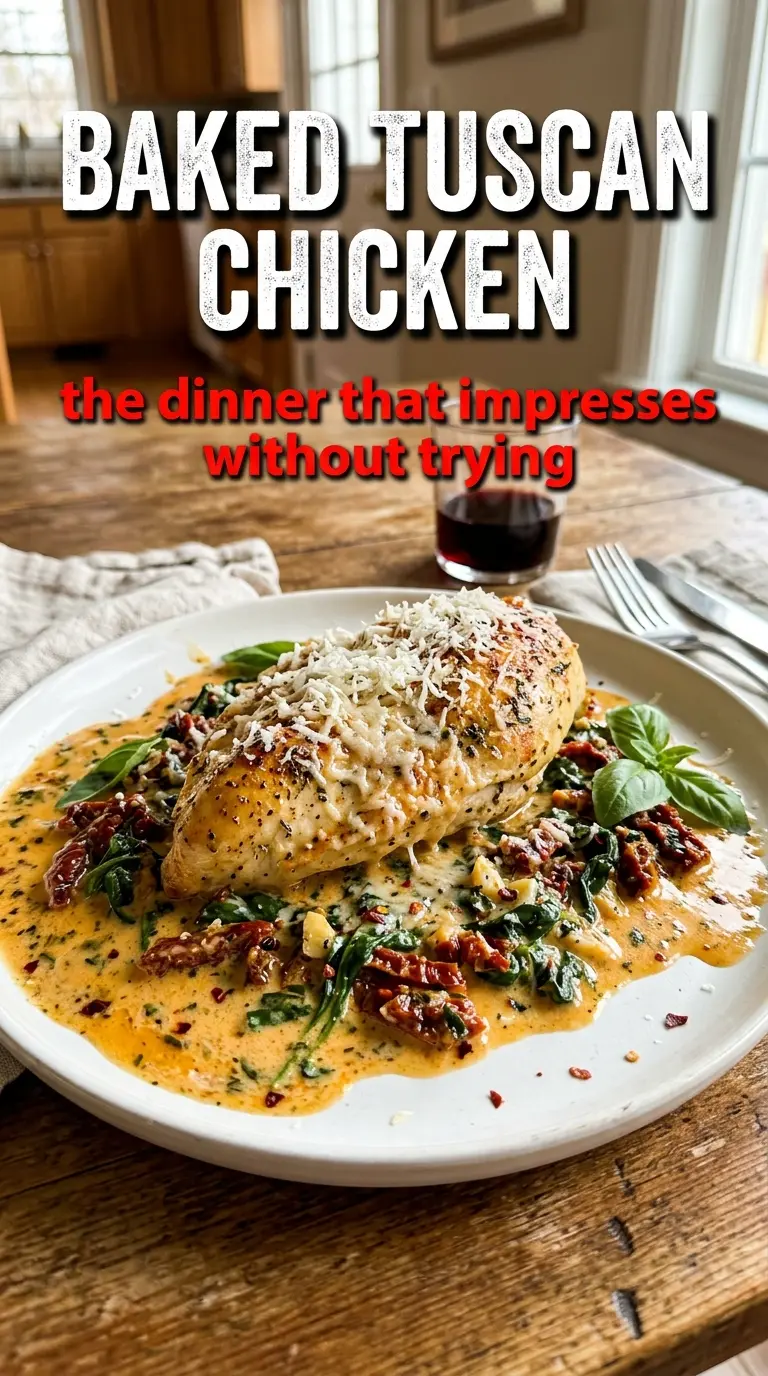
Golden-skinned chicken thighs tucked into a creamy Parmesan sauce with sun-dried tomatoes and spinach are the kind of dinner that looks like you worked harder than you did. The chicken stays juicy because the oven finishes what the skillet starts, and the sauce picks up every bit of flavor left in the pan. By the time it comes out bubbling, the edges are a little thicker, the tomatoes have softened into the cream, and the whole dish feels rich without tipping heavy.
The trick is starting with bone-in, skin-on thighs and giving the skin enough time in the skillet to turn deeply crisp before anything creamy goes near the pan. That first sear builds the flavor base and keeps the chicken from tasting flat. The sauce also depends on the order: garlic and sun-dried tomatoes go in first to wake up their flavor, then the broth loosens the browned bits, and only after that do the cream and Parmesan come together without turning grainy.
Below, I’ve broken down the part that matters most, the ingredient choices that actually change the result, and the few variations that still keep this dish tasting like the same cozy, elegant skillet dinner.
The sauce came together smooth and glossy, and the chicken skin stayed crisp even after baking. I loved how the sun-dried tomatoes and Parmesan balanced each other without making it too heavy.
Save this Baked Tuscan Chicken for the nights when you want crisp-skinned chicken, a creamy Parmesan sauce, and one skillet full of sun-dried tomato comfort.
The Skillet Trick That Keeps the Sauce Creamy After Baking
The biggest mistake with a dish like this is rushing the sauce while the pan is still too hot from searing. If the cream and Parmesan hit screaming heat, the sauce can look oily or grainy before it even gets to the oven. Pulling the skillet off the burner for a moment after deglazing gives the pan a chance to cool just enough for the dairy to stay smooth.
Another thing that matters here is the chicken itself. Bone-in, skin-on thighs hold up to the oven better than lean cuts, and the skin acts like its own shield against dry meat. That’s why this recipe gives you crisp top notes on the outside and juicy chicken underneath, even after the sauce bubbles around it.
- Chicken thighs — These hold moisture far better than breasts in a baked cream sauce, and the skin browns beautifully in the skillet. Boneless thighs work in a pinch, but you lose some of that deep roasted flavor and the cook time drops a few minutes.
- Sun-dried tomatoes in oil — Oil-packed tomatoes bring a softer texture and more concentrated flavor than dry-packed ones. Drain them before slicing so they don’t make the sauce greasy, but don’t rinse away the oil that clings to them; that carries flavor into the pan.
- Heavy cream — This is what gives the sauce body without splitting easily in the oven. Half-and-half can work if that’s what you have, but the sauce will be thinner and needs gentler heat.
- Parmesan — Grate it fresh if you can. Pre-grated Parmesan often contains anti-caking agents that can make the sauce a little sandy instead of silky.
- Baby spinach — Add it at the end so it wilts into the sauce instead of turning swampy. Mature spinach works too, but chop the leaves first or the stems will stay chewy.
What Each Ingredient Is Actually Doing in This Recipe
- Primary ingredient (the star) — Quality matters most. Choose the best you can find.
- Cooking medium (oil, butter, or broth) — This carries flavors and prevents dryness.
- Seasonings (salt, pepper, spices, herbs) — Layer flavors so nothing overpowers. Build depth gradually.
- Aromatics (garlic, onion, herbs) — Cook with fat to bloom flavors. Become the foundation.
- Supporting ingredients — Complement the main ingredient without overpowering it.
- Sauce or liquid (if applicable) — Brings flavors together. Balance richness with acid.
- Acid (lemon, vinegar, wine, or other) — Brightens and prevents flat-tasting results.
- Final finish (garnish, glaze, or sauce) — Prevents one-dimensional taste and adds visual appeal.
Building the Sauce Around the Chicken, Not After It
Seasoning and Searing the Thighs
Season the chicken generously before it ever hits the pan. You want the skin to look dry and lightly coated, not wet with spice paste, because dry skin is what turns crisp. Sear skin-side down in olive oil and leave it alone long enough to turn deeply golden and release from the skillet on its own; if it sticks, it needs another minute. Flip only after the skin has real color, then give the second side a shorter sear so the oven can finish the job.
Pulling Flavor From the Pan
Once the chicken comes out, add the garlic and stir just until fragrant. Thirty seconds is enough; garlic goes bitter fast in a hot skillet. The sun-dried tomatoes should cook long enough to bloom in the oil and pick up the browned bits from the pan. When you add the broth, scrape the bottom well so those caramelized spots dissolve into the sauce instead of staying stuck behind.
Finishing the Cream Sauce
Lower the heat before the cream goes in. That keeps the sauce from separating while the Parmesan melts in. Stir until the sauce looks smooth and lightly thickened, then add the spinach and watch it wilt down in a minute or two. The sauce should coat a spoon without turning gluey; if it feels too thin before baking, that’s fine, because the oven will tighten it up.
Baking Until the Chicken Stays Juicy
Nestle the chicken back into the sauce skin-side up so the top stays out of the cream and has a chance to stay crisp. Bake uncovered so steam can escape and the skin doesn’t soften. The chicken is done when it reaches 165°F at the thickest part and the sauce is bubbling around the edges. If you bake it much longer, the thighs will still be safe, but the skin will lose its edge and the sauce can reduce too far.
How to Adjust This Baked Tuscan Chicken Without Losing What Makes It Good
Make it dairy-free with coconut cream
Use full-fat coconut cream in place of heavy cream and skip the Parmesan or use a dairy-free hard cheese alternative. The sauce will be a little sweeter and less sharply savory, but it still gets rich and spoonable. This version works best if you keep the red pepper flakes and garlic in place so the flavor doesn’t drift too far from the original.
Use chicken breasts if that’s what you have
Chicken breasts will work, but they cook faster and dry out sooner, so pound them to even thickness and check them early. You’ll lose the built-in richness of the thigh meat, which means the sauce matters even more here. Pull them as soon as they hit temperature and let the sauce carry the rest.
Make it gluten-free without changing the method
This recipe is naturally gluten-free as written, so the main job is checking your chicken broth and Parmesan label. If you’re cooking for someone very sensitive, use a broth brand you trust and avoid any cheese with added starches. The texture and finish stay the same.
Add pasta or rice for a bigger meal
Serve the chicken over pasta, rice, or mashed potatoes and spoon extra sauce over the top. The sauce is rich enough to dress a starch without getting lost, and the starch also helps stretch the dish for more people. If you want the sauce looser for serving, stir in a splash of broth at the end.
Storage and Reheating
- Refrigerator: Store in an airtight container for up to 4 days. The sauce will thicken as it chills, which is normal.
- Freezer: It freezes, but the cream sauce may separate a little when thawed. For the best texture, freeze the chicken and sauce together for up to 2 months, then thaw slowly in the fridge.
- Reheating: Rewarm gently on the stovetop over low heat or in a 325°F oven, covered, with a splash of broth to loosen the sauce. High heat is what breaks the dairy and makes the chicken tough.
Questions I Get Asked About This Recipe
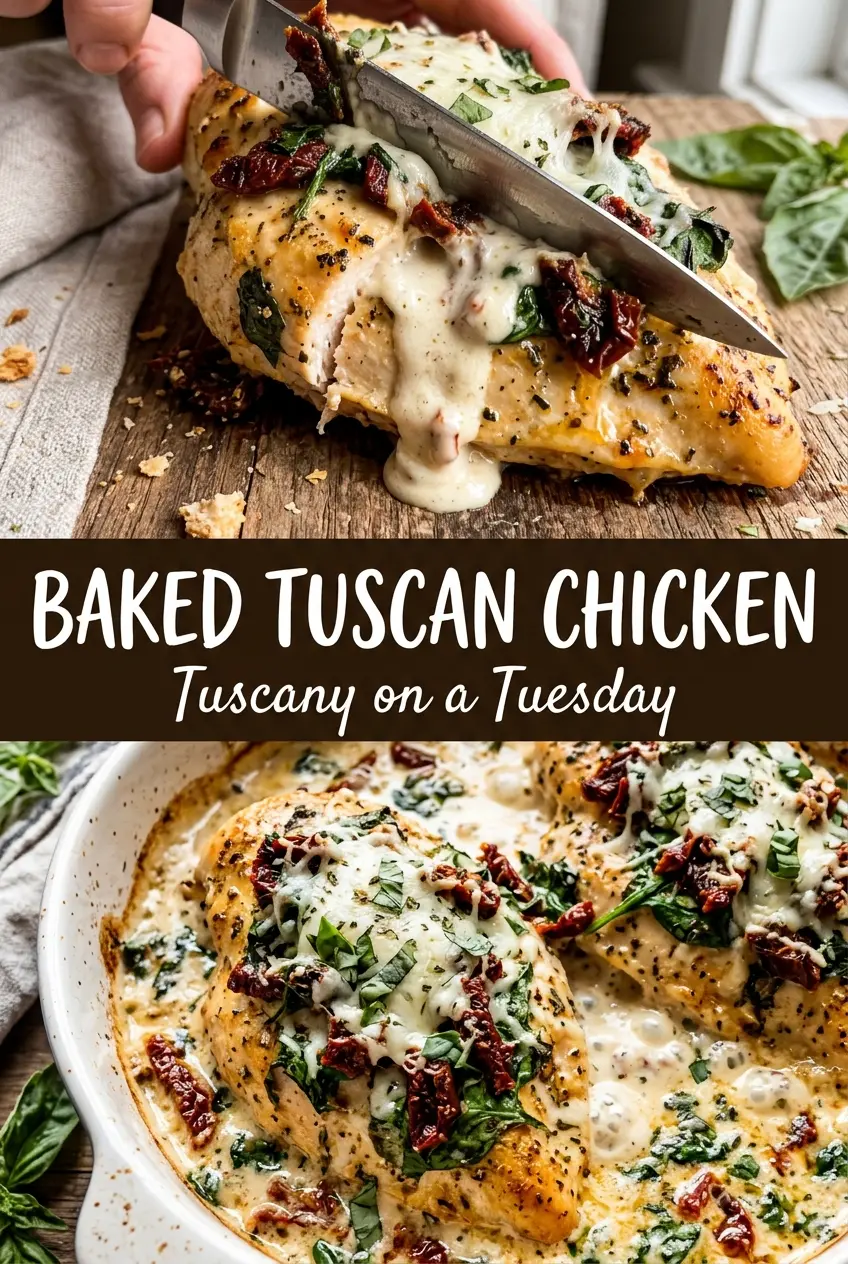
Baked Tuscan Chicken
Ingredients
Equipment
Method
- Preheat the oven to 400°F, then season the chicken thighs generously with salt, pepper, garlic powder, Italian seasoning, and smoked paprika.
- Place the seasoned chicken close to the stove so it’s ready for searing.
- Heat the olive oil in an oven-safe skillet over medium-high heat and sear the chicken skin-side down for 6-7 minutes until deeply golden.
- Flip and sear for 3 more minutes, then remove the chicken to a plate.
- Cook the minced garlic for 30 seconds, then add the sun-dried tomatoes and cook for 1 minute.
- Deglaze with the chicken broth, scraping up the browned bits from the skillet.
- Stir in the heavy cream, Parmesan, Italian seasoning, and red pepper flakes, then simmer briefly until the sauce looks glossy and slightly thickened.
- Stir in the baby spinach until wilted, leaving it visible in the sauce.
- Nestle the chicken skin-side up into the sauce.
- Bake uncovered for 18-20 minutes, until the internal temperature reaches 165°F and the sauce is bubbling around the chicken.
- Garnish with fresh basil and serve hot.