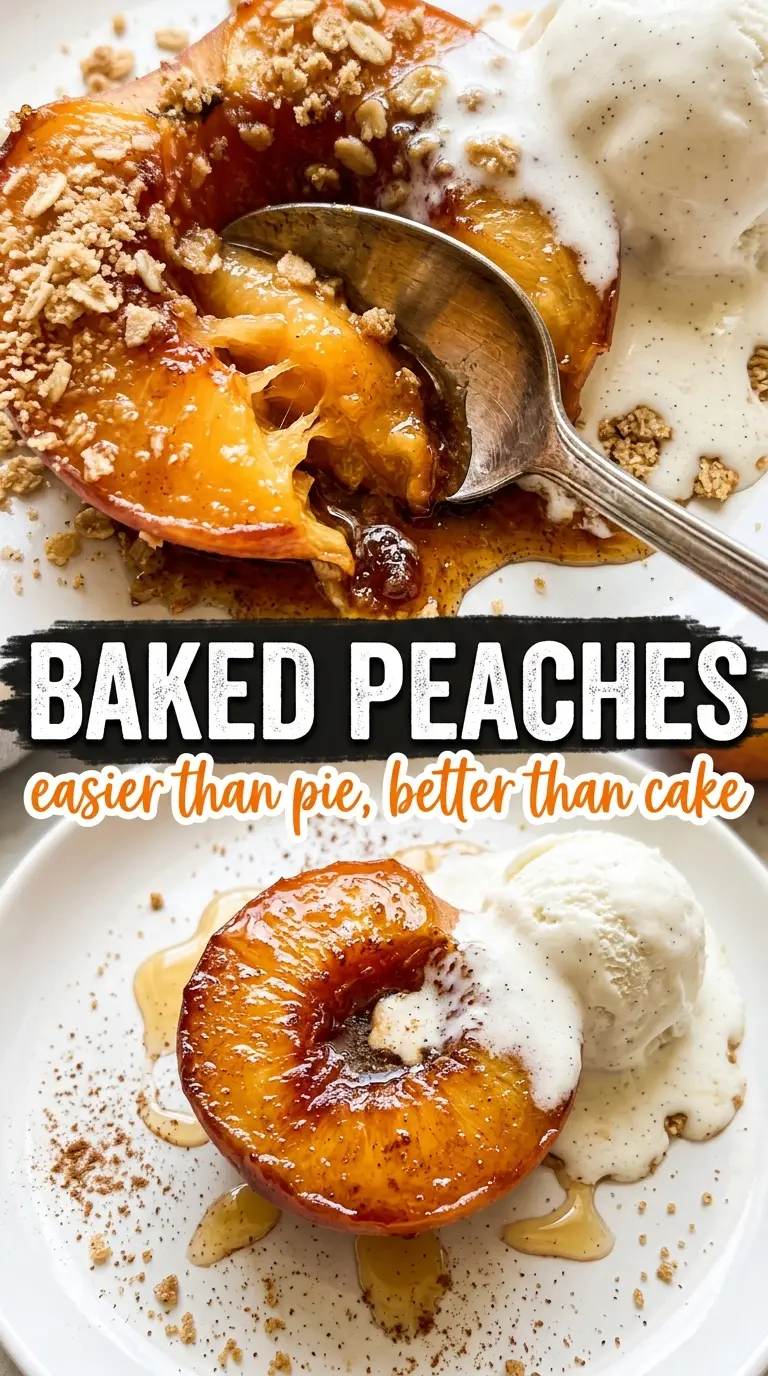
Caramelized baked peaches are one of those desserts that look like you spent far more time on them than you did. The peaches soften just enough to turn jammy at the edges while the centers hold their shape, and the brown sugar melts into a glossy syrup that tastes like warm peach pie filling without the crust. When they come out of the oven, the whole dish smells like cinnamon, butter, and ripe fruit getting along perfectly.
This version works because the peaches bake cut-side up, which keeps all that sugary butter in the cavity instead of letting it run off and burn around the pan. A small spoonful of butter in the center helps the sugar turn into a rich glaze instead of a dry crust, and the vanilla plus nutmeg round out the fruit without taking it over. The key is ripe peaches that still have enough structure to bake cleanly; underripe peaches stay firm and bland, while overripe ones can collapse before the glaze finishes.
Below you’ll find the timing that gives you tender peaches with deeply caramelized tops, plus a few smart swaps if you want to serve them with yogurt, ice cream, or a dairy-free finish.
The sugar melted into the peach centers and made this glossy syrup that pooled in the dish. I served it with vanilla ice cream and it was the first dessert my kids finished without leaving the fruit behind.
Like these cinnamon brown sugar baked peaches? Save them to Pinterest for the nights when you want a fast dessert that turns ripe fruit into something warm and caramelized.
The Part That Keeps the Peaches Tender Instead of Watery
The main mistake with baked peaches is cranking the heat high and expecting faster caramelization. That usually gives you split fruit and a syrup that tastes cooked but not concentrated. At 375°F, the peaches have time to soften evenly while the sugar melts into the butter and thickens in the center, where it can actually cling to the fruit instead of running away.
Cut-side up matters here for another reason: it protects the juicy flesh from drying out while the cavity acts like a little sauce bowl. If your peaches are especially juicy, they may release liquid into the pan as they bake. That’s fine. The goal isn’t a dry dessert; it’s a soft peach with a glossy, spoonable glaze.
- Ripe peaches — Use fruit that gives slightly when pressed but isn’t mushy. Too firm and they stay underbaked in the center; too soft and they slump before the glaze develops.
- Brown sugar — This brings molasses depth and melts into a darker, more caramel-like syrup than white sugar would. Light or dark both work; dark brown sugar gives you a deeper, almost toffee note.
- Butter — The butter is what turns the sugar into a glossy sauce. A substitute like coconut oil will still soften and coat the fruit, but it won’t taste as round or rich.
- Cinnamon and nutmeg — Cinnamon does most of the work, but the nutmeg keeps the dessert from tasting flat. Don’t overdo the nutmeg; it should sit in the background.
What Each Ingredient Is Actually Doing in This Recipe
- Primary ingredient (the star) — Quality matters most. Choose the best you can find.
- Cooking medium (oil, butter, or broth) — This carries flavors and prevents dryness.
- Seasonings (salt, pepper, spices, herbs) — Layer flavors so nothing overpowers. Build depth gradually.
- Aromatics (garlic, onion, herbs) — Cook with fat to bloom flavors. Become the foundation.
- Supporting ingredients — Complement the main ingredient without overpowering it.
- Sauce or liquid (if applicable) — Brings flavors together. Balance richness with acid.
- Acid (lemon, vinegar, wine, or other) — Brightens and prevents flat-tasting results.
- Final finish (garnish, glaze, or sauce) — Prevents one-dimensional taste and adds visual appeal.
Building the Glaze So It Bakes, Not Burns
Setting the peaches in the pan
Place the peach halves cut-side up in a baking dish that holds them snugly. You want them close enough that the sugar and butter stay pooled around the fruit, not spread out in a thin layer across the pan. If the dish is too large, the glaze can dry out before the peaches are tender.
Mixing the topping
Stir the brown sugar, cinnamon, nutmeg, vanilla, and salt together before sprinkling it over the peaches. This keeps the spice distributed evenly instead of ending up in one clump. The vanilla will look like a small amount, but it helps the glaze taste fuller once it bakes.
Baking until the sugar turns glossy
Put a small piece of butter in each center, then bake until the peaches are tender and the sugar has turned dark golden and bubbly. If the tops look wet but not caramelized, give them a few more minutes. If the sugar starts to look dry and grainy, the oven may be running too hot, so pull the dish early and let the residual heat finish the job.
Serving while the pan juices are still warm
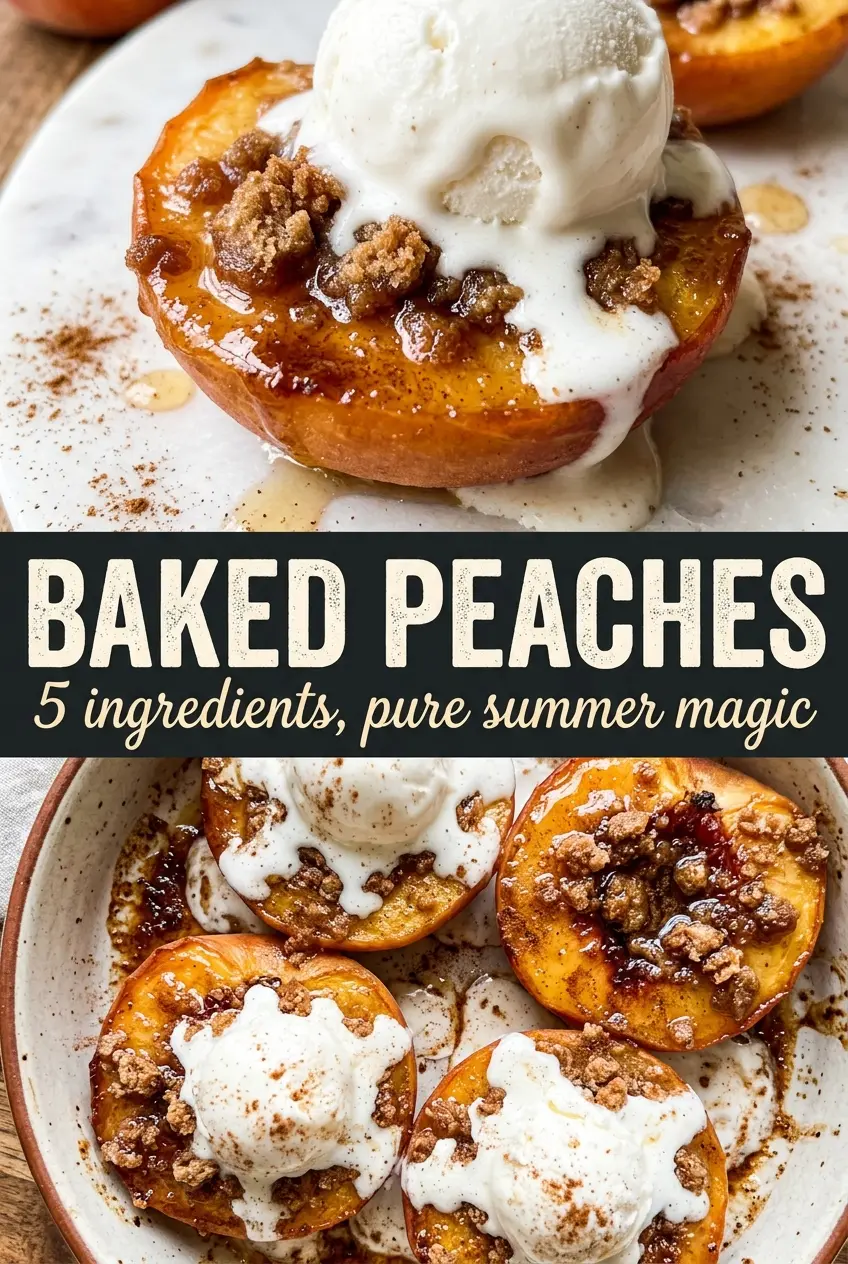
Let the peaches rest for about 5 minutes, then spoon the pan juices over the tops. That short rest lets the syrup thicken just enough to cling. Serve them warm with ice cream, Greek yogurt, or whipped cream, and add mint right at the end so it stays fresh and bright.
How to Adapt These Baked Peaches for Different Tables
Dairy-Free Baked Peaches
Swap the butter for coconut oil or a plant-based butter. Coconut oil gives the glaze a faint tropical note and a slightly lighter finish, while plant-based butter keeps the flavor closer to the original. The peaches still caramelize well, but the sauce will be a little less rich than the dairy version.
Lower-Sugar Baked Peaches
Cut the brown sugar to 2 tablespoons and lean on very ripe peaches for sweetness. The glaze will be thinner and a little less sticky, but the fruit itself will carry more of the dessert. If you go this route, watch the pan closely near the end because less sugar means less obvious browning.
Turning It Into a Brunch Topping
Serve the baked peaches over Greek yogurt, ricotta, oatmeal, or pancakes instead of as a stand-alone dessert. The warm syrup soaks into anything creamy or starchy, which makes the dish feel fuller without extra work. If you’re doing brunch, add a handful of toasted pecans for crunch.
Using Nectarines Instead
Nectarines work with the same timing, but their thinner skins soften faster and the texture lands a little silkier. They’re a good choice if you don’t want to peel anything or if your peaches are underripe. Keep the bake time on the short side and check them early so they don’t collapse.
Storage and Reheating
- Refrigerator: Store leftovers in an airtight container for up to 3 days. The peaches will soften more, and the syrup will thicken as it chills.
- Freezer: They can be frozen, but the texture turns much softer after thawing, so I only do this if I plan to use them over yogurt or oatmeal later. Freeze in a sealed container for up to 2 months.
- Reheating: Warm gently in a 300°F oven or in short microwave bursts until just heated through. High heat can make the peaches collapse and push the syrup into a scorched, sticky mess.
Answers to the Questions Worth Asking
Baked Peaches
Ingredients
Equipment
Method
- Preheat oven to 375°F and place peach halves cut-side up in a baking dish so the centers are accessible.
- Stir together brown sugar, cinnamon, nutmeg, vanilla extract, and salt until evenly combined, then sprinkle mixture evenly over each peach half.
- Place a small piece of butter in the center of each peach half so it melts into the cavity during baking.
- Bake for 18-22 minutes at 375°F until the peaches are tender and the sugar caramelizes to a dark golden glaze with visible bubbling.
- Let cool for 5 minutes, giving the caramelized glaze time to thicken slightly and look glossy.
- Spoon the caramelized pan juices over each peach to coat the softened jammy flesh.
- Serve warm with vanilla ice cream (or Greek yogurt or whipped cream) and scatter fresh mint over the top.