Roasted delicata squash gives Caesar salad the kind of crunch that usually comes from bread, but with a sweeter edge and a little caramelized depth that keeps each bite interesting. The squash softens just enough in the middle while the edges turn bronzed and crisp, so it plays the same role as a crouton without feeling heavy. Paired with sharp parmesan, toasted pepitas, and a garlicky dressing, the whole bowl lands somewhere between bright, savory, and satisfying.
The trick is treating the squash like a true stand-in for croutons: slice it into even rings, roast it hot, and leave enough space on the pan for the edges to color instead of steam. Delicata is the easiest winter squash to use here because the skin gets tender in the oven, so there’s no peeling and no fuss. The dressing is built from mayo, lemon, Worcestershire, garlic, and Dijon, which gives you that Caesar punch without needing raw egg or anchovy paste.
Below, I’ve included the detail that matters most for keeping the squash crisp and the dressing balanced, plus a few ways to adapt the salad when you want to lean dairy-free or turn it into a more substantial main.
The delicata roasted up with those browned edges exactly like little croutons, and the dressing clung to the romaine without turning it soggy. I made it for dinner and ended up eating the last few squash rings straight off the pan.
Save this autumn Caesar salad with delicata squash croutons for the nights when you want crisp romaine, roasted squash, and a creamy homemade dressing in one bowl.
Why the Squash Needs Space to Turn Crisp Instead of Soft
Delicata squash can go one of two ways in the oven: bronzed and chewy at the edges, or soft and a little soggy from crowded steam. The difference comes down to heat and airflow. If the rings are piled on top of each other, they release moisture and essentially steam in place. Spread them out on a hot sheet pan and you get those caramelized edges that make the squash feel like a proper crouton substitute.
Cutting the rings evenly matters too. Half-inch slices cook through at the same pace, so the thinner pieces don’t burn while the thicker ones stay firm in the middle. Flip them halfway through roasting only after the underside has taken on color; if they stick, let them go a minute longer. They’ll release once a crust forms.
- High heat matters. At 425°F, the squash browns before it collapses.
- Oil is for contact, not soaking. A thin coating helps the surface caramelize.
- Salt belongs before roasting. It draws out a little moisture and seasons the squash all the way through.
What Each Part of the Dressing Is Doing in the Bowl
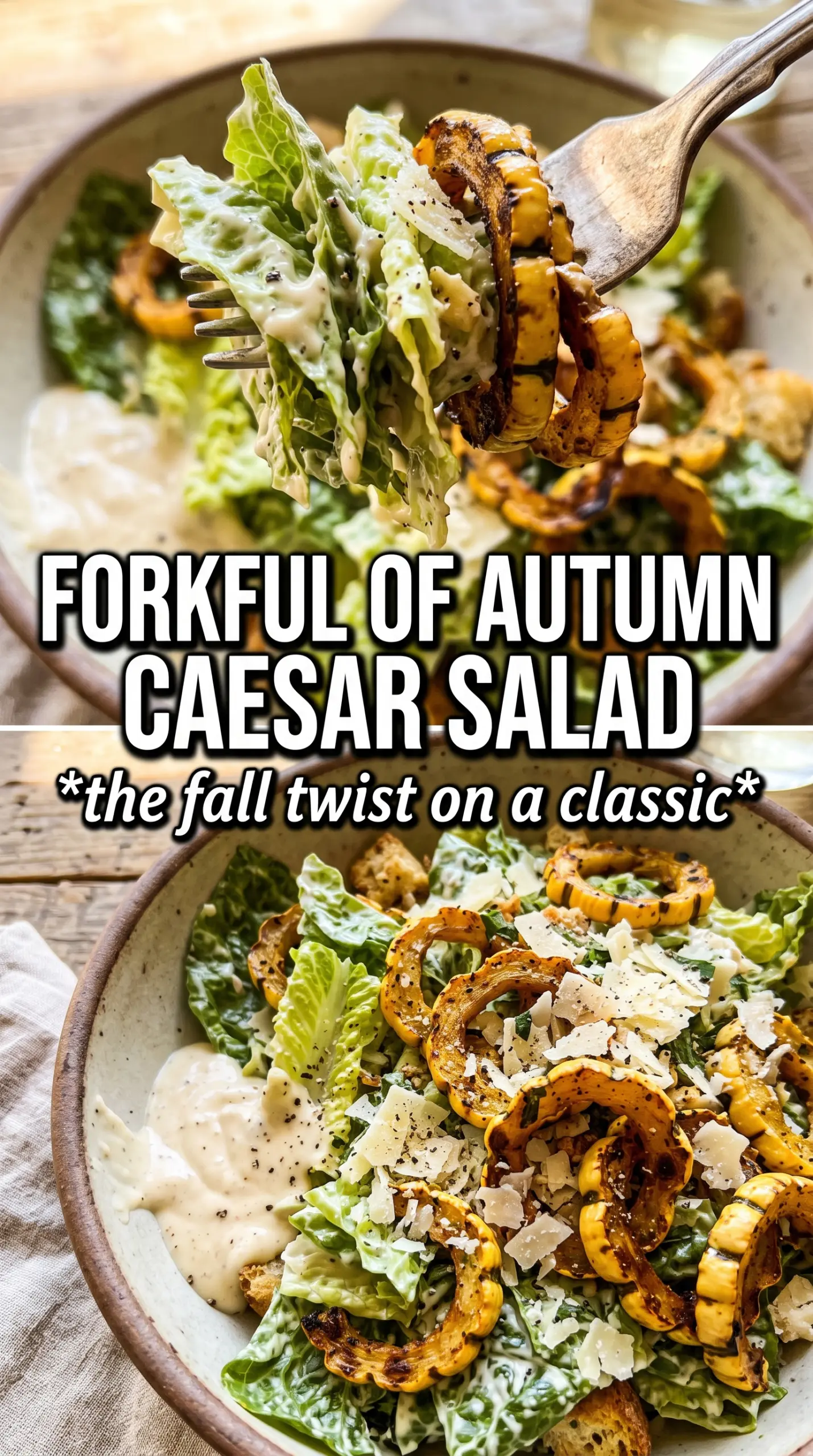
- Mayo gives the dressing its body and keeps it from splitting. It stands in for the egg-and-oil base in a classic Caesar without making you whisk like a maniac.
- Lemon juice sharpens the whole salad and keeps the squash from feeling flat against the romaine.
- Worcestershire is where that deep savory note comes from. If you leave it out, the dressing tastes more like lemon-garlic mayo than Caesar.
- Dijon helps the dressing emulsify and gives it a little bite. Use a smooth, standard Dijon here, not a coarse one.
- Parmesan works in the dressing and on top, and both uses matter. In the dressing it melts into the base; on top it gives you those salty shards that catch in the lettuce.
- Delicata squash is the ingredient that makes this salad feel autumnal without turning it into a side dish that eats like dessert. Any other squash would need peeling and usually won’t give you the same tender skin and neat ring shape.
Roast, Whisk, Toss, and Plate in That Order
Getting the Squash in the Oven First
Start with the delicata rings on a parchment-lined sheet pan and give them space. Toss them with olive oil, salt, and pepper until lightly coated, then roast until the bottoms are golden and the edges are starting to brown. If the squash looks pale and wet after 20 minutes, it needs a few more minutes; if it’s shriveled, the oven ran too hot or the slices were too thin.
Building a Dressing That Stays Smooth
Whisk the mayo, parmesan, lemon juice, Worcestershire, garlic, Dijon, salt, and pepper until the dressing looks glossy and uniform. The garlic should be fine and dispersed, not sitting in sharp little piles. If it tastes too thick, a teaspoon of water loosens it just enough to coat the romaine without clumping.
Tossing the Lettuce Without Bruising It
Add the dressing to the chopped romaine in a large bowl and toss until every leaf is lightly coated. Don’t drown the lettuce; Caesar salad works when the leaves glisten, not when they slump. Add the shaved parmesan after the dressing so it stays in distinct ribbons instead of disappearing into the bowl.
Finishing Like a Real Salad, Not a Side Dish Afterthought
Arrange the dressed romaine on plates and top with the roasted delicata rings. Scatter the toasted pepitas over everything for crunch, then finish with extra parmesan. Serve it right away while the squash still has some texture and the greens are cold and crisp.
How to Tweak This Salad for Different Tables
Dairy-Free Version
Swap the parmesan for a dairy-free hard cheese or leave it out and add a little extra salt plus a pinch of nutritional yeast to the dressing. The salad will still taste bright and savory, but it loses some of the classic Caesar sharpness that parmesan brings.
Make It Vegetarian
Use a vegetarian Worcestershire or replace it with a little extra lemon juice plus a tiny splash of soy sauce. That keeps the dressing savory without using anchovy-based ingredients, though it will taste a touch lighter than a classic Caesar.
Turn It Into a Main Dish
Add sliced chicken, salmon, or crispy chickpeas on top. The squash stays the star, but the extra protein turns the salad into a full dinner without changing the dressing or roasting method.
Storage and Reheating
- Refrigerator: Store the dressing separately for up to 4 days. The dressed lettuce will soften quickly, so keep the components apart until serving.
- Freezer: The dressing can be frozen, but the texture may separate slightly after thawing. The salad itself doesn’t freeze well.
- Reheating: Rewarm the squash rings in a 375°F oven for a few minutes if you want to bring back some crispness. Don’t microwave them; that turns the edges soft and kills the texture that makes this recipe work.
Answers to the Questions Worth Asking
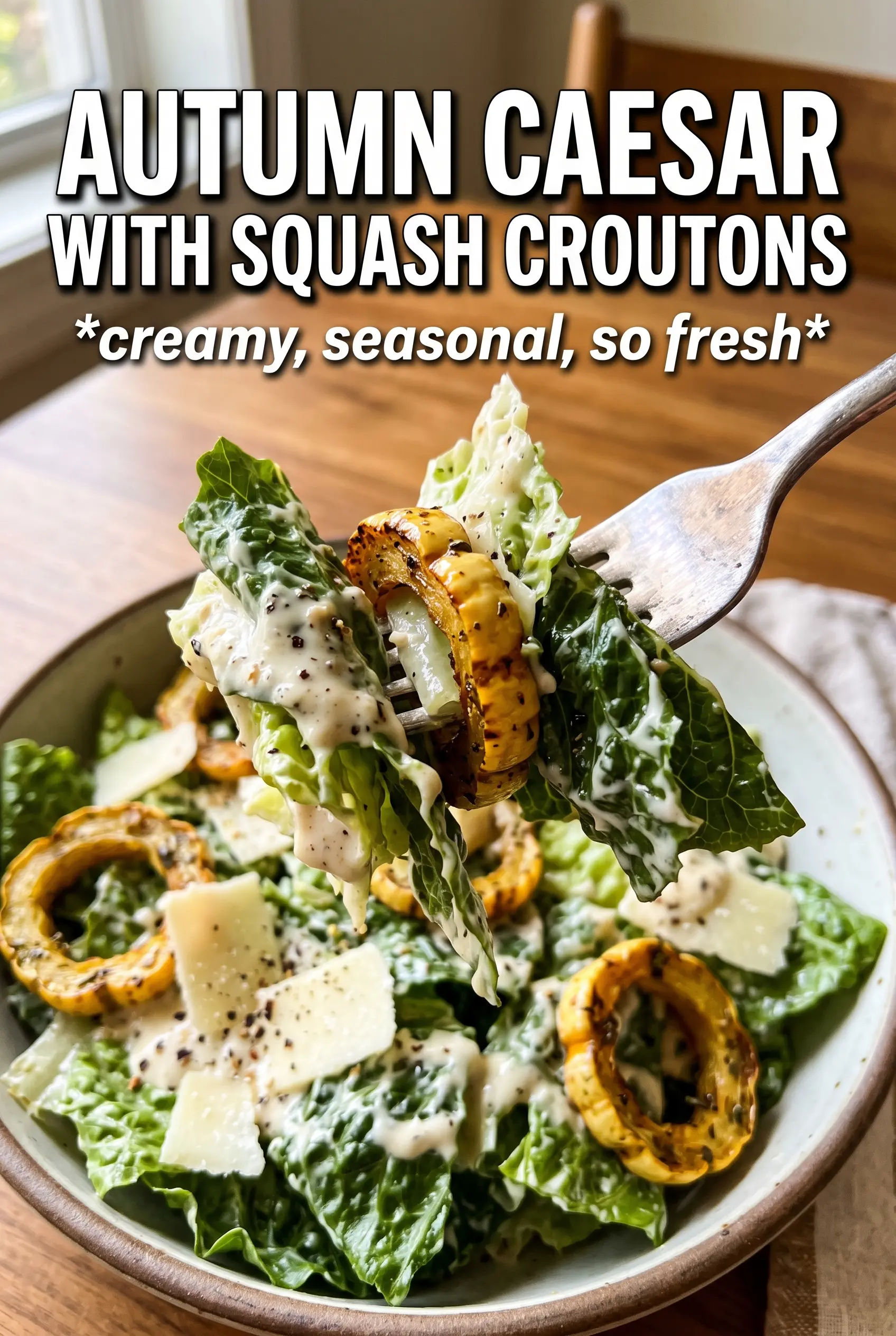
Autumn Caesar Salad With Delicata Squash Croutons
Ingredients
Equipment
Method
- Preheat the oven to 425F. Toss delicata rings with olive oil, salt, and pepper until evenly coated.
- Spread the squash in a single layer on a sheet pan and roast for 20-25 minutes. Flip halfway through so the rings caramelize on both sides.
- Whisk mayo, parmesan, lemon juice, Worcestershire, minced garlic, Dijon, salt, and pepper until smooth. Keep whisking until the dressing looks creamy and fully combined.
- In a large bowl, toss chopped romaine with Caesar dressing and shaved parmesan. Toss until the leaves are evenly coated with a light sheen.
- Arrange the dressed romaine on plates and top with the roasted delicata rings as croutons. Add them while the squash is warm for the best texture.
- Scatter toasted pepitas over the salads and finish with extra parmesan. Serve right away while the pepitas stay crisp.