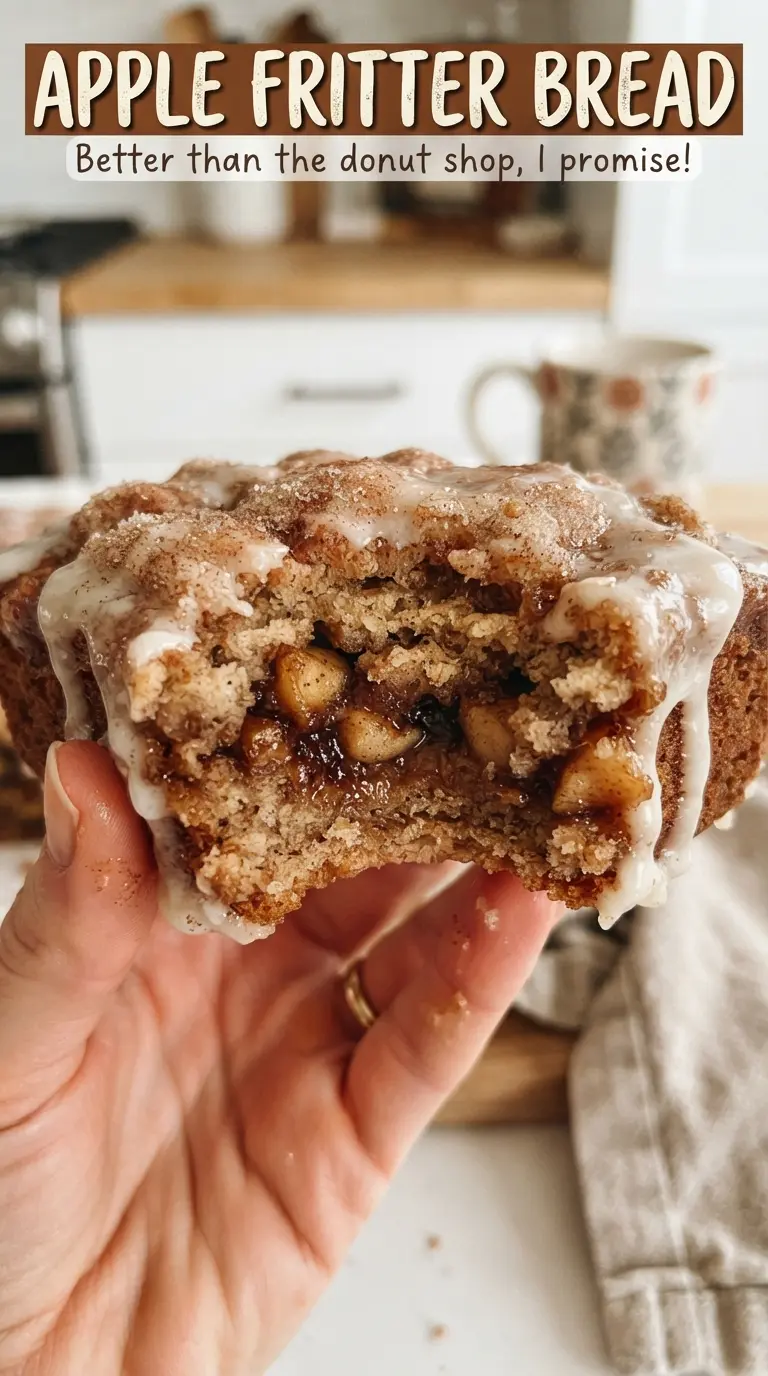
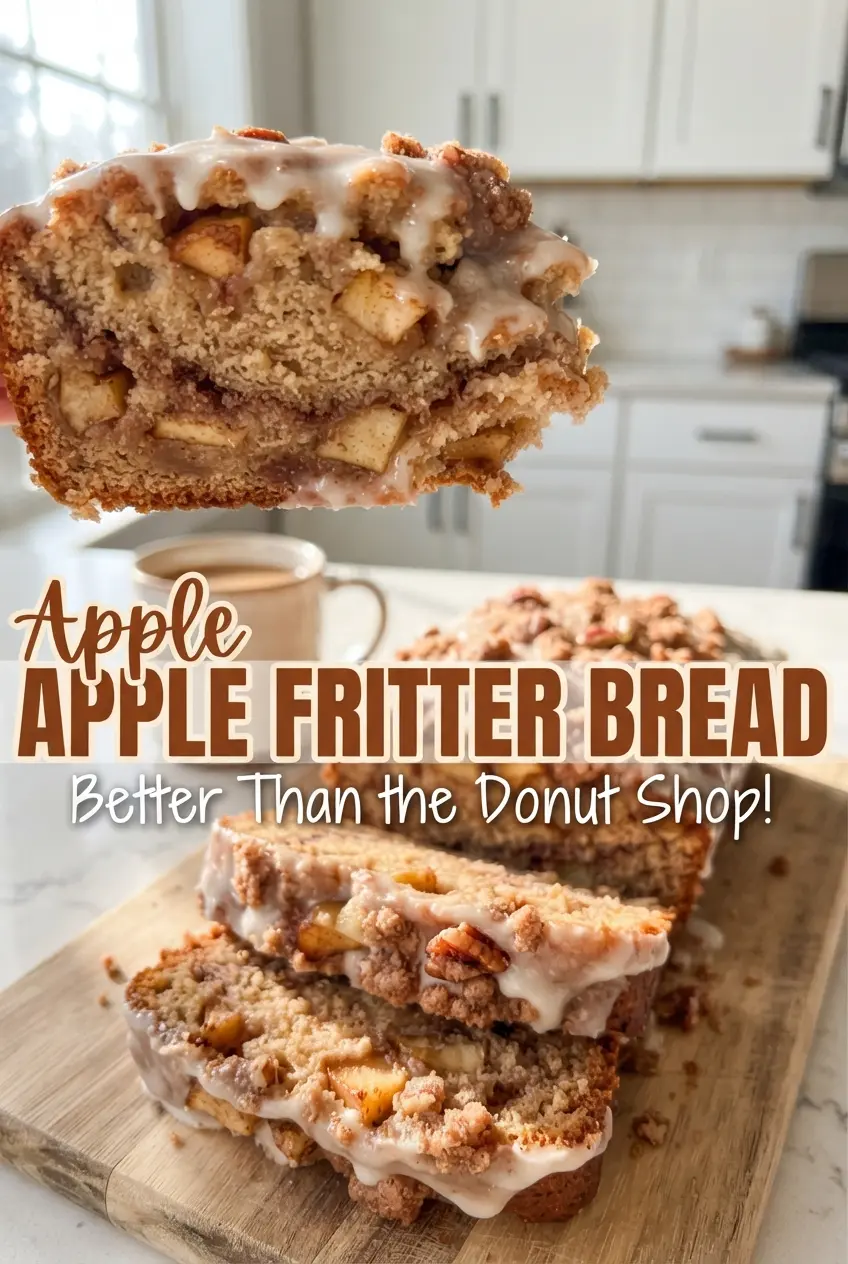
Apple fritter bread bakes up with a tender crumb, pockets of soft cinnamon apples, and a ribbon of brown sugar that melts into the loaf as it bakes. The glaze on top sets into a thin sweet shell, then gives way with each slice. It tastes like a bakery-style apple fritter, but in a loaf pan you can cut and serve without any frying at all.
The trick is keeping the apple layers distinct enough to give you those little bursts of fruit, while still swirling the cinnamon sugar through the batter so every bite tastes finished. Tossing part of the brown sugar mixture with the apples keeps them from sinking and gives the fruit its own spice coating before it ever hits the oven. Using softened butter and room-temperature eggs also helps the batter stay light instead of dense.
Below, I’ve included the details that matter most: how to layer the apples for the best swirl, what to watch for in the last 10 minutes of baking, and a few variations that still keep the loaf moist and bakery-worthy.
The cinnamon sugar melted into the apple layers and the loaf stayed moist for days. I loved that the glaze wasn’t too thick, just enough to give each slice that bakery finish.
Love the swirls of cinnamon sugar and soft apple pockets in this apple fritter bread? Save it to Pinterest for the next time you want a bakery-style loaf with a thick vanilla glaze.
The Part That Keeps Apple Loaf from Turning Heavy
The mistake with apple bread is usually the same one: too much stirring after the flour goes in. That tightens the crumb and turns a loaf that should be tender into something more like quick bread brick. Here, the batter should look just combined before you start layering, because the oven will finish the job.
The other thing that matters is how the apples are treated before baking. Tossing them in a little of the cinnamon sugar pulls out some moisture and coats the pieces so they stay flavorful instead of tasting like plain fruit tucked into batter. Swirling gently, not aggressively, keeps those apple pockets visible instead of muddying the loaf.
- Softened butter — This gives the loaf its fine, cake-like texture. Cold butter won’t cream properly, and melted butter changes the structure enough to make the bread heavier.
- Brown sugar and cinnamon — This is the core of the apple fritter flavor. The brown sugar melts into sticky layers, while the cinnamon keeps the loaf from reading as plain apple cake.
- Apples — Use a firm baking apple if you can. Softer apples can disappear into the batter; a crisp apple keeps little juicy bites in the finished slices.
- Powdered sugar glaze — The glaze is more than decoration. It echoes the fritter finish and balances the loaf’s buttery crumb with a quick sweet topping that sets after a few minutes.
What Each Ingredient Is Actually Doing in This Recipe
- Primary ingredient (the star) — Quality matters most. Choose the best you can find.
- Cooking medium (oil, butter, or broth) — This carries flavors and prevents dryness.
- Seasonings (salt, pepper, spices, herbs) — Layer flavors so nothing overpowers. Build depth gradually.
- Aromatics (garlic, onion, herbs) — Cook with fat to bloom flavors. Become the foundation.
- Supporting ingredients — Complement the main ingredient without overpowering it.
- Sauce or liquid (if applicable) — Brings flavors together. Balance richness with acid.
- Acid (lemon, vinegar, wine, or other) — Brightens and prevents flat-tasting results.
- Final finish (garnish, glaze, or sauce) — Prevents one-dimensional taste and adds visual appeal.
Building the Swirl Without Losing the Layers
Creaming the Butter and Sugar
Beat the softened butter and granulated sugar until the mixture looks pale and a little fluffy. That step traps air and gives the loaf lift, which matters because the apples add weight. Add the eggs one at a time so the batter stays smooth instead of looking curdled, then stir in the vanilla.
Bringing the Batter Together
Whisk the flour, baking powder, and salt separately, then add it to the butter mixture alternately with the milk. That alternating pattern keeps the batter from breaking or turning lumpy. Stop as soon as the flour disappears; overmixing at this stage is the fastest way to lose tenderness.
Layering the Apples and Cinnamon Sugar
Spread half the batter into the pan, then scatter on half the apples and half the remaining cinnamon sugar. Repeat with the second layer so every slice gets both top and middle pockets of filling. Use a knife to make a few gentle swirls; if you drag it through too many times, the layers blend together and you lose the fritter look.
Baking Until the Center Springs Back
Bake until the top is deeply golden and a toothpick inserted in the center comes out clean or with only a few moist crumbs. If the top is browning too quickly before the center is done, lay a loose piece of foil over it for the last 10 to 15 minutes. Let the loaf cool for 15 minutes before glazing so the sugar sets on top instead of disappearing into the bread.
Swap in Pears for a Softer, More Floral Loaf
Pears work well here if you want a gentler fruit flavor, but they bake down faster than apples and won’t hold their shape as long. Use firm pears and cut them a little larger so they don’t disappear into the crumb. The finished loaf will taste a bit softer and more delicate, less tart and a little more perfumed.
Make It Dairy-Free Without Losing the Glaze
Use a plant-based butter that works for baking and swap in an unsweetened non-dairy milk in both the batter and glaze. The texture stays close, though the loaf may brown a little less deeply. Choose a milk with a neutral flavor so the vanilla and cinnamon still lead.
Use a Gluten-Free 1:1 Flour Blend
A good 1:1 gluten-free flour blend can work here with only a small texture change. The loaf may be a touch more delicate and slightly less tall, but the cinnamon sugar layers still bake up well. Don’t substitute almond flour alone; it won’t give you the same structure in a loaf like this.
Storage and Reheating
- Refrigerator: Store covered for up to 4 days. The crumb stays moist, but the glaze will soften as it sits.
- Freezer: Freeze the unglazed loaf tightly wrapped for up to 2 months. Thaw at room temperature, then glaze after it’s fully defrosted for the best finish.
- Reheating: Warm slices in the microwave for 10 to 15 seconds or in a low oven for a few minutes. Too much heat dries out the crumb and makes the glaze sticky instead of set.
Answers to the Questions Worth Asking
Apple Fritter Bread
Ingredients
Equipment
Method
- Preheat oven to 350F, then grease and line a 9x5-inch loaf pan. Keep the pan ready so the batter goes in immediately after mixing.
- Mix brown sugar and ground cinnamon, then toss the apples in 2 tbsp of the mixture. The apples should look evenly coated with specks of cinnamon sugar.
- Beat softened butter and granulated sugar until fluffy. The mixture should lighten in color and look smooth.
- Beat in eggs one at a time, then mix in vanilla extract. Stop when the batter looks glossy and fully combined.
- Whisk all-purpose flour, baking powder, and salt together. Make sure there are no visible lumps of baking powder.
- Add the dry ingredients to the batter alternately with milk, mixing just until no dry streaks remain. The batter should be thick and spoonable.
- Spread half the batter in the loaf pan. Level the top so the first apple layer sits evenly.
- Top with half the apples and half of the remaining cinnamon sugar, then spread the rest of the batter over. Aim for a fairly even second layer.
- Repeat the apple and cinnamon sugar layers, then gently swirl with a knife. You should see marbled ribbons of cinnamon sugar throughout the loaf.
- Bake at 350F for 50-55 minutes, until a toothpick comes out clean. Look for a golden top and set edges.
- Cool the loaf for 15 minutes before glazing. The loaf should hold its shape when touched lightly.
- Whisk powdered sugar with 2-3 tbsp milk until smooth, then drizzle over the loaf. Finish when the glaze forms a thick ribbon that slowly drips down the sides.