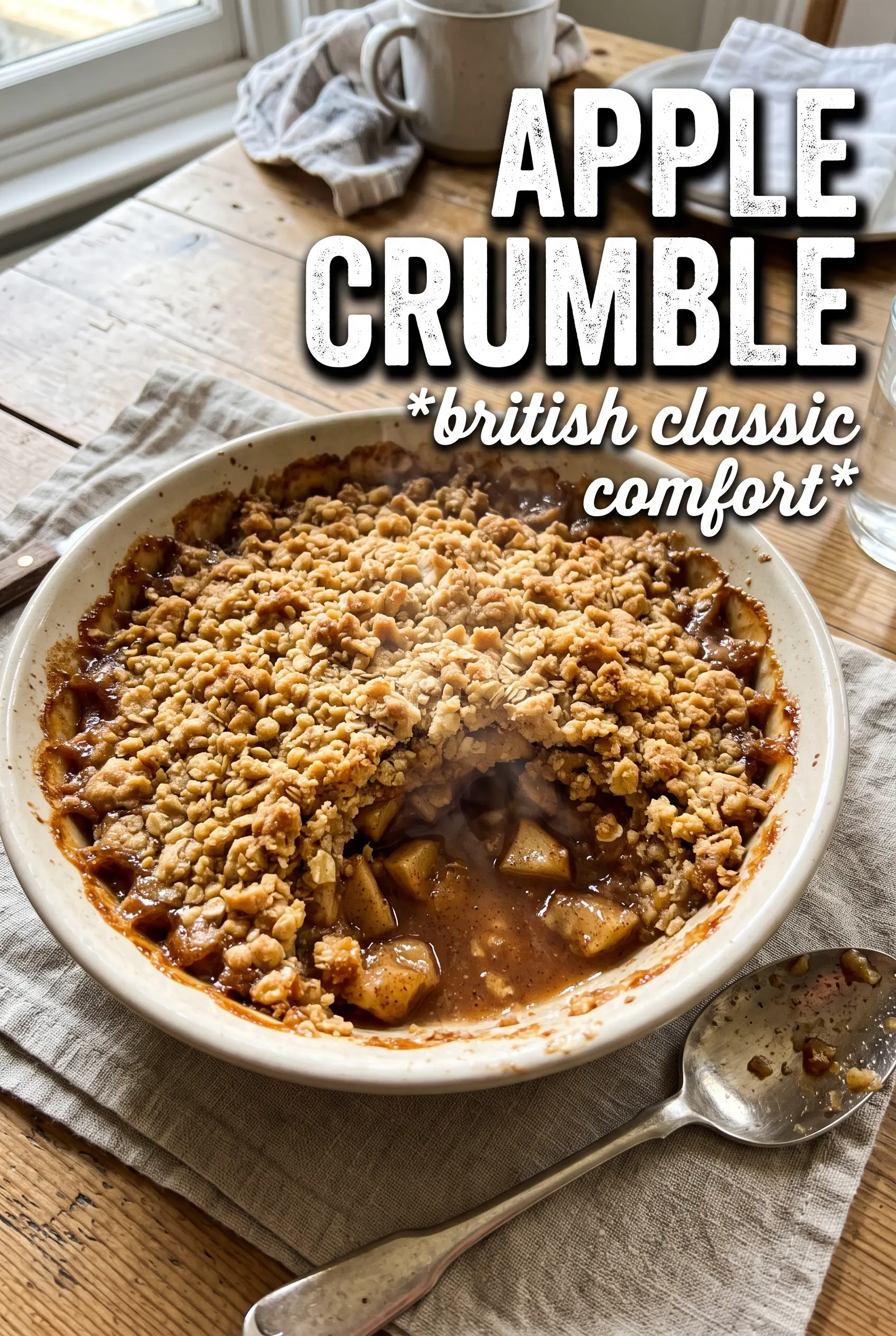
Buttery, golden apple crumble is the kind of dessert that disappears fast because it hits every note at once: tender spiced apples underneath a sandy topping with crisp edges and just enough chew from the brown sugar. The best versions don’t turn soggy at the bottom or dry out on top. They bake into distinct layers, and when you scoop through them with a spoon, the filling should be soft and glossy while the crumble stays rough and crumbly.
This version works because the apples are coated lightly, not drowned, and the topping starts with cold butter rubbed into the flour until you’ve got a mix of fine crumbs and a few larger bits. That mix is what gives you contrast in the finished dish. The lemon juice keeps the apples tasting bright, and the two sugars in the topping give both crunch and a deeper caramel note.
Below, I’ve included the small details that matter most: how to keep the topping from packing down, what kind of apples bake best, and the one visual cue that tells you it’s ready before the topping gets too dark.
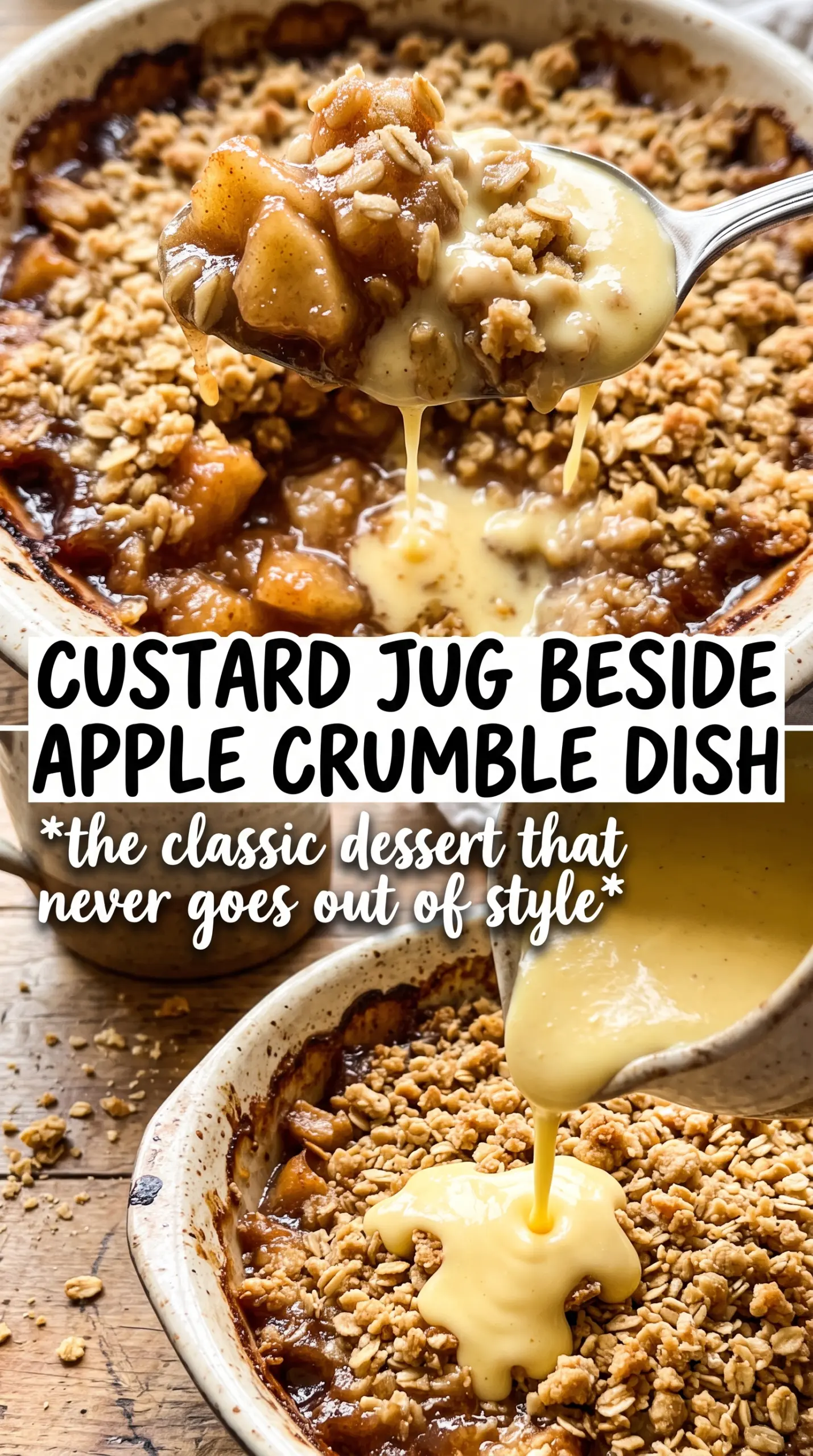
The topping baked up sandy and crisp instead of dense, and the apple filling turned soft without going mushy. I served it with warm custard and there wasn’t a spoonful left.
Save this apple crumble for the nights when you want soft baked apples, a crisp buttery topping, and a bowl of custard on the side.
The Trick to Keeping the Topping Crisp Instead of Dull and Dense
Apple crumble can go wrong in two places: the topping gets packed down and turns bready, or the apples release too much liquid and soak the bottom into a soft layer. The fix is simple, but it matters. Keep the butter cold, work it in just until the mixture looks like breadcrumbs with a few bigger pieces, and then scatter it over the fruit without pressing it flat. That loose, uneven topping bakes into crisp edges and lighter, sandy clusters.
The filling also needs a light hand. Sugar draws out juice from the apples, so the amount here is enough to sweeten and help the fruit soften without flooding the dish. If you’ve ever pulled a crumble from the oven and found a watery base, the apples were probably too sweet, too wet, or sliced too thick. Cooking apples with some structure are the right choice because they collapse into a tender filling instead of turning to purée.
What Each Ingredient Is Actually Doing in This Apple Crumble
- Cooking apples — These hold their shape better than softer eating apples and give you that tender, spoonable filling instead of applesauce. If you need to substitute, use a firm baking apple rather than anything soft or overly sweet.
- Lemon juice — This keeps the apples tasting bright and stops the filling from tasting flat. It also helps balance the sugar, especially if your apples lean sweet.
- Cold unsalted butter — Cold butter is non-negotiable here because it creates pockets in the topping as it bakes. If the butter warms too much before it hits the oven, the crumble turns greasy and dense.
- Light brown sugar — This adds a deeper caramel note and a little chew to the topping. All white sugar will still work, but the finished crumble will taste a bit flatter.
- Plain flour — This forms the structure of the topping. Self-raising flour isn’t needed and can make the topping puff in a way that feels less classic.
Building the Layers So the Fruit Bakes Soft and the Top Stays Golden
Coating the Apples Evenly
Toss the sliced apples with sugar, cinnamon, and lemon juice until every piece looks lightly glossed. Spread them in the baking dish in an even layer so they bake at the same pace. If you pile the fruit too high in the center, the middle takes longer to soften and the topping can overbake before the filling is ready.
Rubbing in the Butter Without Overworking It
Use your fingertips to rub the cold butter into the flour until the mix looks like coarse breadcrumbs with a few larger pieces. Those larger pieces matter because they bake into little crunchy clusters. Stop as soon as the butter disappears into the flour; if you keep going and the mixture starts to look paste-like, the topping will bake up heavy instead of crisp.
Baking Until the Edges Bubble
Spread the crumble over the apples without pressing it down, then bake until the top is pale golden and the fruit is bubbling at the edges. That bubbling is the real sign the apples are cooked through. If the top is browning too quickly before the filling bubbles, loosely lay a sheet of foil over the dish for the last stretch of baking.
How to Adapt This Apple Crumble for Different Pans, Diets, and Apples on Hand
Make it dairy-free
Swap the butter for a firm dairy-free block butter, not a soft tub spread. You still want it cold and cubed so it rubs into the flour the same way. Coconut oil can work in a pinch, but the topping will taste different and can bake a little more fragile.
Use a mix of apples for more depth
If you’ve got a mix of tart and sweet apples, use them together. The tart ones keep the filling bright, while the sweeter ones break down into a softer base. Just avoid very soft apples, which can collapse too fast and make the filling watery.
Make it gluten-free
A good gluten-free plain flour blend works in place of the all-purpose flour. Choose one that already includes a binder like xanthan gum, and rub in the butter the same way. The texture will be slightly more delicate, but the crumble still bakes up nicely.
Use a smaller dish for a thicker topping
A deeper, narrower dish gives you a thicker layer of apples and a more dramatic crumble cap. Just add a few extra minutes in the oven and watch for bubbling at the edges. If the topping is already golden before the filling is ready, cover it loosely with foil.
Storage and Reheating
- Refrigerator: Keep covered for up to 4 days. The topping softens a little in the fridge, but the flavor holds well.
- Freezer: It freezes well baked. Cool completely, wrap tightly, and freeze for up to 3 months. Thaw in the fridge before reheating.
- Reheating: Reheat in a 180C (350F) oven until warmed through and the topping crisps back up. The microwave will heat the filling, but it turns the crumble soft and a little soggy.
Answers to the Questions Worth Asking
Apple Crumble
Ingredients
Equipment
Method
- Preheat oven to 190C (375F) and grease a large baking dish. This ensures the crumble bakes evenly from the start.
- Toss apple slices with granulated sugar, cinnamon, and lemon juice, then spread them in the prepared dish. Arrange the apples in an even layer so they cook consistently.
- Place flour and cold cubed butter together, then rub with your fingertips until the mixture resembles coarse breadcrumbs with some larger pieces. Keep the butter cold so the topping stays sandy.
- Stir in granulated sugar, light brown sugar, cinnamon, and salt until evenly mixed. The mixture should look dry and crumbly.
- Spread the crumble evenly over the apples without packing it down. Leave it airy for a crisp, sandy top.
- Bake for 35-40 minutes at 190C (375F) until the topping is pale golden and the apple filling bubbles at the edges. Look for bubbling around the perimeter as the doneness cue.
- Serve warm with custard, double cream, or vanilla ice cream. Spoon over one portion while the crumble is hot.