Apple Crisp Coffee Cake bakes up with a tender, sour cream-rich crumb under a thick oat crumble that turns crisp at the edges and stays nubbly in the middle. The apple pieces soften just enough to perfume each slice without sinking into the batter, so every bite gives you cake, fruit, and that brown-sugar topping all at once.
The part that makes this version work is the contrast between the moist cake and the cold-butter crumble. The topping gets mixed first and chilled so the butter stays in little pieces, which means it bakes into clusters instead of melting into sand. Sour cream keeps the crumb plush even after a full pan bake, and the diced apples add little pockets of juiciness without making the cake heavy.
Below, I’ve included the one trick that keeps the topping crisp and the cake from turning dense, plus a few smart swaps if you want to adjust the fruit or make it dairy-free.
The crumble stayed crunchy on top even after sitting out, and the cake underneath was still moist the next day. I used Honeycrisp apples and the cinnamon in the topping made the whole pan taste like a bakery coffee cake.
Save this Apple Crisp Coffee Cake for mornings when you want a buttery crumble topping and soft cinnamon apples in every slice.
The Crumble Needs Cold Butter, Not Hope
With coffee cake, the topping can’t just be mixed until it looks even. That’s how you end up with a dusty layer instead of those crisp, buttery clumps everyone wants to steal off the top. Cold butter keeps the oat mixture in little pockets, and those pockets bake into craggy nuggets with browned edges and a sandy center.
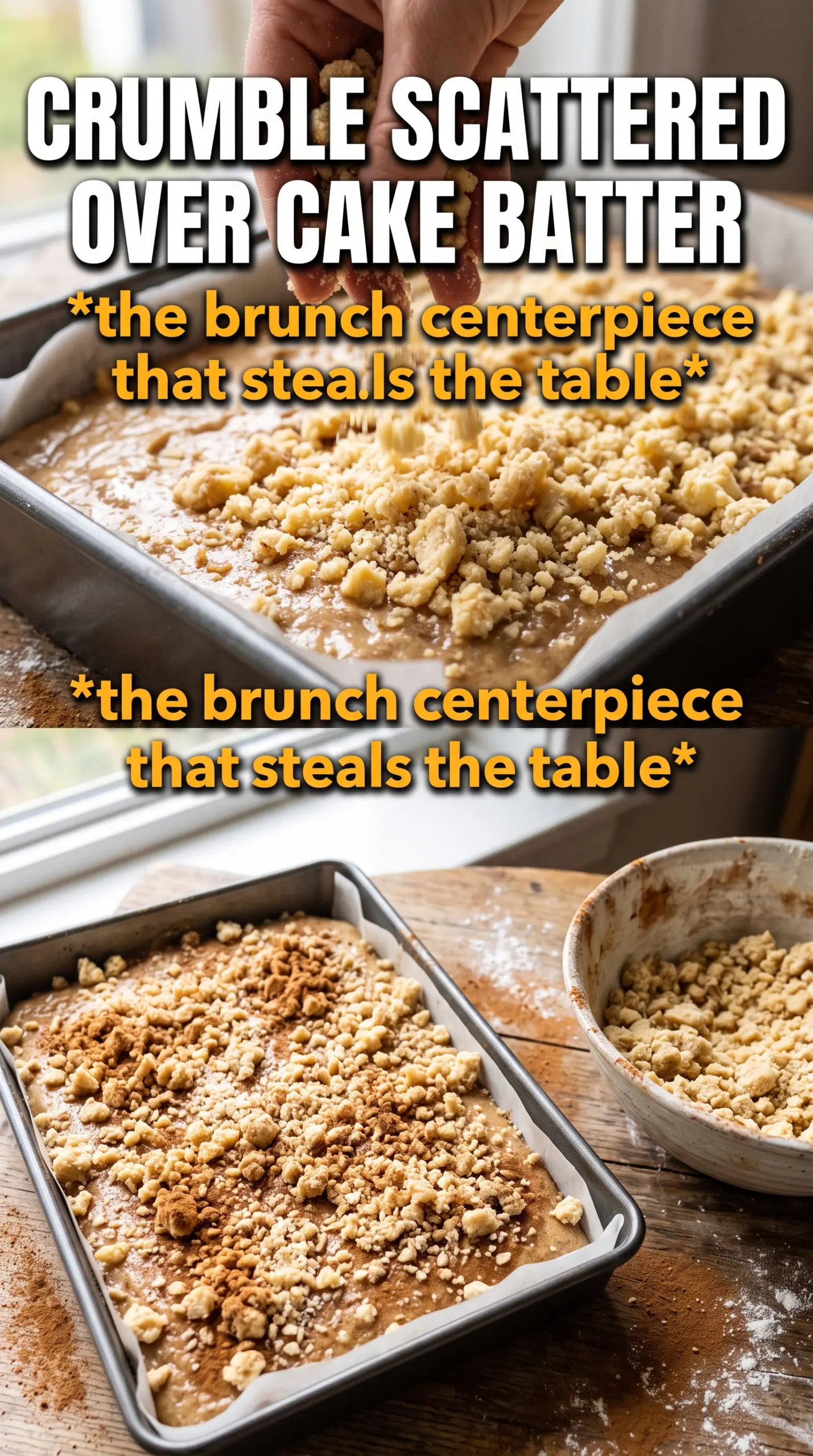
The other mistake is packing the topping down. Scatter it loosely over the batter so the heat can move through it and crisp it up. If you press it in, the butter melts too quickly and the whole layer turns dense before the edges have a chance to caramelize.
What Each Ingredient Is Actually Doing in This Cake
- All-purpose flour — This gives the cake its structure and keeps the crumb sturdy enough to hold the apple layer and topping. For the crumble, it helps bind the oats and sugar into clusters. A 1:1 gluten-free baking blend can work in both places, but the topping may be a little more delicate.
- Sour cream — This is what keeps the cake tender and moist without making it wet or heavy. Plain full-fat yogurt can stand in, but sour cream has a thicker body and a cleaner tang that gives the cake better lift and a softer crumb.
- Apples — Dice them small so they soften during the bake instead of staying crunchy and interrupting the slice. A firm, tart apple like Honeycrisp, Granny Smith, or Braeburn works best because it holds its shape and balances the sweet topping.
- Rolled oats — These create the crisp, hearty texture on top. Quick oats will work in a pinch, but they make the crumble finer and less textured. Old-fashioned oats give you the best crunch.
- Brown sugar — This deepens the topping with molasses notes and helps it bake into those caramelized edges. Light brown sugar is fine; dark brown sugar makes the crumble taste a little richer and more molasses-forward.
- Cold butter — Use it straight from the fridge and cut it in until the mixture looks clumpy. If the butter gets soft before baking, the topping loses its definition and melts into the cake instead of sitting on top of it.
Building the Batter Without Overmixing the Crumb
Mix the crumble first and chill it
Start with the topping so it has time to rest in the fridge while you make the cake. Cut the cold butter into the dry ingredients until you see uneven clumps, not a smooth paste. If the mixture looks too sandy, keep going just until a few larger pieces form. Chilling firms up the butter and helps the topping bake into defined clusters instead of disappearing into the batter.
Whisk the dry ingredients before the wet ones
The flour, leaveners, cinnamon, and salt need to be evenly distributed before they hit the wet mixture, or you’ll get pockets of baking soda and uneven spice. Whisking also breaks up any flour lumps, which matters here because the batter is thick. A quick even mix is enough; you’re not trying to aerate anything at this stage.
Fold in the apples last and stop as soon as they’re distributed
Once the sour cream batter is smooth, add the dry ingredients and stir just until the flour disappears. Then fold in the diced apples with a few turns of the spatula. If you overmix here, the cake gets tight instead of tender, and the apples can start leaking juice into the batter before it hits the oven. Spread it into the pan, scatter the chilled crumble over the top, and bake until the center springs back and a toothpick comes out clean from the cake, not from a pocket of apple.
Make it with pears instead of apples
Firm pears work if that’s what you have, especially Bosc or Anjou. Cut them the same size as the apples and use fruit that still feels firm when you press it, or the cake can turn watery. The flavor is a little softer and more floral, but the crumble still gives you that crisp coffee cake feel.
Dairy-free version
Use a plant-based butter for both the batter and topping, and swap the sour cream for an unsweetened dairy-free yogurt with some thickness. The crumb will still be tender, though the topping may brown a little faster, so watch the last 10 minutes closely.
Gluten-free swap
A good cup-for-cup gluten-free flour blend can replace the all-purpose flour in the cake and topping. Keep the oats certified gluten-free if that matters for your kitchen. The texture will be a touch more delicate, but the crumble still bakes up nicely.
Storage and Reheating
- Refrigerator: Store covered for up to 4 days. The topping softens a little, but the cake stays moist.
- Freezer: Freeze individual slices tightly wrapped for up to 2 months. Thaw overnight in the fridge for the best texture.
- Reheating: Warm slices in a 300F oven for 8 to 10 minutes. The oven brings the crumble back to life better than the microwave, which tends to soften it too much.
Questions I Get Asked About This Recipe
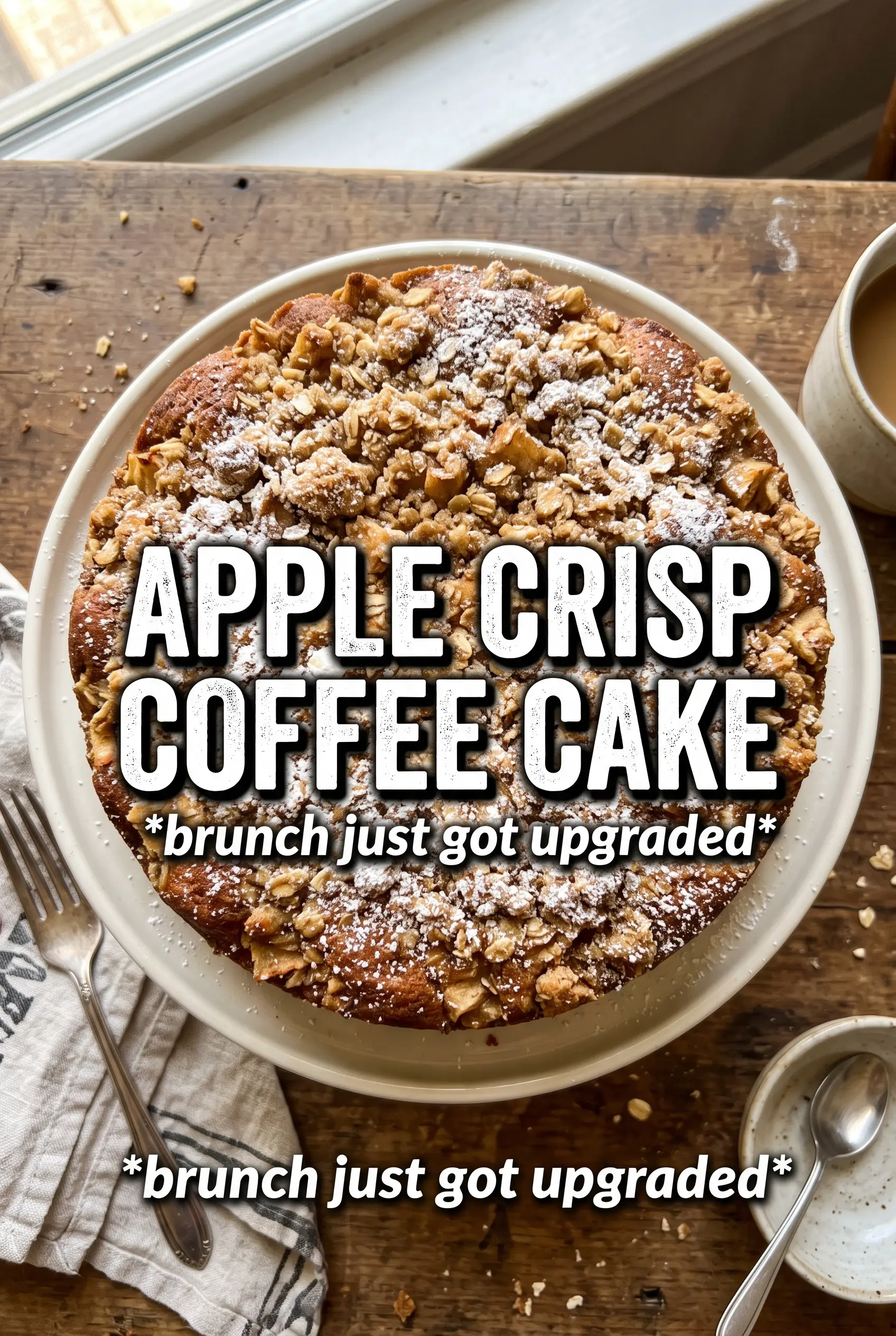
Apple Crisp Coffee Cake
Ingredients
Equipment
Method
- Preheat oven to 350F and grease a 9x13 baking dish so the cake releases cleanly.
- Combine rolled oats, flour, brown sugar, cinnamon, and salt in a bowl, then cut in cold butter until clumpy with visible oat-butter clusters.
- Refrigerate the topping while you mix the cake so it stays cold and forms a crisp crumble.
- Whisk all-purpose flour, baking powder, baking soda, cinnamon, and salt until evenly combined.
- Beat softened butter and granulated sugar until fluffy, then beat in eggs and vanilla until smooth.
- Mix in sour cream until the batter looks creamy and cohesive.
- Fold the dry mixture into the wet just until no dry streaks remain.
- Fold in diced apples so they’re evenly distributed through the batter.
- Spread batter in the prepared pan in an even layer.
- Scatter the oat crumble generously over the top, covering the surface so edges toast and crisp.
- Bake 50-55 minutes at 350F until a toothpick comes out clean and the crumble is golden, with a visibly set center.
- Let cool briefly, then dust with powdered sugar if desired before slicing.