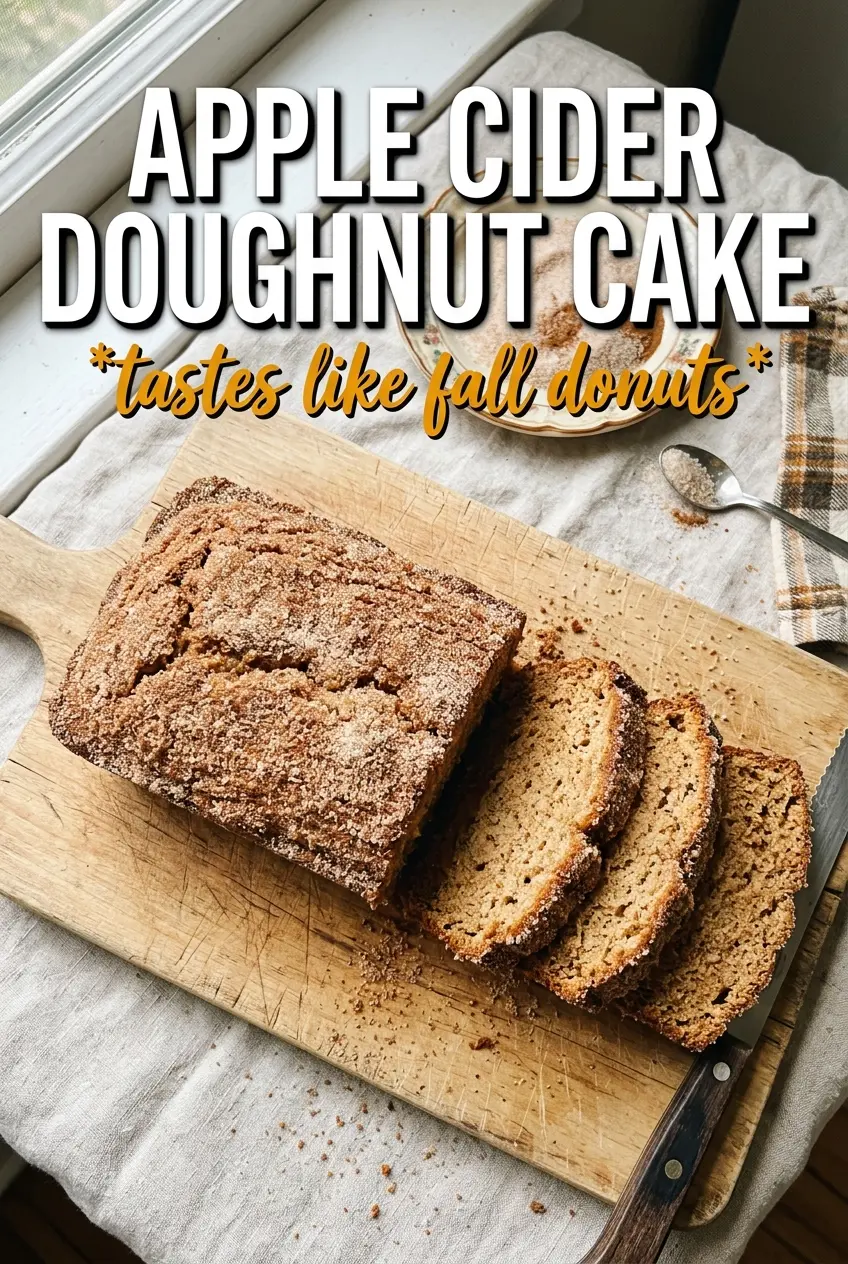
Apple cider doughnut loaf cake brings all the best parts of a warm cider doughnut into one easy pan: a tender, spiced crumb, a deep golden crust, and that buttery cinnamon-sugar finish that crackles when you slice into it. The loaf bakes up like a cross between coffee cake and a bakery-style doughnut, which means you get the flavor people love without frying a thing.
The key is reducing the cider before it goes into the batter. That step concentrates the apple flavor and keeps the loaf from tasting thin or watery. Sour cream adds the soft, plush texture that makes each slice stay moist for days, while oil keeps the crumb tender instead of dry and cakey. After baking, brushing the warm loaf with butter and rolling it in cinnamon sugar gives you that true doughnut-like exterior.
Below, I’ll walk through the part that matters most: how to keep the crumb soft while still getting a browned edge that tastes like it came from a bakery. I’ve also included a few smart swaps and the storage notes you’ll want if you’re planning to make it ahead.
The cider reduction made the flavor pop, and the loaf stayed soft for days. My kitchen smelled like a doughnut shop, and the cinnamon-sugar coating was perfect after brushing it with butter.
Love the buttery cinnamon-sugar crust and tender apple cider crumb? Save this loaf cake for the next time you want bakery-style doughnut flavor without frying.
The Step That Gives This Loaf Its Real Apple Cider Doughnut Flavor
Reducing the cider is what separates this loaf from every bland spiced quick bread pretending to be a doughnut. Raw cider brings water and a light apple note; reduced cider brings concentration. That small amount has enough punch to cut through the sugar, butter, and warm spices, so the flavor reads as apple cider doughnut instead of just cinnamon loaf.
The other big difference is the combination of oil and sour cream. Oil keeps the crumb soft and gives the loaf that tender, slightly cakey bite you expect from a doughnut, while sour cream adds body and moisture without making the batter heavy. If you skip either one, the loaf gets flatter in flavor and drier by the next day.
The cinnamon, nutmeg, allspice, and cardamom all matter here, but cardamom is the one that makes people stop and ask what’s different. It doesn’t make the loaf taste perfumey when used in a small amount; it just sharpens the warm spice finish so the cake tastes more like a real bakery doughnut.
What Each Ingredient Is Actually Doing In This Loaf

- Apple cider, reduced — This is the flavor anchor. Reducing it from 1/2 cup to 1/4 cup concentrates the apple taste without adding extra liquid, which keeps the loaf from baking up gummy.
- Sour cream — This is the moisture insurance. It brings richness and helps the crumb stay soft even after the loaf cools, and plain full-fat yogurt works in the same amount if that’s what you have.
- Vegetable oil — Oil gives you a tender, fine crumb and keeps the loaf soft after chilling. Butter can be used, but the texture will be a little less plush and the loaf won’t stay as moist for as long.
- Brown sugar plus granulated sugar — The white sugar gives clean sweetness, while the brown sugar adds a little molasses depth that fits the cider and spices. Using only white sugar makes the loaf taste less rounded.
- Cardamom — This is the quiet ingredient that makes the loaf taste like a bakery version. You only need a little, and the loaf still reads as apple cider and cinnamon first.
Building The Batter So The Loaf Stays Tender, Not Dense
Reduce the cider first and cool it completely
Put the cider on the stove before you do anything else. You want it down to 1/4 cup, not just warm, because hot cider can thin the batter and start softening the eggs too soon. Let it cool until it’s no longer steaming so the batter stays smooth and even.
Mix the wet ingredients until they look fully blended
Whisk the oil, sugars, eggs, vanilla, reduced cider, and sour cream until the mixture looks glossy and unified. There shouldn’t be streaks of egg or little pockets of sour cream left behind. If the batter looks broken here, the oil was too cold or the cider was still hot.
Stop mixing as soon as the flour disappears
Fold the dry ingredients into the wet mixture just until you stop seeing flour. Overmixing is the fastest way to make this loaf tough and tunneling. A few streaks are fine when you’re almost done; they’ll disappear in the final folds and the batter will bake up tender instead of chewy.
Bake for structure, then brush while warm
The loaf is done when the top is deeply golden and a toothpick comes out clean or with a few moist crumbs, not wet batter. Pull it from the pan while it’s still warm so the sides don’t steam and soften. Brush every side with melted butter right away; that’s what helps the cinnamon sugar cling in a thick, doughnut-like coating.
How To Adapt This Loaf For Different Kitchens And Different Needs
Dairy-Free Version
Swap the sour cream for full-fat dairy-free yogurt and use melted plant butter for the coating. The loaf still stays tender, but the top coat will taste a little less rich, so don’t skip the cinnamon sugar after brushing.
Gluten-Free Swap
Use a 1:1 gluten-free baking blend that includes xanthan gum. The loaf will still be moist, but it may need an extra few minutes in the oven and should cool fully before slicing so it doesn’t crumble.
Extra-Spiced Bakery Style
If you want a stronger doughnut-shop finish, add an extra 1/4 teaspoon cinnamon and a tiny pinch more cardamom. That pushes the spice forward without making the loaf taste like a spice cake.
Storage and Reheating
- Refrigerator: Store covered for up to 4 days. The cinnamon-sugar coating softens a bit in the fridge, but the loaf itself stays moist.
- Freezer: Freeze the unsugared loaf tightly wrapped for up to 2 months. Add the butter and cinnamon sugar after thawing so the coating stays crisp and doesn’t dissolve.
- Reheating: Warm slices in a 300F oven for about 8 minutes or microwave briefly. If you reheat it too long, the sugar coating melts off and the crumb turns dry at the edges.
Questions I Get Asked About This Recipe
Apple Cider Doughnut Loaf Cake
Ingredients
Equipment
Method
- Reduce apple cider to 1/4 cup over medium heat, then cool.
- Preheat the oven to 350F, then grease a 9x5 loaf pan.
- Whisk together all-purpose flour, baking powder, baking soda, cinnamon, nutmeg, allspice, cardamom, and salt.
- Whisk vegetable oil, granulated sugar, brown sugar, eggs, vanilla extract, reduced cider, and sour cream until smooth.
- Fold the flour mixture into the wet ingredients until just combined.
- Bake for 60-65 minutes at 350F until a toothpick comes out clean.
- Remove the loaf from the pan while warm, then brush all sides with melted butter.
- Roll the loaf in cinnamon sugar or sprinkle it generously until evenly coated.