Apple cider braised pork shoulder turns into the kind of dinner people remember for the sauce as much as the meat. The pork cooks until it pulls apart in soft, thick strands, and the cider, mustard, and herbs reduce into a glossy pan sauce that tastes balanced instead of sweet. It’s the sort of braise that feels low-effort once it goes into the oven, but still lands with deep, cooked-all-day flavor.
The part that makes this version work is the order of operations. A hard sear builds the browned crust that gives the braising liquid its backbone, and the Dijon helps emulsify the sauce a little so it finishes with body instead of tasting thin. I also like using both cider and broth: the cider brings apple flavor, while the broth keeps the sauce from turning syrupy before the pork has had time to soften.
Below, I’m walking through the piece that matters most — how to keep the sauce balanced and the pork tender enough to shred cleanly. There’s also a note on apple choice, because the apples should hold their shape without disappearing into the pot.
The pork was fall-apart tender at 4 hours, and the cider sauce thickened into something spoonable instead of watery. I served it over mashed potatoes and the apples held their shape just enough to taste through every bite.
Love the glossy cider sauce and fall-apart pork? Save this Apple Cider Braised Pork Shoulder for a cozy dinner with mashed potatoes.
The Seared Crust Is What Keeps This Braise From Tasting Flat
Pork shoulder has plenty of flavor on its own, but braising without a proper sear leaves you with a pot that tastes one-note. The deep browning on the outside gives the cider sauce something to grab onto, and those browned bits on the bottom dissolve into the liquid once the broth and cider go in. That’s where the finished dish gets its depth.
The other mistake people make is rushing the oven and judging the pork too early. Pork shoulder needs time for the connective tissue to loosen, and it won’t shred nicely until it’s genuinely tender all the way through. If the meat still resists a fork, it needs more time even if the top looks finished.
- Don’t crowd the pot during searing — if the pork steams, you lose the crust that builds the best flavor in the braising liquid.
- Keep the braise at a steady low oven temperature — a hard simmer in the oven can tighten the meat and make the sauce greasy.
- Wait for fork-tender, not just cooked-through — the pork should pull apart with almost no resistance when it’s ready.
What Each Ingredient Is Actually Doing in the Pot
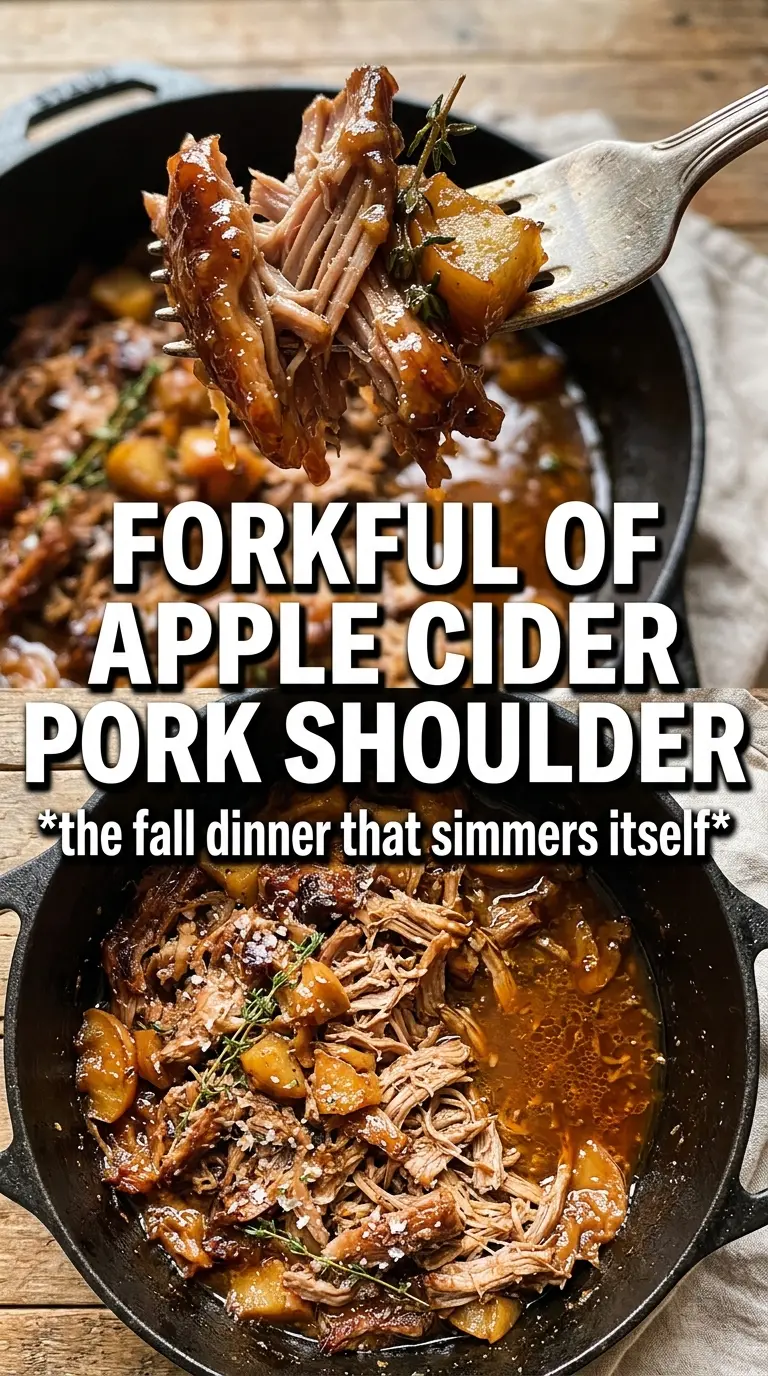
- Boneless pork shoulder — this is the cut that turns silky and shredable after a long braise. Pork loin won’t give you the same result; it cooks too lean and dries out before the sauce develops.
- Apple cider — use fresh cider if you can. It gives a round, apple-forward flavor that feels fuller than juice. Hard cider works too and adds a little brightness and dryness, which keeps the sauce from leaning sweet.
- Dijon mustard — this does more than add tang. It helps the braising liquid taste layered and gives the sauce a little natural body. Plain yellow mustard won’t bring the same depth.
- Apples — choose firm apples that hold their shape, like Honeycrisp, Pink Lady, or Granny Smith. Softer apples will melt away into the sauce before the pork is done.
- Brown sugar and apple cider vinegar — these two keep the sauce balanced. The sugar rounds out the acidity of the cider and vinegar, while the vinegar keeps the whole dish from tasting heavy.
- Thyme and rosemary — these herbs match the pork and cider without overpowering them. Fresh is best here because dried rosemary can turn sharp and woody during a long braise.
Getting the Braise to Shred Tender Without Losing the Sauce
Building the Browned Base
Season the pork generously before it hits the pot, then sear it in hot olive oil until each side is deeply browned. You’re not aiming for a little color — you want a real crust that releases from the pan when it’s ready. If the meat sticks, give it another minute; forcing it too soon tears the crust away. Once the pork comes out, the onion and garlic should go into the same pot so they pick up every bit of flavor left behind.
Whisking the Braising Liquid
Stir the cider, broth, Dijon, brown sugar, and vinegar together before they go into the pot. That keeps the mustard from clumping and helps the sugar dissolve so the sauce starts evenly. Pour it in and scrape the bottom well; those browned bits are part of the finished flavor. The liquid should look loose at this stage because it will reduce and concentrate during the long oven time.
Letting the Oven Do the Work
Once the pork, apples, thyme, and rosemary are back in the pot, cover it and slide it into a 325F oven. After a few hours, the pork should feel soft when pierced and begin to break apart easily. If the top looks done but the middle still feels tight, keep going. The fork-tender stage is what matters, not the clock alone.
Shredding in the Juices
Take the pork out and shred it right in the pot so the meat catches the cider sauce instead of drying on a cutting board. Toss the strands through the juices until they look glossy and evenly coated. If the sauce seems thin, let it sit uncovered for a few minutes after shredding; the heat will help it tighten slightly. Serve it over mashed potatoes while it’s still hot enough to soak in.
How to Adapt This Braised Pork Shoulder Without Losing What Makes It Good
Make it with hard cider for a drier finish
Swap the fresh cider for hard cider if you want a slightly less sweet sauce with a sharper edge. It brings more brightness and a little bitterness, which works especially well if your apples are on the sweeter side.
Use chicken stock if that’s what’s in the pantry
Chicken broth is already listed here for a reason: it keeps the braise savory without competing with the apples. If you only have stock, use it the same way, but hold back on extra salt until the end because stock can be saltier and more concentrated.
Make it dairy-free or gluten-free with no changes to the braise
The braised pork itself is already dairy-free and gluten-free as written, so the only thing to watch is the side you serve it with. Mashed potatoes are fine if you use butter and milk substitutes you trust, and the sauce doesn’t need flour or cream to thicken.
Stretch it for a bigger crowd
A larger pork shoulder can go a long way, but keep the liquid amount proportional so the pot doesn’t dry out before the meat is tender. If you scale up, use a Dutch oven or roasting pan with a tight lid and give the meat enough room for the liquid to bubble gently around it.
Storage and Reheating
- Refrigerator: Store the pork and sauce in an airtight container for up to 4 days. The flavor gets even better after a night in the fridge.
- Freezer: It freezes well for up to 3 months. Cool it completely first, then freeze in sauce so the meat stays moist and doesn’t dry out.
- Reheating: Warm it gently on the stove over low heat or covered in the oven with a splash of broth if needed. High heat is the mistake here; it can tighten the pork and make the sauce separate.
Questions I Get Asked About This Recipe
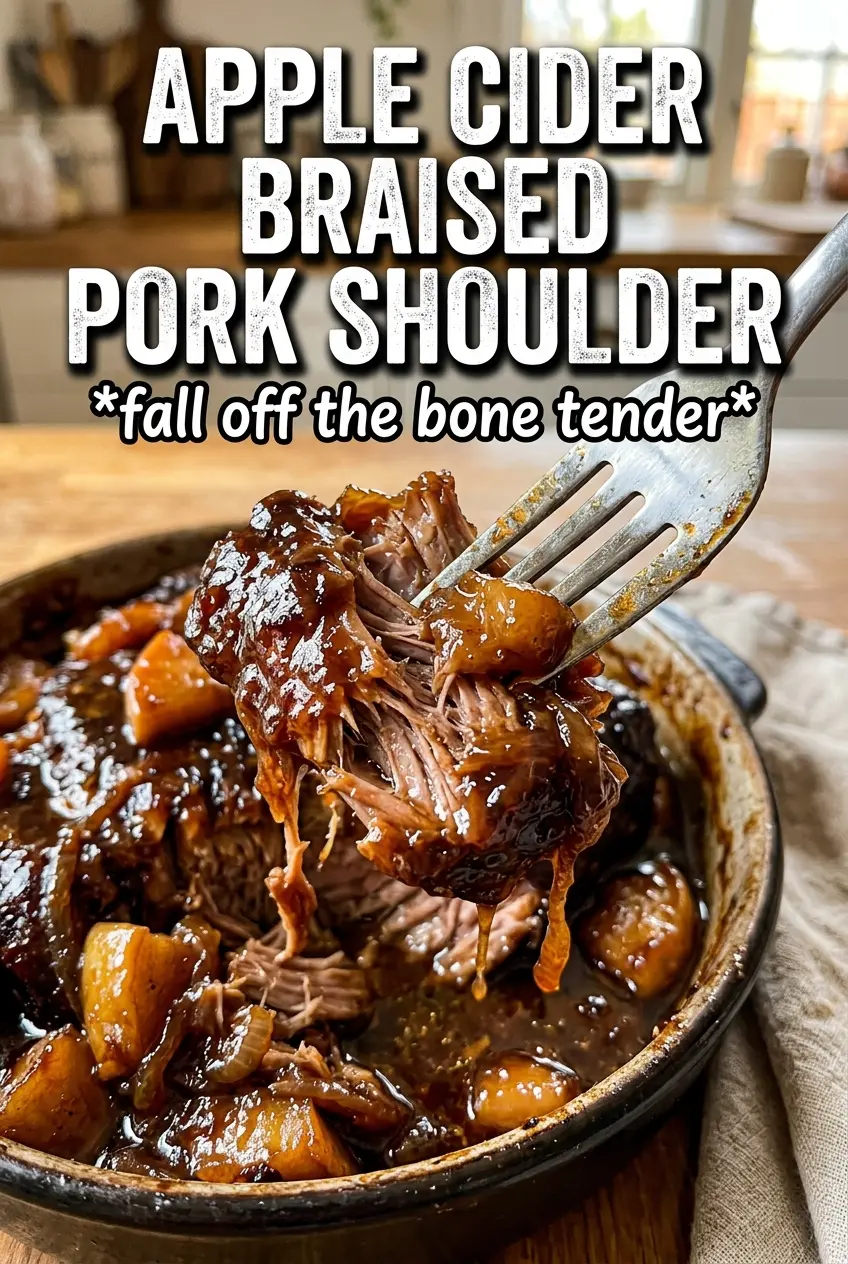
Apple Cider Braised Pork Shoulder
Ingredients
Equipment
Method
- Preheat oven to 325F, then season pork generously with salt and pepper for even flavor all the way through.
- Heat olive oil in a Dutch oven over medium-high heat and sear the pork on all sides until deeply browned, about 8–12 minutes total, moving it as needed for an even crust.
- Remove pork to a plate; sauté onion and garlic in the pot for 3 minutes to soften and lightly color the aromatics.
- Whisk apple cider, chicken broth, Dijon mustard, brown sugar, and apple cider vinegar, then pour the mixture into the pot to deglaze the browned bits.
- Return the pork to the pot, then add apples, thyme, and rosemary so the pork is surrounded by fruit and herbs.
- Cover and braise in the oven at 325F for 3-1/2 to 4 hours until the pork is fall-apart tender when pressed with a fork.
- Shred the pork in the juices right in the Dutch oven until fully coated and juicy.
- Serve the shredded pork over mashed potatoes, spooning the apple cider braising sauce and softened apples on top.