Bright, crisp, and eye-catching, an American Flag Fruit Platter disappears fast because it looks festive without asking much from the cook. The trick is in the arrangement: tight rows, clean edges, and fruit that’s cut to the same general size so the flag reads instantly from across the table. When it’s done right, the strawberries stay bold, the bananas stay pale and fresh, and the blueberries make the whole platter look intentional instead of scattered.
What makes this version work is a little attention before the platter hits the table. Halving the strawberries lengthwise helps them line up like shingles, which makes the red stripes look neat instead of bumpy. Brushing the banana slices with lemon juice slows browning enough to keep the white stripes looking clean for the short window this platter is meant to be served. That’s the whole game here: simple fruit, arranged with enough care that it feels special.
Below, you’ll find the layout strategy that keeps the flag shape sharp, plus a few practical notes on timing so the bananas don’t go dull before guests get there.
I loved how the strawberry rows stayed neat and the bananas didn’t turn brown before we served it. The blueberry corner really made it look like an actual flag, not just a fruit tray, and there wasn’t a single piece left after the cookout.
Love the clean red, white, and blue look? Save this American Flag Fruit Platter for your next patriotic party spread.
Why the Flag Looks Neat Instead of Crowded
The biggest mistake with a fruit flag is letting the pieces sprawl. Once the rows loosen up, the whole platter starts to look messy and the flag shape disappears. Tight placement matters more than perfect symmetry here, because the eye reads the red and white stripes first and the blueberry corner second.
Cutting the strawberries lengthwise gives you flatter pieces that sit together with less rolling, which is a lot easier to manage than whole berries. The bananas should be sliced at the last minute and brushed lightly with lemon juice right away. If you wait, they’ll dull fast and the white stripes lose their contrast. A tray with a clear rectangular shape also helps the fruit read like a flag instead of a casual arrangement.
What Each Ingredient Is Actually Doing in This Recipe
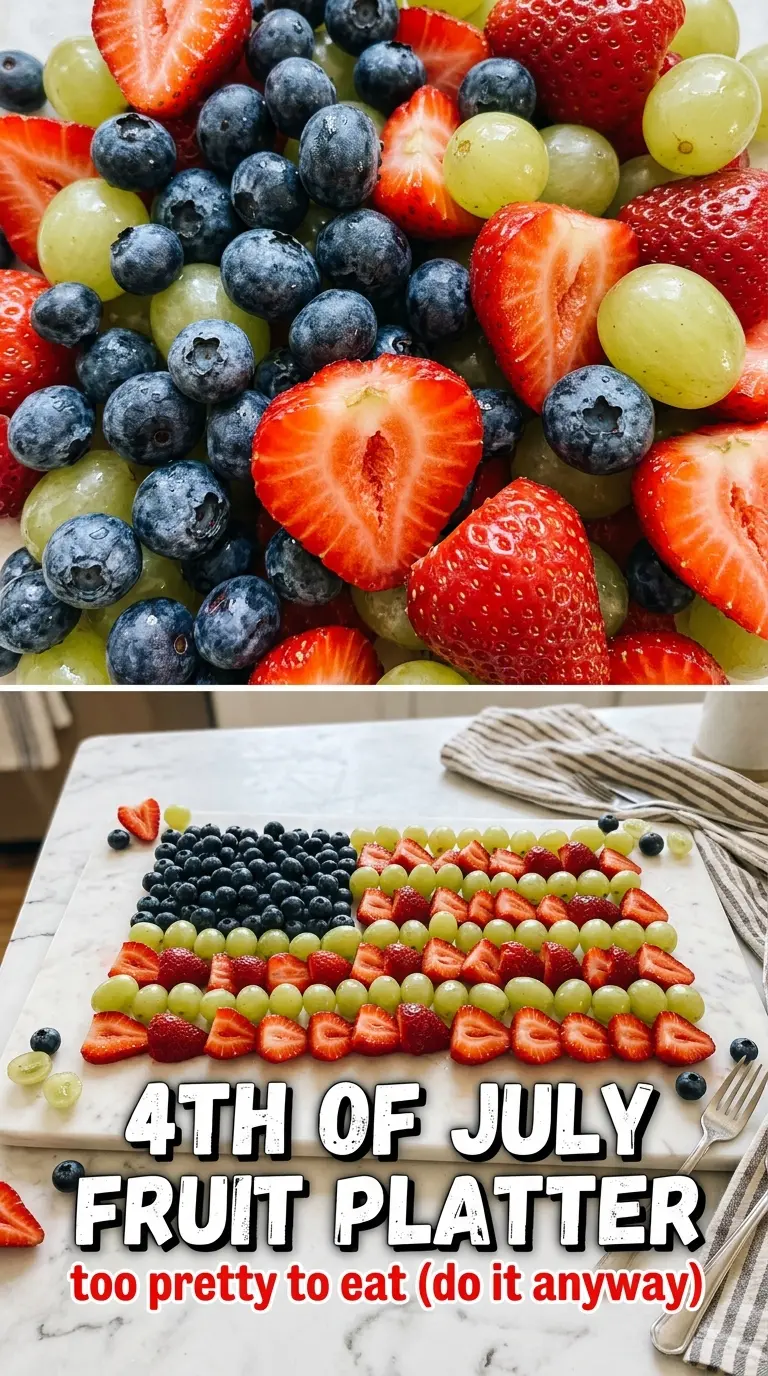
- Primary ingredient (the star) — Quality matters most. Choose the best you can find.
- Cooking medium (oil, butter, or broth) — This carries flavors and prevents dryness.
- Seasonings (salt, pepper, spices, herbs) — Layer flavors so nothing overpowers. Build depth gradually.
- Aromatics (garlic, onion, herbs) — Cook with fat to bloom flavors. Become the foundation.
- Supporting ingredients — Complement the main ingredient without overpowering it.
- Sauce or liquid (if applicable) — Brings flavors together. Balance richness with acid.
- Acid (lemon, vinegar, wine, or other) — Brightens and prevents flat-tasting results.
- Final finish (garnish, glaze, or sauce) — Prevents one-dimensional taste and adds visual appeal.
What Each Fruit Is Doing on the Platter
- Blueberries — These create the canton, so the smaller the berry and the denser the pile, the cleaner the corner looks. If your blueberries are very large, use them anyway, but pack them tightly so the blue section doesn’t look patchy.
- Strawberries — Halving them lengthwise gives you stable, flat pieces that stack into crisp red stripes. Smaller strawberries often work best because they fit the tray more evenly, but larger berries are fine if they’re cut consistently.
- Bananas — These give you the bright white stripes, but they’re the only fruit here that starts browning almost immediately. Lemon juice slows that down without changing the look or adding much flavor, so don’t skip it if the platter won’t be served right away.
- Lemon juice — A light brush is enough. If you soak the bananas, they’ll turn wet and slippery, which makes the rows slide and dulls the color contrast.
Building the Flag Row by Row
Laying Out the Tray
Start with a large rectangular tray or a cutting board with enough edge-to-edge space to hold the flag shape. You want a surface that lets the rows run straight, because a curved platter makes the stripes look off before you even begin. If the tray is too small, compressing the fruit will make the rows collapse into each other.
Making the Blue Corner First
Fill the upper left corner with blueberries before you do anything else. That section anchors the design and gives you a fixed stopping point for the first strawberry row. Pack the berries tightly so the corner looks like a solid block of color, not a scattered handful.
Creating the Stripes
Working from the blueberry section across the tray, lay down a row of halved strawberries cut-side down, then a row of banana slices brushed with lemon juice. Keep the rows close together and line them up in straight bands so the color contrast stays sharp. If the strawberries tip over or leave gaps, the stripe looks broken, so nudge them into place while the fruit is still fresh-cut.
Serving at the Right Moment
This platter is at its best right after assembly. Bananas soften and discolor quickly, even with lemon juice, and the whole design loses its clean look if it sits too long. If you need a little lead time, wash and dry the fruit ahead, but don’t slice the bananas until close to serving.
Make It Dairy-Free and Naturally Gluten-Free
This platter already fits both of those needs without any changes, which is part of why it works so well for a crowd. The only thing to watch is cross-contact if you’re serving it alongside other foods, especially if the tray has been used for crackers, pastries, or dips before.
Swap Bananas for White Fruit That Holds Up Longer
If you need a fruit that stays pale a little longer, try firm pear slices brushed with lemon juice or thin slices of apple. The look changes a bit, and the stripes won’t feel as soft and sweet as bananas, but you gain better holding power if the platter needs to sit out briefly.
Make a Bigger Platter for a Crowd
For a larger group, extend the same pattern onto a sheet pan or oversized board and repeat the rows in wider bands. The design reads best when the blueberry corner stays proportionally smaller than the rest of the tray, so don’t let the blue section swallow too much space.
Storage and Timing
- Refrigerator: Best served within 1 hour. After that, the bananas begin to brown and the strawberries release juice.
- Freezer: Not a good option. The texture changes too much once thawed, and the fruit won’t hold the flag pattern.
- Reheating: Not applicable. If you’re making it ahead, prep the berries in advance and slice the bananas at the very end.
Questions I Get Asked About This Recipe
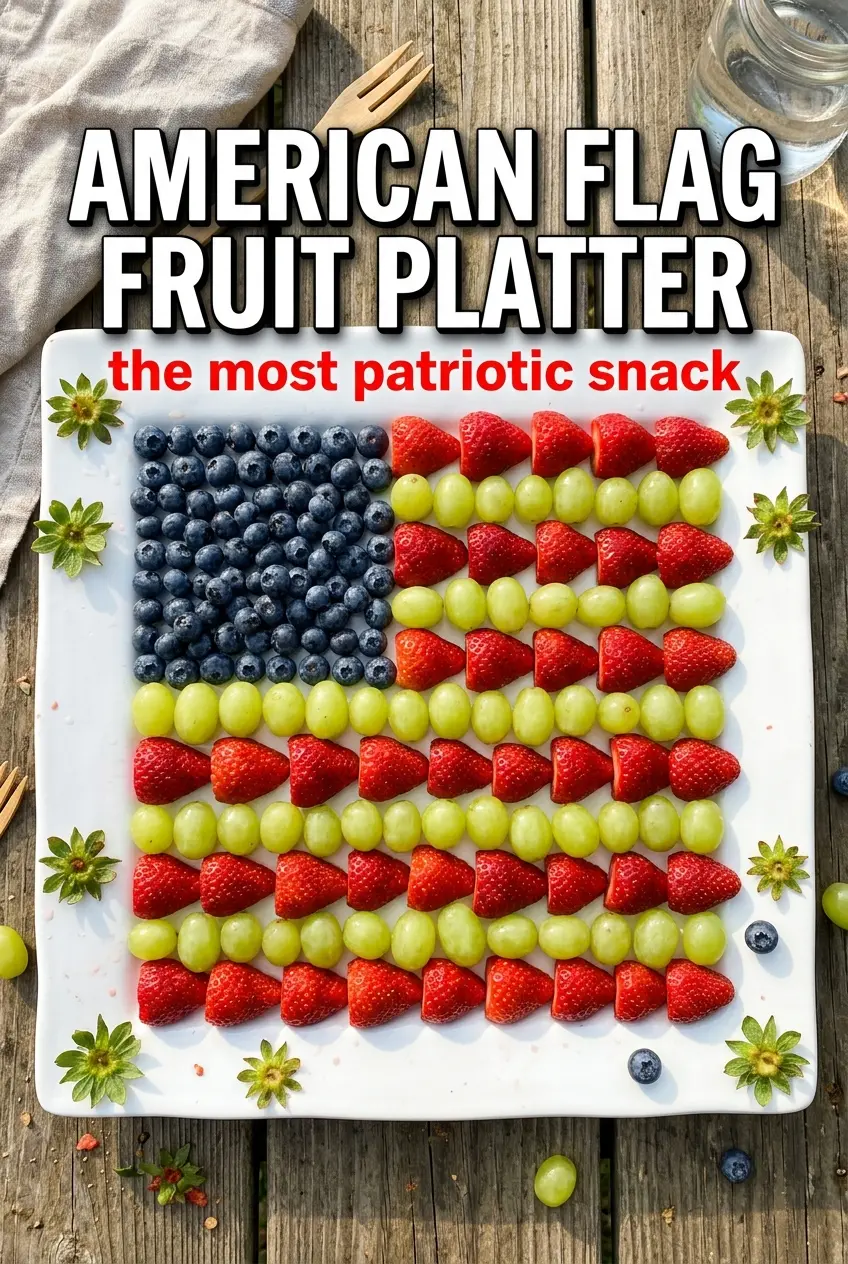
American Flag Fruit Platter
Ingredients
Method
- Choose a large rectangular serving tray or cutting board and place it on a flat surface for easy assembly.
- In the upper left corner, arrange a dense rectangle of blueberries to form the canton (star field).
- Starting from the top right of the tray and working left from the blueberry section, lay rows of halved strawberries cut-side down to form the red stripes.
- Brush the banana slices with lemon juice to prevent browning, then arrange them in rows between the strawberry stripes to create the white stripes.
- Continue alternating strawberry and banana rows across the full length of the tray until the flag is complete.
- Serve immediately, or refrigerate uncovered for up to 1 hour before serving to keep the fruit looking fresh.