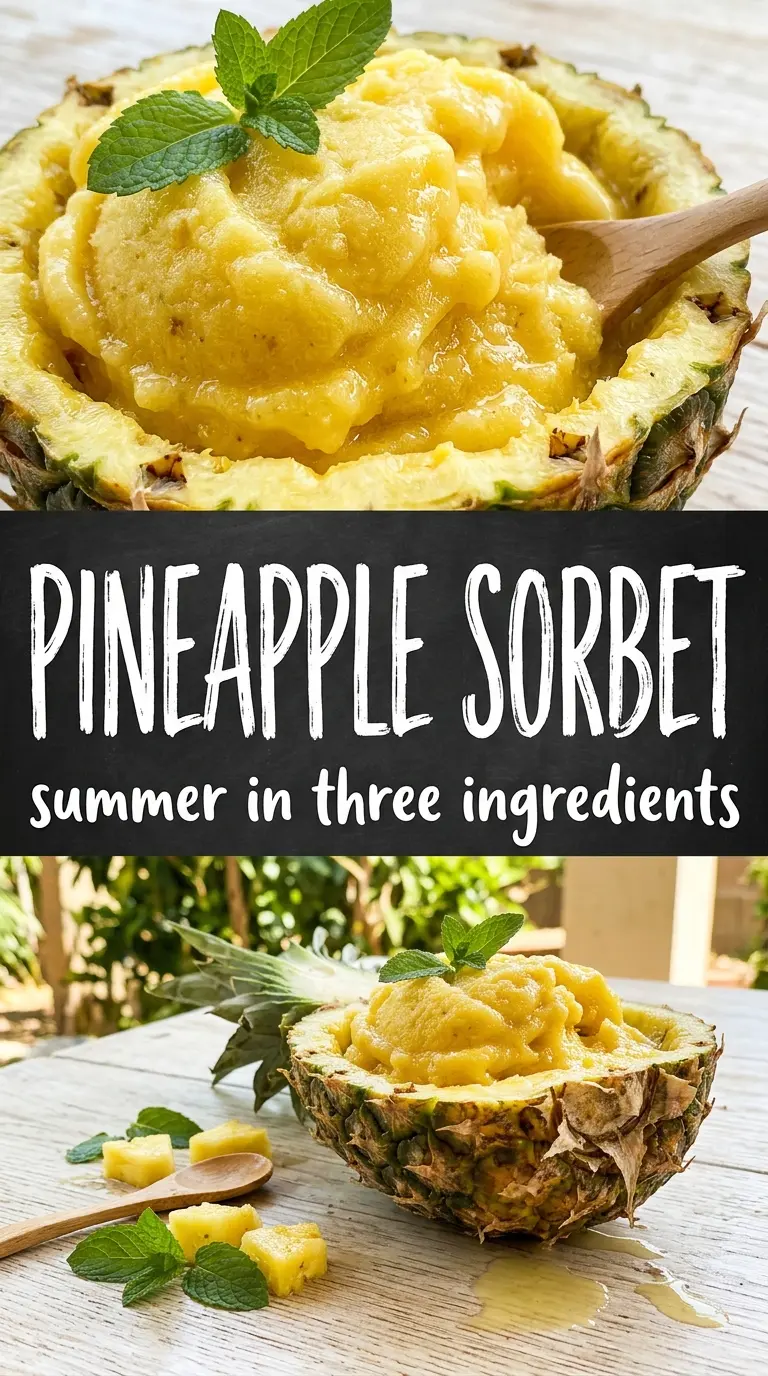
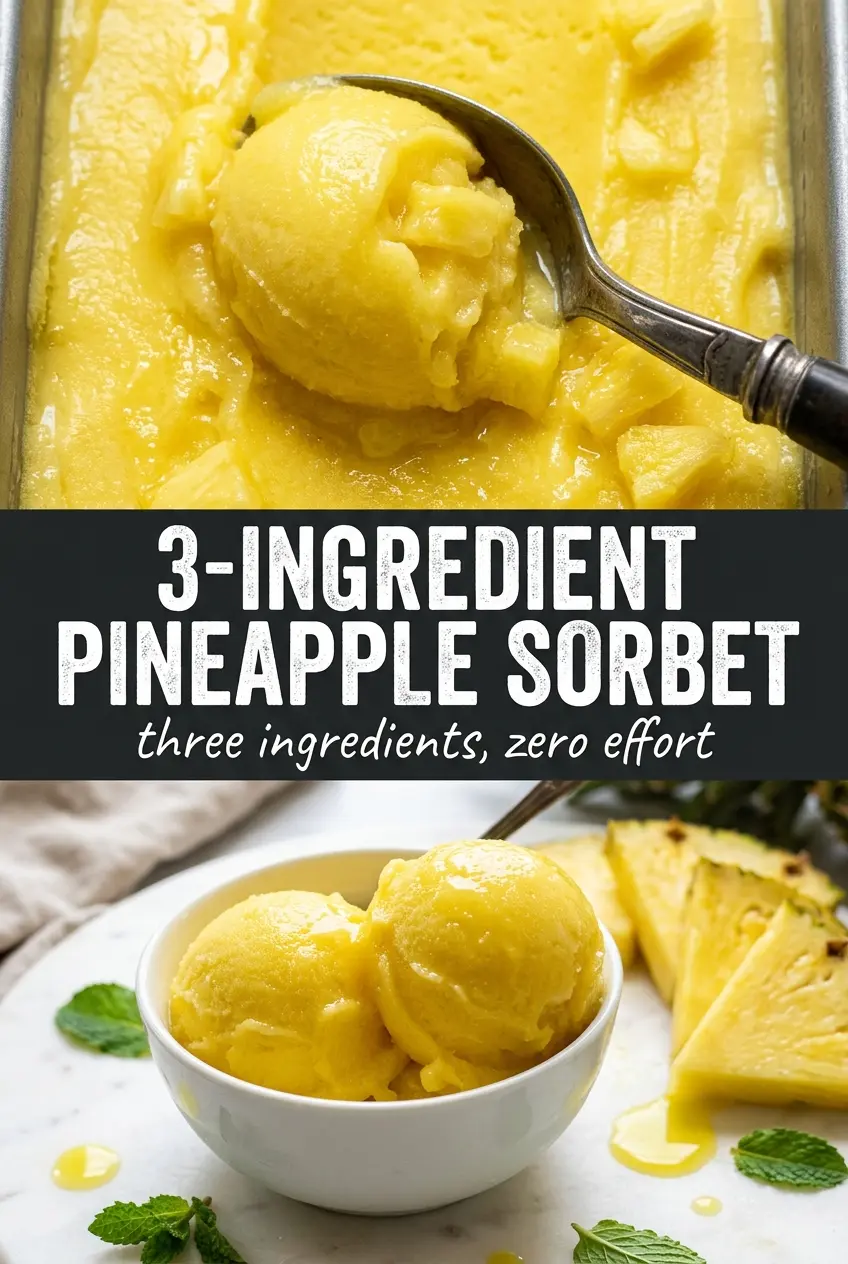
Bright pineapple sorbet hits all the right notes: icy at the edges, creamy-smooth on the tongue, and sharp enough from the lime to keep every spoonful from tasting flat. With just frozen pineapple, citrus, and a little sweetener, it turns into a dessert that tastes clean and vivid instead of heavy.
The trick is letting the pineapple soften just enough before blending. That small pause keeps the blender from stalling and helps the fruit break down into a smooth puree instead of clumping around the blades. The lime doesn’t just add brightness; it wakes up the pineapple’s natural sweetness, so you need less honey or agave than you might expect.
Below, I’ve included the little details that matter most, like how to fix a sorbet that freezes too hard and how to turn the same mixture into a softer, scoopable dessert or a more crystalline granita-style texture.
I was shocked at how smooth this got with just pineapple, lime, and honey. Mine needed about 3 minutes in the blender after the fruit softened, and the texture was like a soft-serve sorbet. My kids asked for seconds before I even put the lid back on the container.
Like this pineapple sorbet? Save it for the days when you want a frozen dessert that’s bright, smooth, and made with just three ingredients.
The Step Most People Skip That Keeps Pineapple Sorbet Smooth
Frozen fruit sorbet seems foolproof until the blender starts fighting back. The problem is usually that the fruit is too hard going in, which forces you to add extra liquid and loosens the finished texture. That’s how you end up with pineapple slush instead of a scoopable sorbet.
Letting the chunks sit for about 5 minutes takes the edge off without melting them. That tiny bit of give lets the blades catch the fruit cleanly, so the mixture turns silky before it warms up. If your blender is struggling, stop and scrape down the sides instead of adding more liquid; extra liquid makes the sorbet icy later.
What Each Ingredient Is Actually Doing in This Ice Cream
- Base ingredient (cream, milk, or custard) — This provides the foundation and richness. Quality matters.
- Sweetener (sugar, honey, or condensed milk) — This sweetens and prevents ice crystals. The ratio is critical.
- Flavor element (vanilla, fruit, chocolate, cookie, or other) — This defines the ice cream personality. Use quality ingredients.
- Egg yolks (if making custard base) — These create richness and silky texture. Optional but elevates ice cream.
- Churning (if using ice cream maker) — This incorporates air and prevents ice crystals. Critical for smooth texture.
- Freezing temperature and time — Proper freezing prevents rock-hard texture. Store at 0°F or below.
- Mix-ins (chocolate, cookies, candy, or swirls) — These add texture and prevent one-dimensional flavor. Add near end of churning.
- Serving temperature (slightly soft, not rock hard) — This provides creamy mouthfeel. Remove from freezer 5 minutes before serving.
What Each Ingredient Is Doing in the Blender
- Frozen pineapple chunks — These are the body of the sorbet, and quality matters here because pineapple is carrying almost all the flavor. Use ripe frozen pineapple if you can; under-ripe fruit tastes flat and needs more sweetener to wake it up.
- Lime juice — This keeps the pineapple from tasting one-note. Fresh lime is worth it because bottled juice can taste dull and slightly metallic in a dessert this simple.
- Honey or agave — This softens the acidity and helps the texture stay a little more scoopable after freezing. Agave blends in cleanly if you want a vegan version, while honey adds a warmer, rounder sweetness. Start with less than you think, then taste and adjust after blending.
How to Blend It So It Turns Creamy Instead of Watery
Softening the Fruit First
Let the frozen pineapple sit at room temperature for about 5 minutes. You want the outside to lose its rock-hard edge, not turn mushy. If it starts sweating heavily or melting, it’s gone too far and the sorbet will freeze up looser later.
Blending to a Smooth Base
Add the pineapple, lime juice, and sweetener to a high-powered blender. Start on low, then work up as the fruit breaks down. Stop and scrape the sides if the mixture forms a tunnel around the blades; that means the fruit is packed too tightly and needs help moving. Blend until no visible chunks remain and the mixture looks glossy and thick.
Adjusting Before It Sets
Taste the mixture before freezing. Pineapple loses some sweetness once it’s cold, so the base should taste a little brighter and sweeter than you think the final sorbet should. Add more lime if it tastes heavy, or a little more honey or agave if it tastes sharp.
Choosing Your Final Texture
Serve it right away for a soft, spoonable sorbet, or freeze it for 2 to 4 hours for a firmer scoop. If it freezes solid, let it sit on the counter for a few minutes and then scrape it with a fork for a granita-like texture, or blend it again briefly for a smoother finish.
How to Adapt This Pineapple Sorbet for Different Freezers and Diets
Vegan Pineapple Sorbet
Use agave instead of honey. Agave blends in cleanly and keeps the recipe fully plant-based without changing the texture much. Honey works too, but it gives the sorbet a slightly richer sweetness that some people notice right away.
Sweeter or Tarter Finish
If your pineapple is extremely ripe, you may only need a drizzle of sweetener. If it tastes sharp or slightly icy, add the sweetener a teaspoon at a time. That balance matters because cold desserts mute flavor, and a sorbet that tastes perfect warm can seem dull once frozen.
Granita-Style Pineapple Dessert
Freeze the blended mixture in a shallow container, then scrape it with a fork every 30 to 45 minutes until flaky. This gives you a lighter, icier texture with bigger crystals and less creaminess, which is great if your blender isn’t powerful enough to make a perfectly smooth sorbet.
Storage and Re-Blending
- Refrigerator: This isn’t a refrigerator dessert; it melts fast and loses its texture.
- Freezer: Store in a sealed freezer container for up to 1 week. Press parchment or plastic wrap directly on the surface if you want to slow ice crystals.
- Reheating: There’s no reheating here, but if it freezes too hard, let it sit 5 to 10 minutes on the counter and then pulse it in the blender or scrape it with a fork. Trying to force it straight from the freezer usually just strains the motor and leaves you with uneven chunks.
Answers to the Questions Worth Asking
3-Ingredient Pineapple Sorbet
Ingredients
Equipment
Method
- Let frozen pineapple chunks sit at room temperature for 5 minutes to soften slightly, so they blend smoothly.
- Add softened pineapple, lime juice, and honey or agave to a high-powered blender and blend until completely smooth, scraping down if needed.
- Taste the sorbet base and adjust sweetness or acidity by adding a little more honey or agave or more lime juice as needed.
- Serve immediately as a soft sorbet for a thicker, spoonable texture.
- Transfer to a freezer container and freeze for 2-4 hours for a firmer scoop.
- If you prefer granita, scrape the frozen mixture with a fork to create icy crystals.
- If you prefer a smooth sorbet after freezing, blend again briefly until smooth, then serve right away.