Jammy cranberry sauce with whole berries, a glossy finish, and the right balance of tart and sweet earns its place next to anything roasted or brined. This version stays clean and bright instead of collapsing into a sugary gel, and it thickens naturally as the berries burst and the pectin does its work. You end up with a sauce that holds a spoon but still looks fresh on the plate.
The trick is in the order. Sugar goes into the water first so it dissolves before the cranberries hit the pan, which keeps the sauce smooth and prevents gritty bits at the bottom. Once the berries start popping, the liquid turns from sharp red to a deep ruby syrup, and that’s the moment to trust the simmer rather than pushing for a hard boil.
Below, I’ve included the little timing details that matter, plus a few smart swaps if you want to adjust the sweetness or make it ahead without losing that glossy texture.
The berries burst right on time and it thickened up beautifully as it cooled. I chilled it overnight and it sliced cleanly on the spoon without turning stiff or gummy.
Save this 3 Ingredient Cranberry Sauce for the table side that turns out thick, glossy, and perfectly tart every single time.
The Small Step That Keeps Cranberry Sauce Glossy, Not Grainy
Cranberry sauce can turn out dull or sandy when the sugar doesn’t fully dissolve before the fruit goes in. That’s why the syrup base matters more than people think. When the water and sugar come to a full boil first, the berries cook in a smooth liquid instead of a half-dissolved mix, and the finished sauce sets up with a cleaner shine.
The other thing that matters is patience at the end. The sauce looks looser in the pan than it will once it cools, so pulling it early is a mistake. If you cook it until it looks thick like jam on the stove, it usually ends up too stiff in the fridge.
What Each Ingredient Is Doing In This Sauce
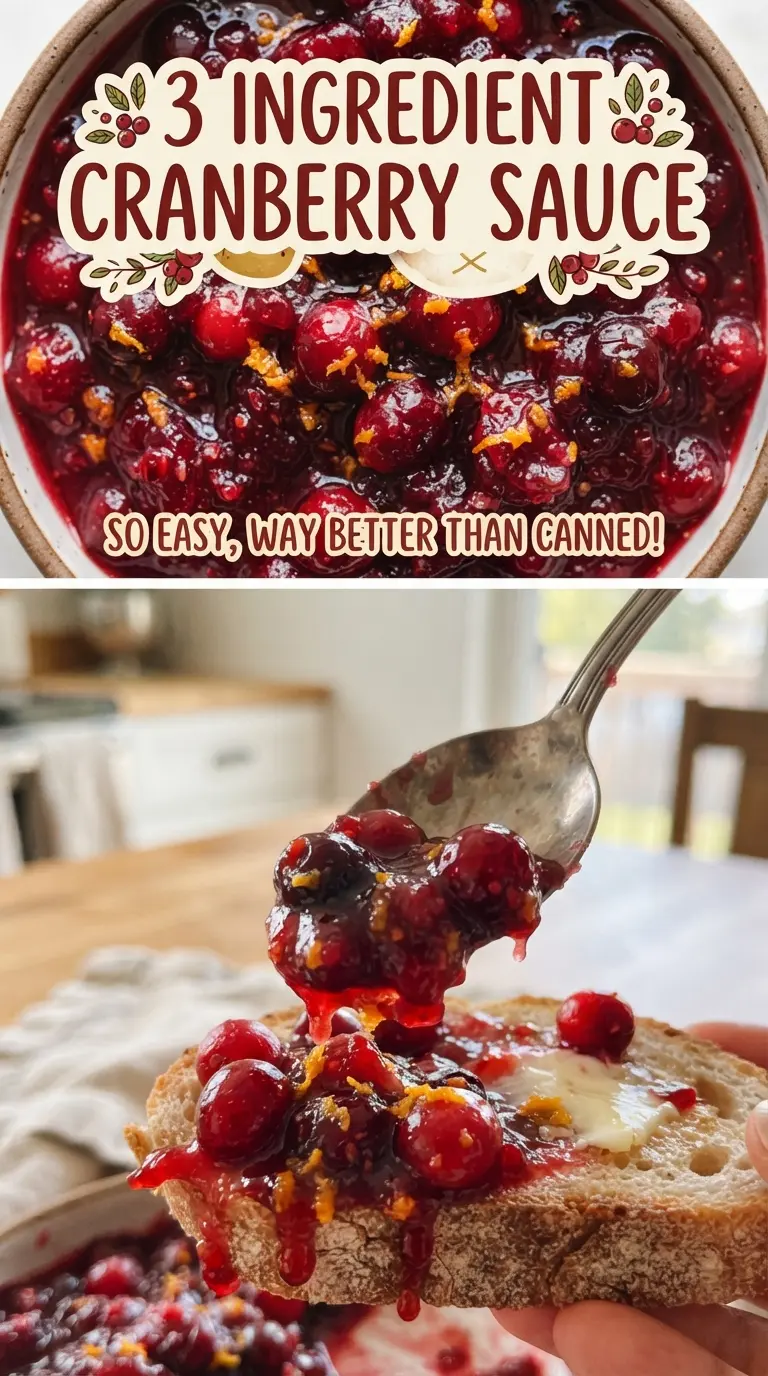
- Fresh cranberries — These give you the tart pop and the natural pectin that makes the sauce thicken as it cools. Frozen cranberries also work, and you can use them straight from the freezer without thawing; just expect them to take a minute longer to come back to a boil.
- Granulated sugar — Sugar isn’t just for sweetness here. It balances the cranberries’ sharpness and helps the sauce look glossy instead of muddy. You can reduce it slightly if you like a tarter sauce, but cutting it too far leaves the berries harsh and the texture less polished.
- Water — This creates the thin syrup that cooks the berries evenly. Don’t swap in juice unless you want a stronger fruit note and a darker, less clean flavor; water keeps the cranberry flavor front and center.
Building the Sauce So It Thickens The Right Way
Dissolving the Sugar First
Bring the water and sugar to a boil and stir just until the crystals disappear. The liquid should look clear, not cloudy or sandy, before the cranberries go in. If you skip this step, the sauce can feel a little gritty at the bottom even after it’s cooked.
Cooking Until the Berries Burst
Add the cranberries and let the pan return to a boil before lowering the heat. As the berries heat through, you’ll hear tiny pops and see the liquid turn thicker and redder. Stir occasionally so the berries on the bottom don’t scorch, but don’t stir constantly or you’ll slow down the bursting.
Knowing When to Stop
After about 10 minutes of simmering, most of the berries should have split open and the sauce should look loose but syrupy. That’s the moment to take it off the heat. It will seem thinner than you want, but it sets up as it cools; overcooking is what turns it into a stiff paste instead of spoonable sauce.
How to Adapt This for Different Tables
Less Sweet, More Tart
Cut the sugar to 3/4 cup if you want a sharper cranberry bite. The sauce will still thicken, but it won’t taste as rounded, so this works best for people who like their cranberry sauce to lean bright instead of dessert-sweet.
Orange-Scented Version
Replace 1/2 cup of the water with fresh orange juice and add a little zest at the end. The sauce will taste brighter and slightly softer in flavor, with a citrus edge that works well on turkey sandwiches and leftovers.
Maple-Sweetened Swap
Use 3/4 cup sugar plus 1/4 cup maple syrup in place of the full cup of sugar. You’ll get a deeper, woodsy sweetness and a slightly softer set, which reads rich without losing the cranberry tang.
Make-Ahead Storage
Refrigerator: Keeps for 7 to 10 days in a covered container. The sauce will firm up as it chills, then loosen slightly after sitting at room temperature. Freezer: Cranberry sauce freezes well for up to 2 months; thaw overnight in the fridge. Reheating: Serve it cold or let it sit out for 20 to 30 minutes. If you want it warm, use low heat and stir gently so it doesn’t break into a watery mess.
Answers to the Questions Worth Asking
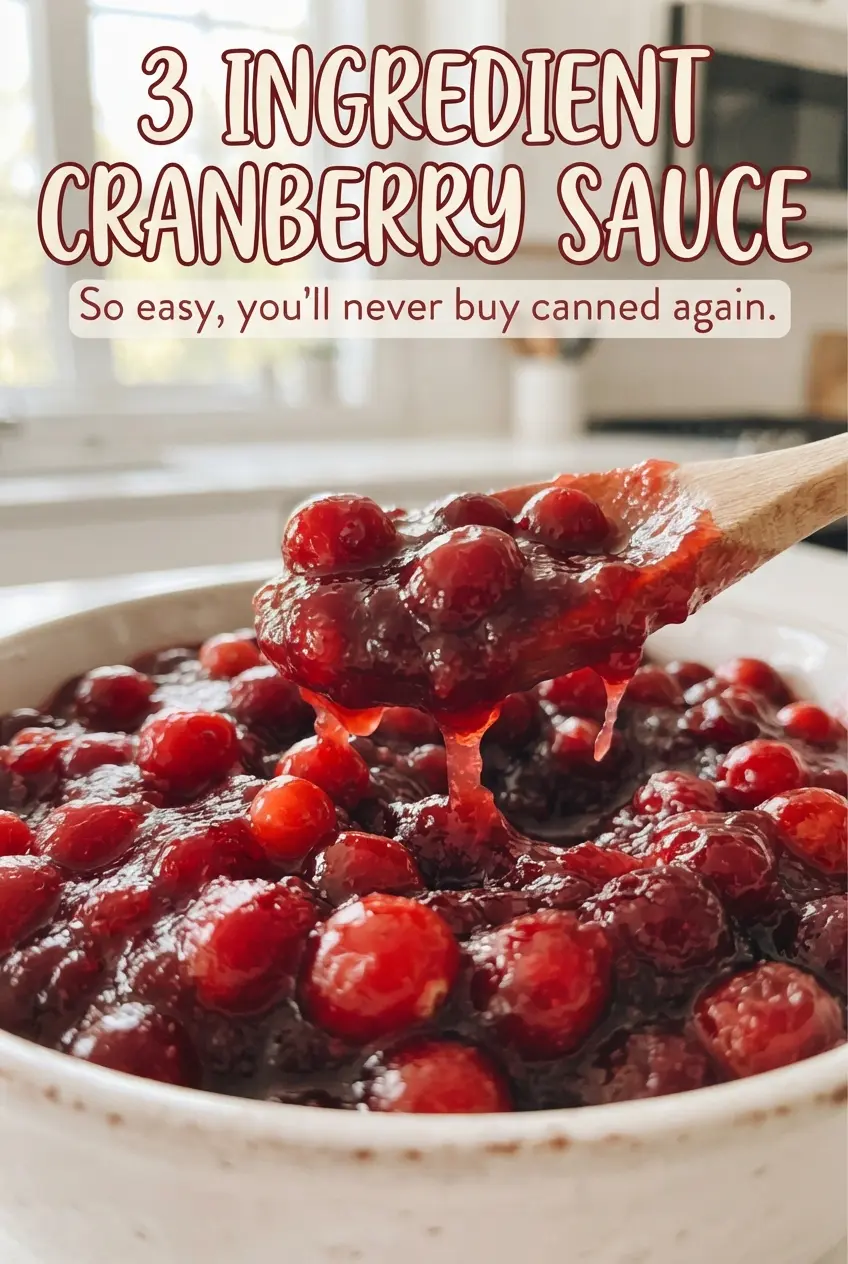
3 Ingredient Cranberry Sauce
Ingredients
Equipment
Method
- Bring 1 cup water and 1 cup granulated sugar to a boil in a saucepan, stirring until the sugar dissolves, about 2 minutes, and look for clear syrup bubbles across the surface.
- Add 12 oz fresh cranberries to the boiling syrup and return to a boil, then watch for berries starting to pop and soften around the edges.
- Reduce heat and simmer for 10 minutes, stirring occasionally, until the berries burst and the sauce turns glossy and thick, with visible softened skins throughout.
- Remove from heat and cool completely, then chill until serving so the sauce sets as it cools and becomes spoonable and thick.