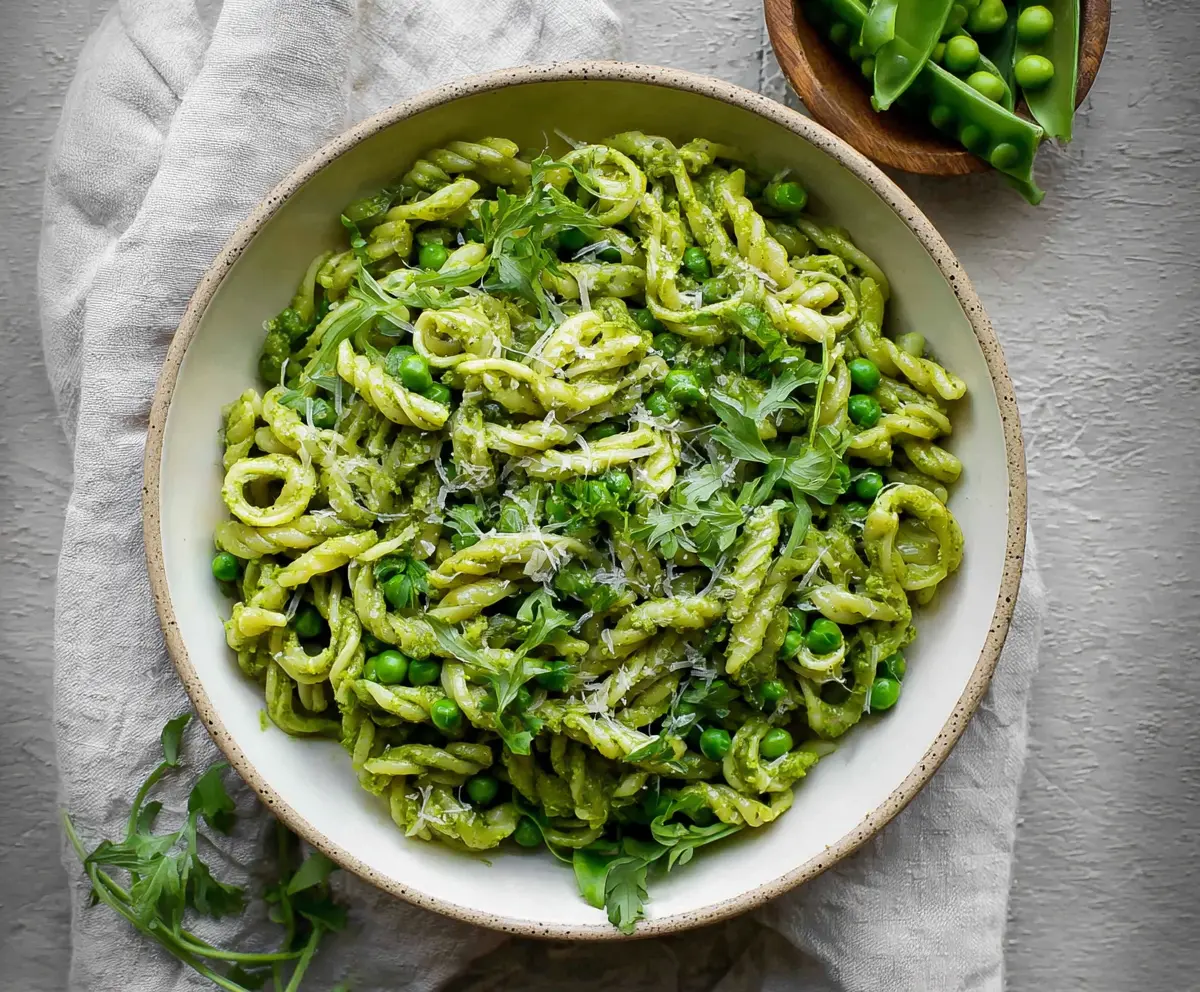
Spring Pea Pesto Pasta is a fresh and bright dish that’s perfect for welcoming the warmer months. It features a creamy pesto made from sweet spring peas blended with fresh herbs, garlic, and parmesan, tossed with tender pasta for a light yet satisfying meal. The vibrant green color alone makes it feel like a little celebration of spring on your plate.
I love making this pasta when spring is in full swing because the peas add a natural sweetness that makes the pesto taste so fresh and lively. Plus, it’s a nice twist on the classic basil pesto, giving it a lighter texture and a bit of a fun pop from the peas. I usually blend the sauce quickly in a food processor and save myself some time on busy weeknights.
My favorite way to serve this pasta is with a sprinkle of extra parmesan and a squeeze of lemon to brighten everything up even more. It’s great on its own, but it also pairs beautifully with grilled chicken or a simple salad for a wholesome meal. I find that it’s a dish that everyone enjoys because it’s so fresh and easy to love, even if you’re usually not a huge fan of peas!
Key Ingredients & Substitutions
Green peas: Fresh peas are best for that sweet, fresh flavor, but frozen peas work well too and are easy to keep on hand. I often use frozen when fresh are out of season.
Arugula or basil: Arugula adds a nice peppery bite, while basil offers a classic pesto taste. You can mix both or try swapping parsley for a milder herb flavor.
Nuts: Pine nuts give the pesto a creamy texture and classic taste. If you don’t have pine nuts, walnuts or almonds are great substitutes and a bit more budget-friendly.
Parmesan cheese: Parmesan adds salty umami. For a dairy-free version, try nutritional yeast instead to keep a cheesy flavor without the dairy.
Lemon zest and juice: These brighten the pesto and balance richness. Fresh lemon is best, but bottled juice can work in a pinch.
How Do I Make Smooth, Creamy Pea Pesto Every Time?
The key to a smooth pesto is the order and consistency of blending. Here’s how I do it:
- Start by pulsing the tougher ingredients (peas, herbs, garlic, nuts) to break them down first.
- Slowly add olive oil while blending to create a creamy, emulsified sauce.
- If the pesto is too thick, add reserved pasta water a little at a time—this thins the pesto and helps it coat the pasta beautifully.
- Taste and adjust seasoning as you blend for a balanced flavor.
This approach makes the pesto silky and easy to mix with pasta, giving you that fresh, vibrant dish every time I make it.
Equipment You’ll Need
- Large pot – I use it to boil the pasta and blanch the peas easily in the same water.
- Food processor – speeds up blending the pesto into a smooth, creamy sauce.
- Measuring cups and spoons – for accuracy, especially with herbs and cheese.
- Slotted spoon or strainer – helps drain the pasta and peas without excess water.
- Serving bowl – for tossing the pasta and presenting the meal attractively.
Flavor Variations & Add-Ins
- Switch herbs: Swap basil for mint or cilantro for a different twist on flavor.
- Protein boost: Add grilled chicken, shrimp, or crumbled feta on top for extra richness.
- Nut options: Use toasted walnuts or almonds instead of pine nuts for varied taste and texture.
- Spice it up: Mix in red pepper flakes or a splash of hot sauce for some heat.
How to Make Spring Pea Pesto Pasta
Ingredients You’ll Need:
For The Pasta:
- 12 oz (340g) pasta (gemelli, fusilli, or spaghetti)
- 1 ½ cups fresh or frozen green peas (plus extra for garnish)
For The Spring Pea Pesto:
- 2 cups fresh or frozen green peas
- 1 cup fresh arugula or basil leaves
- ¼ cup fresh parsley leaves
- 2 cloves garlic
- ¼ cup pine nuts or walnuts (toasted)
- ½ cup grated Parmesan cheese, plus extra for serving
- ⅓ cup extra virgin olive oil
- Zest and juice of 1 lemon
- Salt and freshly ground black pepper, to taste
- Optional: pea shoots or fresh herbs for garnish
Time You’ll Need:
This recipe takes about 20-25 minutes total, including boiling pasta, blanching peas, and blending the pesto. It’s a quick and fresh meal to whip up any day!
Step-by-Step Instructions:
1. Cook the Pasta and Blanch Peas:
Bring a large pot of salted water to a boil. Add the pasta and cook following the package directions until al dente. During the last 2-3 minutes, add 1 ½ cups of peas to the water to blanch them. Before draining, save about ½ cup of the pasta cooking water. Then drain the pasta and peas and set aside.
2. Prepare the Spring Pea Pesto:
In a food processor, combine the blanched peas, arugula or basil, parsley, garlic, toasted pine nuts or walnuts, lemon zest, lemon juice, and Parmesan cheese. Pulse a few times to mix everything roughly.
With the processor running, slowly pour in the olive oil until the pesto is smooth and creamy. If it feels too thick, add a little bit of the reserved pasta water to loosen it up. Taste and season with salt and black pepper as you like.
3. Toss and Serve:
Put the pasta back into the pot or a large bowl. Pour the pea pesto over the pasta and toss well to coat all the noodles. Stir in the extra fresh peas for a pop of color and fresh bite.
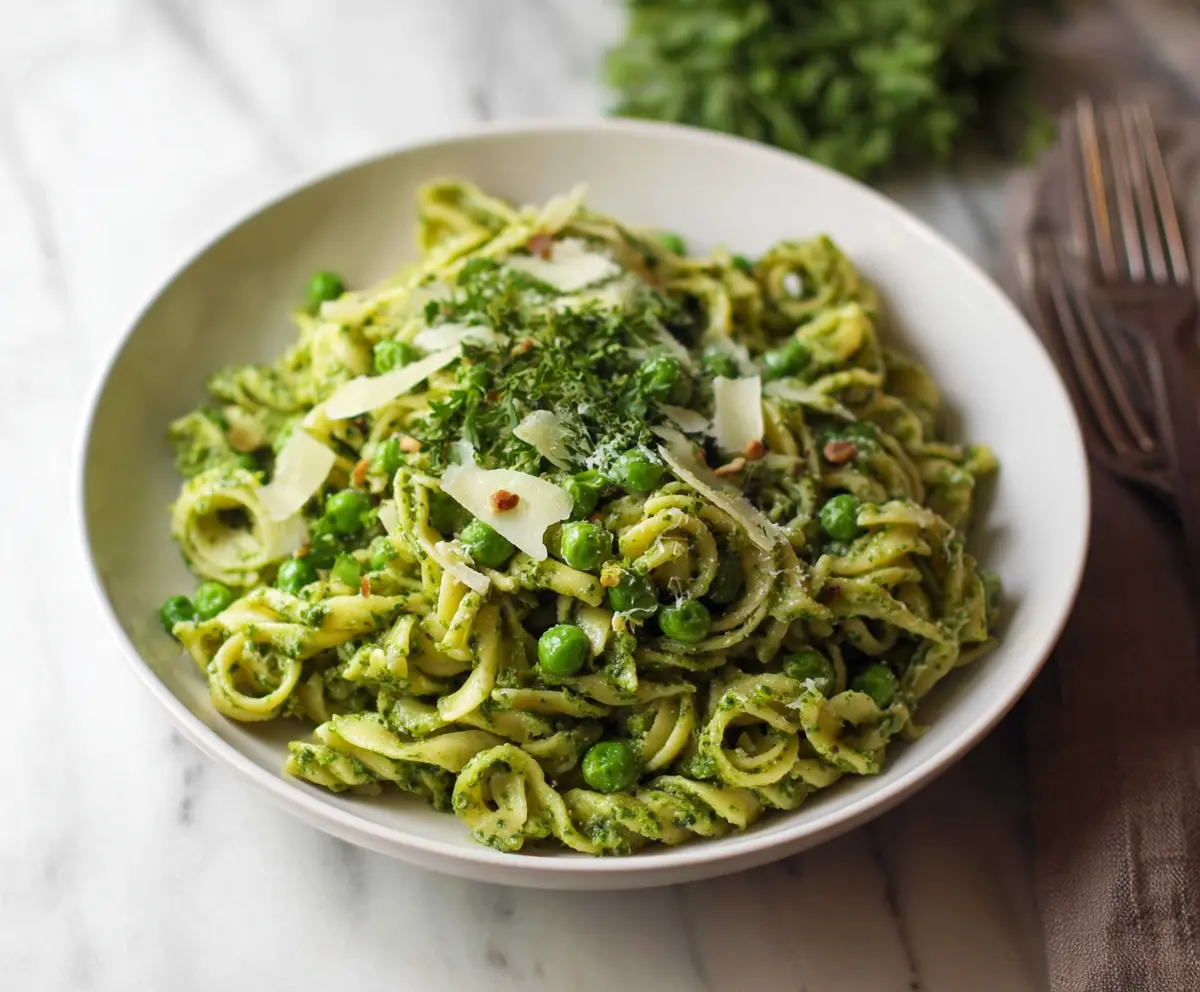
Plate the pasta and garnish with more Parmesan cheese, pea shoots or fresh herbs, and a drizzle of olive oil if you like. Serve immediately and enjoy your fresh spring meal!
Can I Use Frozen Peas Instead of Fresh?
Yes! Frozen peas work perfectly well for this recipe. Just thaw them before blending or blanch them briefly in boiling water to bring out their sweetness and keep that fresh green color.
How Can I Make This Dish Vegan?
To make it vegan, simply omit the Parmesan cheese or replace it with nutritional yeast for a cheesy flavor. Also, double-check that your pasta contains no eggs if you want it fully vegan.
Can I Prepare the Pesto Ahead of Time?
Absolutely! You can make the pea pesto up to 1 day in advance. Store it in an airtight container in the fridge and stir in a little extra olive oil or reserved pasta water before tossing with pasta to refresh the texture.
What’s the Best Pasta to Use?
Short pasta shapes like gemelli, fusilli, or rotini work great since they hold the pesto well. But feel free to use spaghetti or any noodles you have on hand—the sauce is versatile!