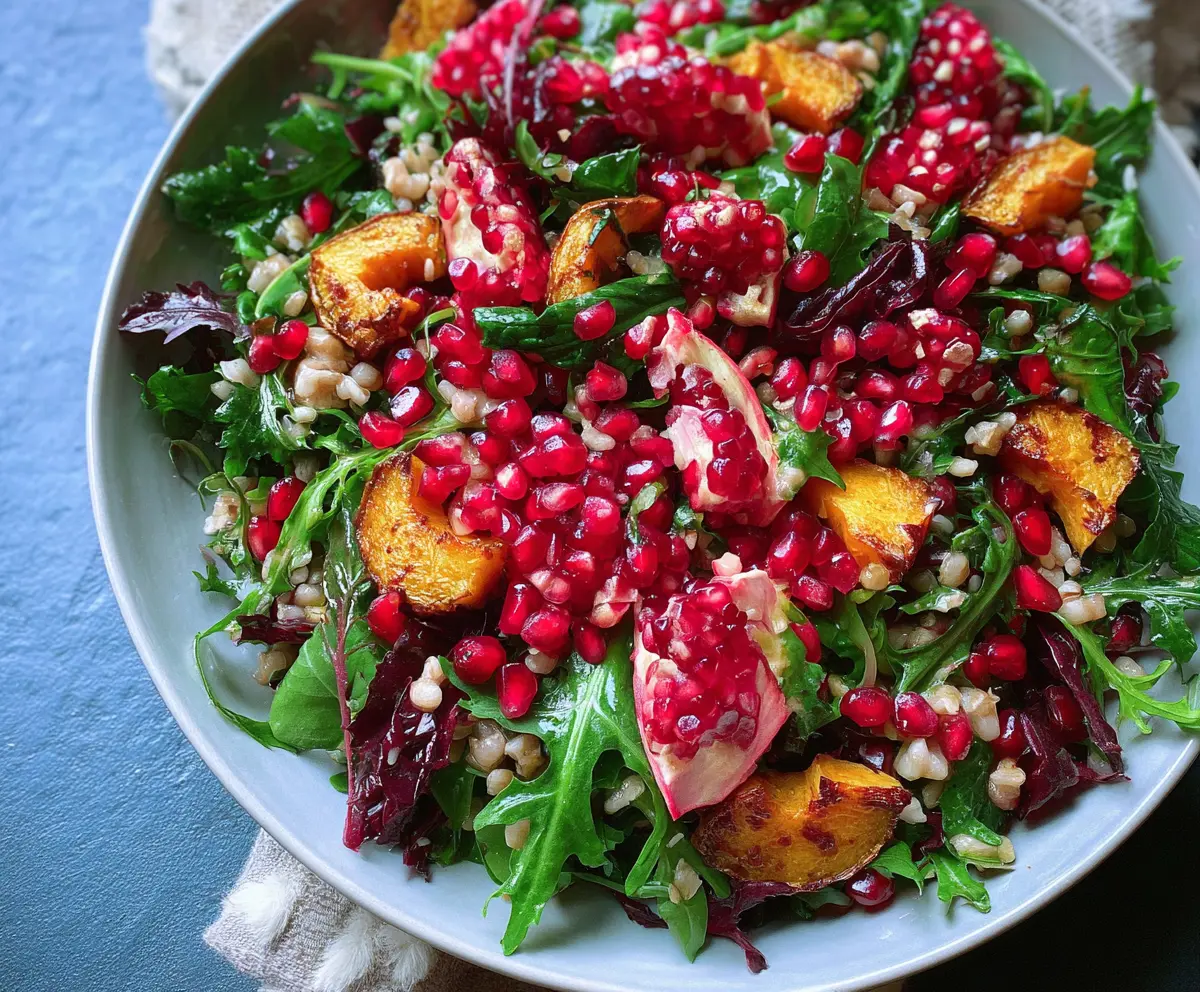
This Healthy Winter Salad with Pomegranate is a fresh and colorful way to enjoy the season’s best flavors. It’s packed with crisp greens, juicy pomegranate seeds, crunchy nuts, and a light dressing that brings everything together perfectly. I love how the tartness of the pomegranate adds a burst of brightness to this otherwise simple salad.
I always find this salad to be a great pick-me-up during the colder months when I’m craving something fresh and healthy but still satisfying. The mix of textures—from the tender leafy greens to the crunchy nuts and juicy fruit—makes every bite interesting. I like to toss it with a little lemon vinaigrette to keep things light and refreshing.
My favorite way to serve this salad is alongside roasted chicken or a warm grain bowl for a balanced meal. It’s also a great dish to bring to winter gatherings because it looks so pretty on the plate, and everyone always asks for the recipe. If you want a nice crunch, try adding some toasted pecans or walnuts on top—they add such a lovely flavor!
Key Ingredients & Substitutions
Winter Greens: I like using kale, arugula, and red leaf lettuce for a mix of flavors and textures. If you don’t have these, spinach or Swiss chard work well too.
Barley: Barley adds chewiness and nuttiness. Quinoa or farro are great substitutes if you want a gluten-free or quicker-cooking option.
Butternut Squash: Roasting brings out its sweet, nutty flavor. Pumpkin or sweet potato make good alternatives if squash isn’t available.
Pomegranate Seeds: They add a juicy, tart pop. You can swap with dried cranberries if fresh pomegranate is hard to find, though fresh is best.
Walnuts or Pecans: Toasted nuts add crunch and richness. Almonds or pumpkin seeds work nicely if you want something different.
How Can I Roast Butternut Squash Perfectly?
Roasting squash takes time but it’s simple and enhances flavor. Here’s how I do it:
- Preheat oven to 400°F (200°C).
- Toss peeled, cut squash wedges with olive oil, salt, and pepper.
- Spread in one layer on a baking sheet—avoid crowding so they roast evenly.
- Roast for 25-30 minutes, flipping halfway to brown both sides.
- The squash should be tender with caramelized edges when done.
Let it cool briefly before adding to salad so it doesn’t wilt the greens. This step makes the squash sweet and soft, a delicious contrast to crisp greens and juicy pomegranate seeds.
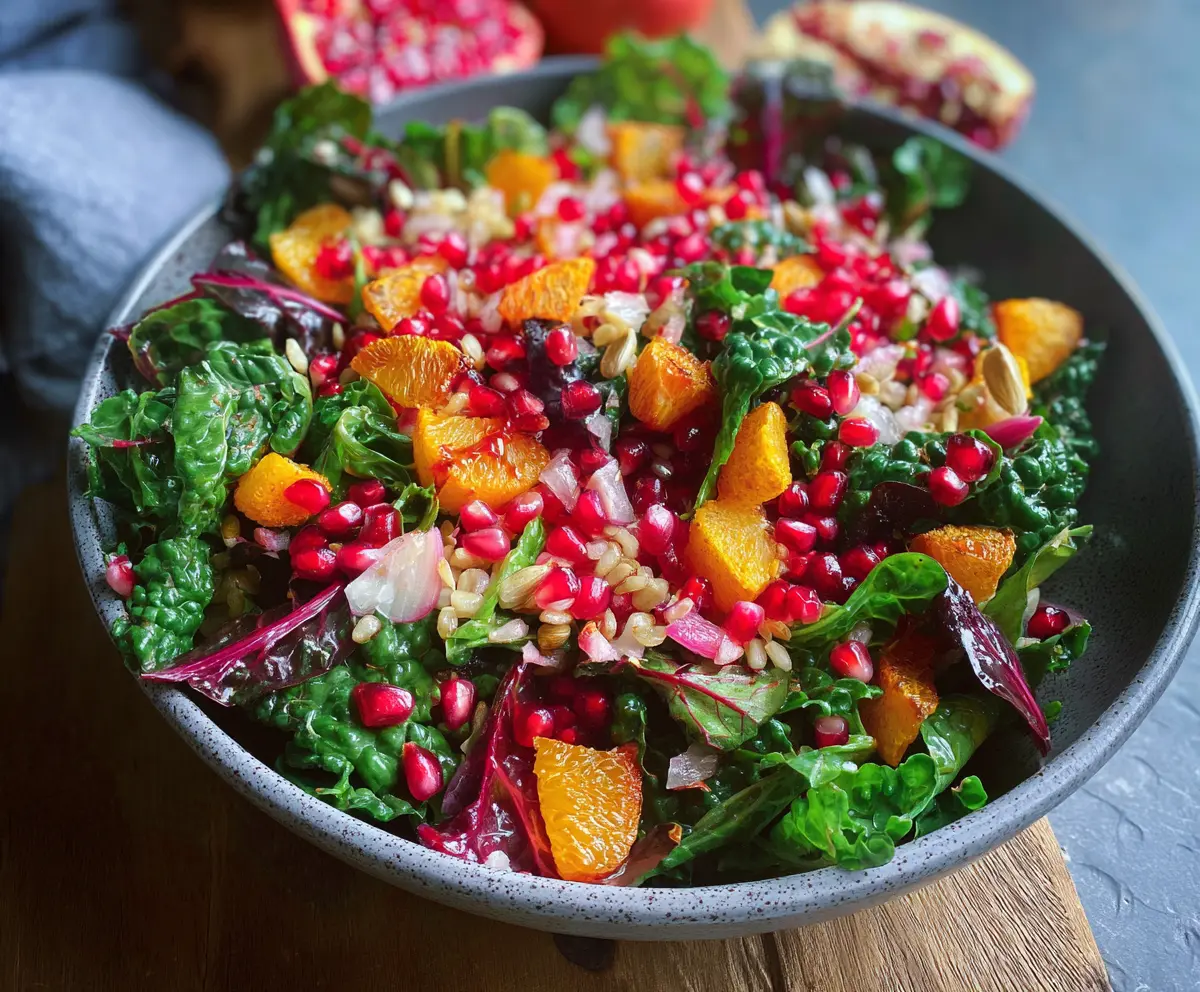
Equipment You’ll Need
- Large mixing bowl – I use this to toss all the ingredients easily and serve the finished salad.
- Mixing whisk or fork – helps you quickly whisk together the dressing for a smooth, balanced flavor.
- Baking sheet – perfect for roasting the squash evenly without crowding.
- Small bowl – I prefer this for whisking the dressing separately before combining everything.
- Measuring cups and spoons – keep your ingredients precise for the best flavor balance.
Flavor Variations & Add-Ins
- Swap the grains: Use cooked quinoa or farro instead of barley for a different texture or gluten-free option.
- Add protein: Toss in cooked chicken, chickpeas, or feta cheese to make the salad more filling.
- Include extra nuts: Sprinkle toasted pecans, almonds, or pumpkin seeds for additional crunch.
- Change the fruit: Use dried cranberries or sliced orange segments for a different burst of flavor.
How to Make a Healthy Winter Salad with Pomegranate
Ingredients You’ll Need:
For the Salad:
- 4 cups mixed winter greens (such as kale, arugula, and red leaf lettuce)
- 1 cup cooked barley (or other whole grain like farro or quinoa)
- 1 medium small butternut squash or pumpkin, peeled, seeded, and cut into 1-inch wedges
- 1 cup fresh pomegranate seeds (arils)
- 1/4 cup toasted walnuts or pecans (optional)
- 2 tablespoons olive oil, plus extra for roasting
- Salt and freshly ground black pepper, to taste
For the Dressing:
- 3 tablespoons extra virgin olive oil
- 1 1/2 tablespoons apple cider vinegar or fresh lemon juice
- 1 teaspoon honey or maple syrup
- 1 teaspoon Dijon mustard
- Salt and freshly ground black pepper, to taste
How Much Time Will You Need?
This healthy winter salad takes about 10 minutes to prepare and 25 to 30 minutes to roast the squash. Including mixing and assembling, plan for around 40 minutes total. You can serve it right away or chill it briefly to let flavors meld.
Step-by-Step Instructions:
1. Roast the Butternut Squash:
Preheat your oven to 400°F (200°C). Toss the peeled and cut butternut squash wedges with 2 tablespoons of olive oil, then lightly season with salt and pepper. Spread the squash evenly on a baking sheet. Roast for about 25 to 30 minutes, flipping the wedges halfway through roasting. The squash should become tender and slightly caramelized. Once done, remove from the oven and let it cool slightly.
2. Make the Dressing:
While the squash is roasting, whisk together the extra virgin olive oil, apple cider vinegar or lemon juice, honey or maple syrup, Dijon mustard, and a pinch of salt and pepper in a small bowl. Keep whisking until the dressing is well mixed and smooth.
3. Assemble the Salad:
In a large salad bowl, combine the mixed winter greens and cooked barley. Add the roasted butternut squash and the fresh pomegranate seeds. If using, sprinkle the toasted walnuts or pecans on top.
4. Dress and Serve:
Drizzle the dressing over the salad and toss gently to combine everything well. Serve the salad immediately for a fresh taste, or chill it briefly in the fridge so the flavors blend together. This salad is perfect on its own or alongside roasted meats or grain bowls.
Can I Use Frozen Butternut Squash Instead of Fresh?
Yes, you can! Just thaw the frozen squash completely and pat it dry before roasting to avoid excess moisture. Roasting time may be slightly shorter since the squash will be softer.
What Can I Substitute for Barley?
Quinoa, farro, or brown rice are great alternatives if you want a gluten-free or quicker-cooking grain. Just cook according to package instructions before adding to the salad.
How Should I Store Leftovers?
Keep any leftover salad and dressing separate in airtight containers in the fridge for up to 2 days. Combine and toss just before serving to keep the greens fresh and crunchy.
Can I Make the Dressing Ahead of Time?
Absolutely! The dressing can be made up to 3 days ahead and stored in the fridge. Give it a good shake or whisk before drizzling over the salad.